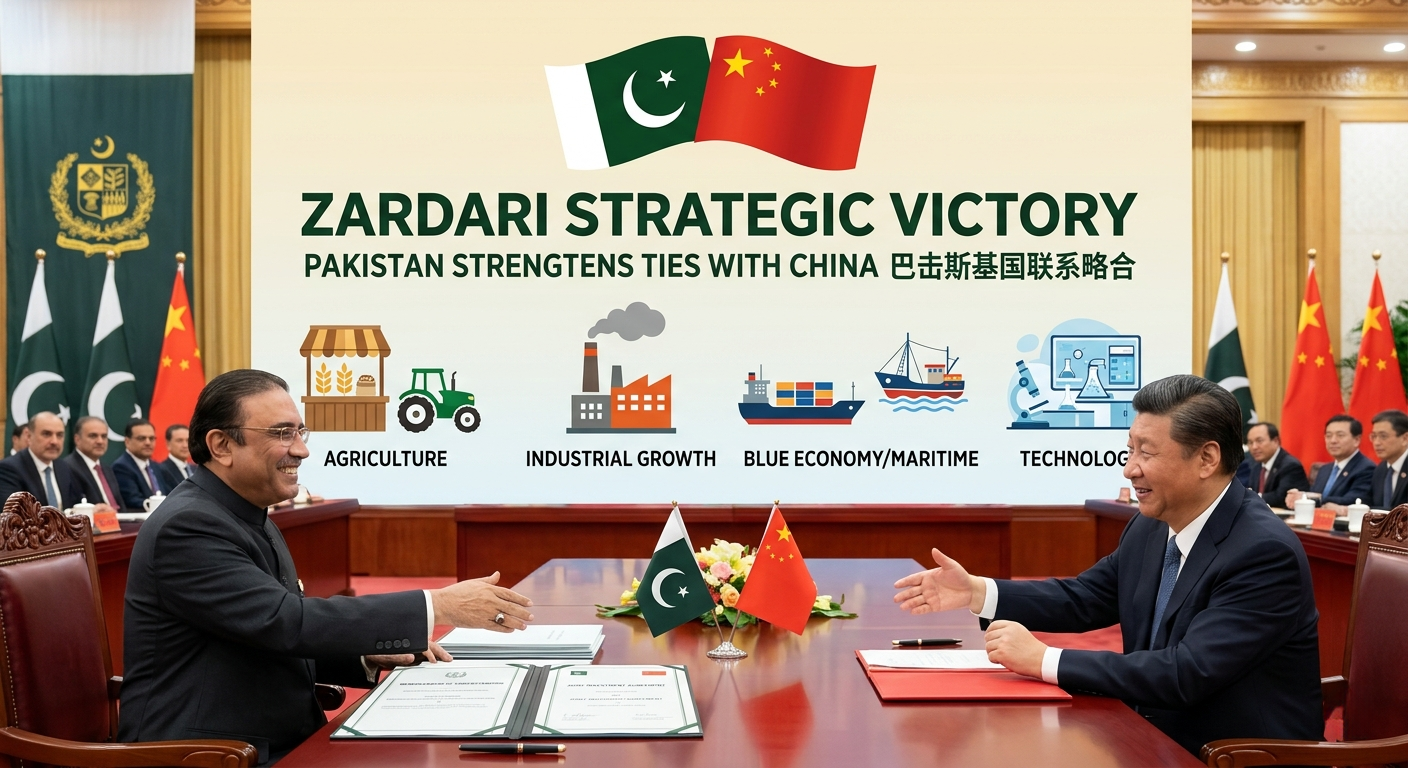
Zardari Strategic Victory 3 Major China Deals Finalized Today
Zardari Strategic Victory: Pakistan Strengthens Ties with China
Pakistan has taken another important step on the global stage as Asif Ali Zardari returned home after completing a productive five-day visit to China. The visit is being seen as a Zardari Strategic Victory, as it focused on strengthening bilateral relations and unlocking new opportunities in key economic sectors.
From industrial growth to agriculture and maritime development, the agreements signed during this visit reflect a forward-looking partnership between the two countries. This Zardari Strategic Victory could play a significant role in shaping Pakistan’s economic future.
A Purpose-Driven Visit
President Zardari’s trip was not just ceremonial—it was carefully planned to deepen cooperation between Pakistan and China. His discussions in the provinces of Hunan and Hainan focused on practical areas that directly impact economic growth.
The Zardari Strategic Victory lies in the fact that both countries showed strong commitment to expanding collaboration in sectors like industry, agriculture, and the blue economy. These are areas where Pakistan has significant potential but requires investment and technology to grow.
Strengthening CPEC 2.0
One of the central themes of the visit was advancing the next phase of the China-Pakistan Economic Corridor, commonly referred to as CPEC 2.0.
This phase is expected to shift focus from infrastructure development to industrialization and economic sustainability. The Zardari Strategic Victory becomes clear here, as Pakistan aims to move from being a transit economy to a manufacturing and export-driven economy.
Through this partnership, Pakistan hopes to boost domestic industries, create jobs, and increase exports. The agreements signed during the visit are expected to support these goals.
Key Agreements and MoUs
During the visit, several memoranda of understanding (MoUs) and agreements were signed, highlighting the practical outcomes of the trip.
In Changsha, three MoUs were signed focusing on:
- Seawater desalination
- Agricultural technology
- Development of the tea sector
Additionally, in Sanya, two more MoUs and a joint investment agreement were finalized. These covered:
- Machinery cooperation
- Animal vaccines
- Medical technology
These agreements represent a major part of the Zardari Strategic Victory, as they bring direct investment, innovation, and technical expertise to Pakistan.
Focus on Agriculture and Technology
Agriculture remains the backbone of Pakistan’s economy, and improving this sector is essential for long-term growth. The agreements on agricultural technology aim to introduce modern farming techniques, improve crop yields, and enhance food security.
The Zardari Strategic Victory also includes collaboration in the tea sector, which has the potential to reduce imports and develop local production.
Technology transfer is another key benefit. By working closely with Chinese institutions, Pakistan can gain access to advanced tools and systems that can modernize its agricultural practices.
Boosting the Blue Economy
Another important highlight of the visit was the focus on the blue economy. This includes maritime resources, fisheries, and coastal development.
The Zardari Strategic Victory in this area is particularly important because Pakistan has a long coastline that remains underutilized. With Chinese investment and expertise, this sector can generate significant economic activity.
Projects like seawater desalination are also crucial, as they can help address water shortages in coastal areas.
Industrial Growth and Investment
Industrial development was a major focus of the discussions. Pakistan aims to attract more Chinese investment into manufacturing and industrial zones.
The Zardari Strategic Victory lies in creating opportunities for local industries to grow while benefiting from Chinese expertise. This can lead to job creation, increased productivity, and stronger economic stability.
The joint investment agreement signed in Sanya is expected to play a key role in achieving these goals.
Diplomatic Significance
Beyond economics, the visit also holds strong diplomatic importance. It reflects the continued trust and partnership between Pakistan and China.
President Zardari was seen off at Sanya Airport by senior Chinese officials, including Wang Qiang, highlighting the importance China places on its relationship with Pakistan.
This Zardari Strategic Victory reinforces Pakistan’s position as a key partner in the region and strengthens its global diplomatic standing.
Challenges Ahead
While the outcomes of the visit are promising, there are challenges that need to be addressed. Implementing these agreements effectively will be crucial.
The Zardari Strategic Victory will only be meaningful if these projects are executed on time and deliver real benefits to the people of Pakistan.
Issues like governance, infrastructure, and policy consistency will play a key role in determining success.
What This Means for Pakistan’s Future
The agreements signed during this visit have the potential to bring long-term economic benefits. From improved agriculture to industrial growth and maritime development, the impact could be wide-ranging.
The Zardari Strategic Victory represents a step toward economic stability and growth. It shows that Pakistan is actively seeking partnerships that can drive development and improve living standards.
Conclusion
President Zardari’s visit to China can be seen as a meaningful step toward strengthening Pakistan’s economic and diplomatic position. The agreements signed and the focus on key sectors highlight a clear vision for the future.
The Zardari Strategic Victory is not just about signing deals—it is about creating opportunities for growth, innovation, and progress. If implemented effectively, these initiatives can transform Pakistan’s economy and open new doors for development.