Saudi Targets Slammed by 3 Deadly Houthi Drone and Missile Strikes
Tensions across the Middle East reached a boiling point this weekend as Yemen’s Houthi forces launched a wave of retaliatory attacks against Saudi Arabia. Just hours after vowing revenge for a major Saudi-led coalition offensive, Saudi Targets Slammed by incoming ballistic missiles and drones forced authorities in Riyadh to issue urgent aerial threat alerts.
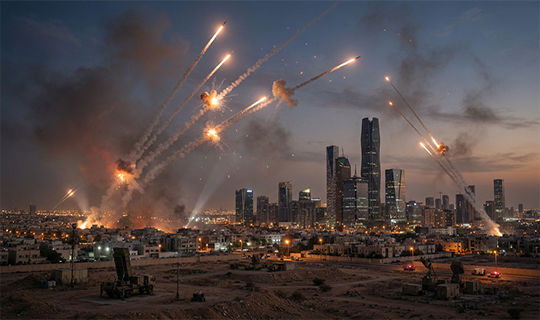
Residents across the capital were rattled by loud explosions as air defense systems scrambled to intercept the incoming barrage, marking one of the most dangerous escalations since the collapse of a four-year truce earlier this summer. Saudi Targets Slammed by 3 Deadly Houthi Drone and Missile Strikes
For months, regional observers have warned that the fragile calm along the Saudi-Yemeni border was rapidly deteriorating. With fighting reigniting across multiple fronts in Yemen’s long-running civil war, the Kingdom has found itself battling an intensifying surge of cross-border hostilities. Yet, the sheer scale of Saturday’s assault—where Saudi Targets Slammed by precision-guided munitions threatened key economic and civilian hubs—demonstrates just how quickly the conflict is spiraling back toward full-scale confrontation.
Aerial Alerts and Explosions Rock Riyadh
The latest crisis unfolded on Saturday when Saudi civil defense authorities issued an emergency warning stating that Riyadh was “under a hostile aerial threat.” Shortly after the alert went out, an AFP journalist stationed in the capital reported hearing two thunderous explosions echoing across the skyline. While the alert was eventually lifted, the psychological impact on the city’s residents was immediate.
According to official statements from the Saudi-led coalition, air defense batteries successfully intercepted and destroyed three Houthi ballistic missiles heading directly toward Riyadh. However, the Houthis quickly claimed responsibility for a much broader operation, declaring that they were actively striking multiple locations across the Kingdom. The group’s military wing boasted that Saudi Targets Slammed during the operation included high-value infrastructure deep inside Saudi territory.
This is not the first time the capital’s economic nerve center has come under fire. Earlier in the week, a separate Houthi strike hit a prominent tower within Riyadh’s King Abdullah Financial District (KAFD). Witnesses told AFP that the city’s tallest skyscraper—a building that houses Saudi Arabia’s massive sovereign wealth fund—sustained visible damage, delivering a high-profile blow to the world’s top oil exporter. Recognizing the heightened danger, offices within the financial district had already been evacuated weeks prior, though the repeated news of Saudi Targets Slammed in the heart of the capital continues to unnerve international investors.
The Spark: A Coalition ‘Special Operation’ in Hodeida
Saturday’s missile barrage did not happen in a vacuum. Rather, it was a direct response to a sweeping “special operation” conducted by the Saudi-led coalition on Friday across several Yemeni provinces, most notably the vital Red Sea port city of Hodeida.
Coalition spokesman Turki al-Malki explained that allied forces had targeted critical operational capabilities at Hodeida port that were allegedly being utilized for smuggling operations and the transport of ballistic missiles and weapons. Beyond the coastline, coalition warplanes also struck what al-Malki described as legitimate “military targets” in the Houthi-held capital of Sanaa, including missile assembly sites, drone facilities, and a major supply depot, alongside additional raids in the Saada and Taiz governorates.
For a deeper understanding of how maritime chokepoints influence these military maneuvers, analysts often look at regional security dynamics in the Red Sea to see how port control dictates leverage in the conflict.
The human toll of Friday’s exchanges remains fiercely contested and impossible to verify independently:
-
Houthi Claims: The group stated that coalition airstrikes killed at least 41 people over a 24-hour period, while also accusing Saudi forces of striking a civilian boat early Friday morning, allegedly killing 19 people. Saudi Targets Slammed by 3 Deadly Houthi Drone and Missile Strikes
-
Coalition & Allied Claims: Yemen’s Saudi-backed armed forces reported that dozens of coordinated airstrikes, drone raids, and hundreds of artillery barrages had killed or wounded 193 Houthi fighters.
Meanwhile, Houthi-run Al-Masirah television broadcast footage showing a heavily damaged power station in the coastal town of Mocha following an air raid, underscoring the widespread destruction hitting Yemen’s already battered infrastructure.
Jizan and Al-Shuqaiq Under Fire
While Riyadh grabbed international headlines, southern Saudi regions near the Yemeni border also bore the brunt of the retaliatory strikes. The coalition spokesman confirmed that two additional ballistic missiles were intercepted over the Jizan region, sending debris raining down into the coastal town of Al-Shuqaiq.
The Houthi military spokesman painted a far more severe picture, claiming the group had hit both the Al-Shuqaiq power station and Jizan port with “accurate and direct” strikes that inflicted “extensive damage.” As reports circulated of Saudi Targets Slammed along the southern border, concerns grew over the vulnerability of the Kingdom’s desalination plants, power grids, and energy export terminals.
Aviation Warnings and Threats to Jeddah
Perhaps most alarming for global trade and travel was the Houthis’ explicit threat to widen the theater of war to Saudi Arabia’s western coastline. Prior to Friday’s raids, the coalition had warned civilians to evacuate Hodeida port. In response, the Houthis’ Humanitarian Operations Coordination Centre dispatched urgent emails to shipping companies and maritime agencies operating out of Jeddah port, warning them to clear the area immediately.
Simultaneously, the group issued a chilling advisory to international carriers, declaring that Saudi airspace was now “unsafe” and would serve as an active combat zone in the coming hours—making an exception only for the holy airspace above Makkah and Madina. They also reiterated warnings for civilians to steer clear of Riyadh’s King Abdullah Financial District, explicitly labeling it a legitimate “military target.” With Saudi Targets Slammed across both central and southern provinces, commercial airlines and Red Sea shipping firms face mounting pressure to reroute operations.
International Condemnation and Shifting Frontlines
The sharp escalation drew swift condemnation from key regional allies. Pakistani Prime Minister Shahbaz Sharif strongly denounced the Houthi strike on the King Abdullah Financial District in Riyadh. Taking to the social media platform X, Sharif stated:
“Such acts of reckless aggression, targeting civilian infrastructure and economic facilities, are totally unacceptable and threaten regional peace and stability. Pakistan stands in unwavering solidarity with our brotherly Kingdom of Saudi Arabia and its people. We fully support the Kingdom’s right to defend its sovereignty and territorial integrity and to protect its citizens and residents.”
Diplomats at the United Nations Middle East peace mission also voiced grave concern on Friday over the spiraling violence, urging all parties to exercise restraint before the humanitarian situation deteriorates even further.
Unfortunately, events on the ground suggest that diplomacy is losing ground to military momentum. Since the four-year truce collapsed in July, the balance of power inside Yemen has shifted dramatically. Earlier this month, Yemen’s Saudi-backed government forces withdrew from strategic areas near the Bab al-Mandab strait, ceding vital coastal territory to the Houthis following a sweeping offensive launched in September.
Today, Houthi fighters have advanced dangerously close to Aden—the southern port city serving as the interim capital for the internationally recognized government ever since it fled the Houthi takeover of Sanaa in 2014. Since the Saudi-led coalition first intervened in early 2015, the war has claimed hundreds of thousands of lives and triggered one of the world’s worst humanitarian crises. Now, with Saudi Targets Slammed by renewed missile fire and coalition jets pounding Yemeni cities once again, hopes for a lasting settlement appear dimmer than ever.
What Happens Next for Regional Stability?
As air defense crews remain on high alert and communities on both sides of the border brace for further strikes, the trajectory of the conflict hangs by a thread. Saudi Targets Slammed by 3 Deadly Houthi Drone and Missile Strikes
Every time news breaks of Saudi Targets Slammed by long-range drones or ballistic missiles, the pressure on Riyadh to respond with overwhelming force intensifies. Conversely, continued coalition bombardments on Yemeni ports and cities only fuel the Houthis’ resolve to strike deeper into Saudi territory.
Ultimately, whether through renewed international mediation or sustained military deterrence, breaking this cycle of retaliation is essential. If Saudi Targets Slammed in Riyadh and Jizan become a weekly reality once again, the fallout will not be confined to the Arabian Peninsula—it will reverberate across global energy markets, international aviation, and maritime trade routes for months to come. With Saudi Targets Slammed now dominating headlines worldwide, the urgent need for a diplomatic off-ramp has never been clearer.