Iran Targets Kuwait and Bahrain 7 Explosive Facts After US Exchange
Iran Targets Kuwait and Bahrain: Gulf Tensions Escalate After US-Iran Military Exchange
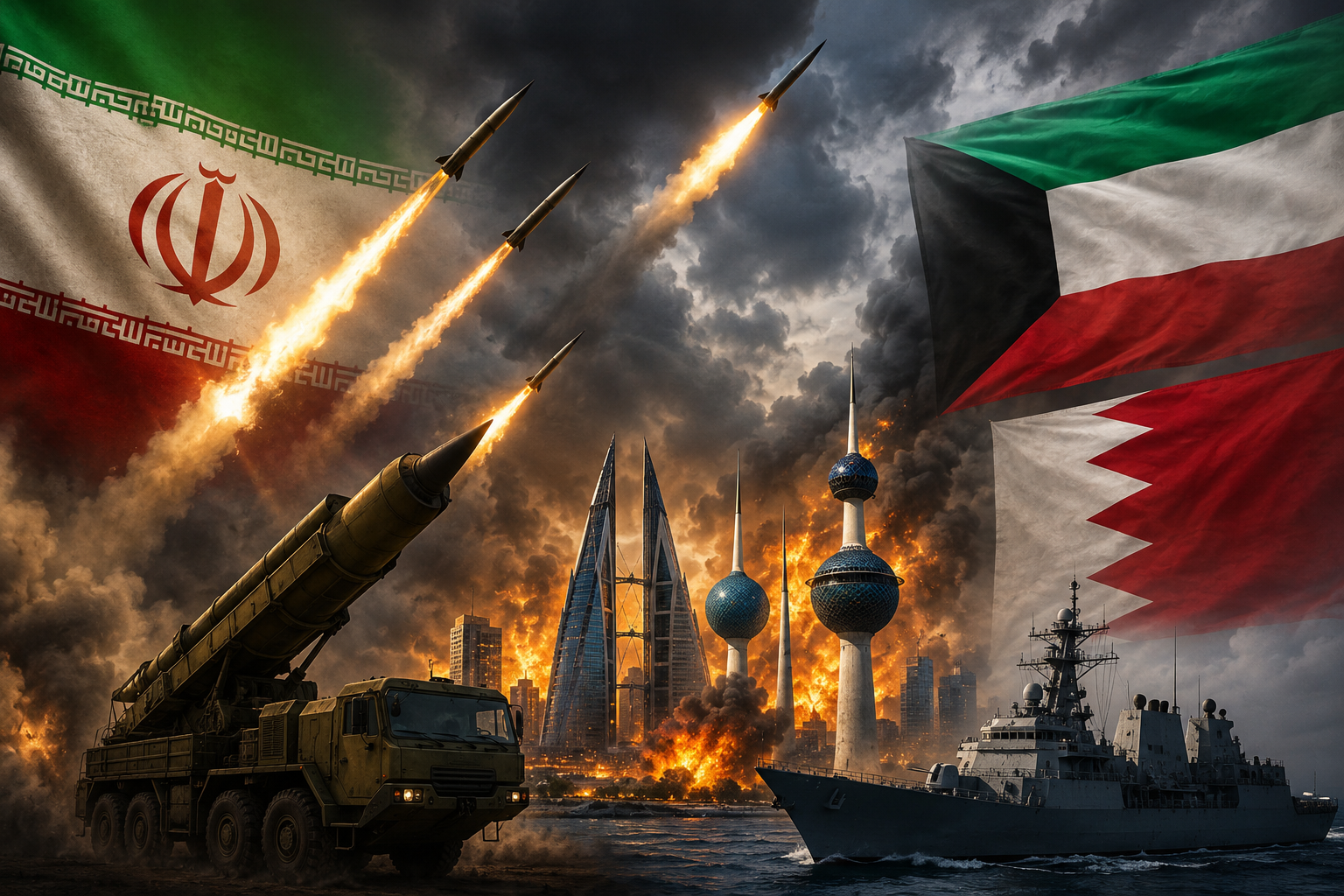
The Middle East has once again been thrust into uncertainty as tensions between the United States and Iran continue to intensify. In a dramatic escalation, Iran launched missiles and drones toward Kuwait and Bahrain after the US military reportedly shot down Iranian drones and carried out strikes on Iranian radar installations. The latest developments have raised fears of a wider regional conflict and renewed concerns about global economic stability.
The phrase Iran Targets Kuwait and Bahrain quickly dominated international headlines after both Gulf nations activated air raid alerts and took emergency defensive measures. The incident marks one of the most serious confrontations in the region since the fragile ceasefire between Iran and its adversaries came under increasing pressure.
Iran Targets Kuwait and Bahrain Following US Military Action
The latest crisis began when US Central Command announced that American forces had intercepted four Iranian drones that were allegedly heading toward the strategic Strait of Hormuz. According to US officials, the drones posed an immediate threat to maritime traffic in one of the world’s most important shipping routes.
In addition to intercepting the drones, the US military reportedly targeted Iranian coastal radar facilities to prevent further attacks. Hours later, reports emerged that Iran Targets Kuwait and Bahrain through a series of missile and drone launches aimed at locations linked to US military operations in the Gulf.
Authorities in Bahrain immediately activated air raid sirens, urging residents to seek shelter and follow emergency instructions. Kuwait’s military also confirmed that its defense systems were responding to incoming aerial threats.
Why Kuwait and Bahrain Were Targeted
Iran’s Revolutionary Guards claimed responsibility for the attacks, stating that military installations associated with US forces were their primary targets. Iranian media reports suggested that the Ali Al Salem Air Base and facilities connected to the US Fifth Fleet were among the intended objectives.
The announcement that Iran Targets Kuwait and Bahrain has significantly increased anxiety across the Gulf region. Both countries host important US military assets, making them strategically important in any confrontation involving Washington and Tehran.
While Iran described the operation as retaliation for American military actions, US officials denied claims that major American facilities suffered significant damage.
Growing Concerns Over Regional Stability
The fact that Iran Targets Kuwait and Bahrain has alarmed governments throughout the Middle East. Regional leaders fear that continued military exchanges could undermine ongoing diplomatic efforts aimed at preserving peace.
Over recent months, international mediators have attempted to extend ceasefire agreements and restart negotiations surrounding Iran’s nuclear program. However, repeated military incidents have complicated those efforts.
Security analysts warn that any further escalation could draw additional regional actors into the conflict, creating broader instability that extends far beyond the Gulf.
Impact on Global Energy Markets
One of the most immediate consequences after Iran Targets Kuwait and Bahrain has been increased volatility in global energy markets. The Strait of Hormuz remains a crucial route for oil and natural gas exports, with a significant percentage of the world’s energy supply passing through the waterway.
Investors reacted nervously to reports of military activity near the strait. Energy prices climbed as traders feared potential disruptions to shipping operations. Even temporary interruptions in Gulf energy exports can have substantial effects on global fuel prices.
Economic experts note that prolonged instability could increase inflationary pressures in many countries already struggling with economic challenges.
Humanitarian Concerns Continue to Rise
Beyond military and economic implications, humanitarian organizations have expressed concern about the broader impact of the conflict. The World Food Programme has warned that rising energy and transportation costs linked to ongoing tensions are contributing to food insecurity in vulnerable regions.
As Iran Targets Kuwait and Bahrain, experts fear that prolonged conflict could worsen living conditions in developing nations that rely heavily on imported food and fuel. Countries already facing economic hardship may experience additional pressure due to higher global commodity prices.
The WFP estimates that millions of people around the world could face increased difficulty accessing essential food supplies if instability continues.
Trump Faces Pressure to Deliver a Diplomatic Solution
US President Donald Trump continues to face growing pressure to prevent the conflict from expanding further. While speaking to reporters, Trump expressed confidence that negotiations could eventually produce a favorable outcome.
However, the situation remains complicated. The fact that Iran Targets Kuwait and Bahrain despite ongoing diplomatic efforts highlights the fragile nature of current negotiations.
American and Iranian officials have reportedly been discussing potential extensions to ceasefire arrangements while also addressing concerns related to Iran’s nuclear activities. Nevertheless, significant disagreements remain, making a long-term agreement difficult to achieve.
Iran’s Military Capabilities Remain a Key Issue
Another major concern for policymakers is the extent of Iran’s remaining military capabilities. Recent statements from US officials suggest that Iran still retains a substantial inventory of missiles and drones despite previous military operations.
The incident in which Iran Targets Kuwait and Bahrain demonstrates that Tehran continues to possess the ability to project force across the region. Military analysts believe that Iran’s missile and drone programs remain among its most important strategic tools.
This reality complicates efforts to establish a lasting ceasefire and increases the importance of diplomatic engagement.
The Risk of a Wider Conflict
Many observers fear that continued exchanges between Iran and the United States could trigger a broader regional war. The latest incident, where Iran Targets Kuwait and Bahrain, has highlighted how quickly localized military actions can expand into wider confrontations.
Neighboring countries remain on high alert as governments monitor developments closely. International organizations have repeatedly called for restraint and urged all parties to avoid actions that could further inflame tensions.
The coming weeks may prove critical in determining whether diplomatic negotiations can regain momentum or whether military escalation will continue.
Conclusion
The situation in the Gulf remains highly volatile as Iran Targets Kuwait and Bahrain following US military strikes on Iranian assets. The exchange has intensified regional security concerns, shaken energy markets, and complicated ongoing diplomatic efforts aimed at preserving peace.
As world leaders monitor developments, the priority remains preventing further escalation while pursuing meaningful dialogue. Whether diplomacy succeeds or tensions continue to rise will have significant consequences not only for the Middle East but also for the global economy and international security.