Shock Threat Can 1 One Nation Orange Wave Upend Victoria Election?
Shock Threat: Can One Nation’s Rising Wave Upend the Victorian Election?
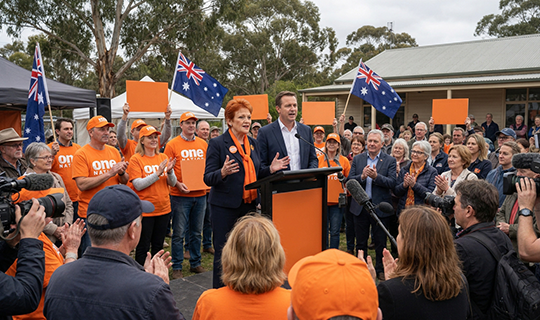
As Victoria hurdles toward the November 28 state election, political commentators and major party strategists are scrambling to answer one crucial question: Shock Threat Can Pauline Hanson’s One Nation genuinely disrupt the state’s long-standing political order, or is the talk of an impending “orange wave” merely campaign bluster?
With voters increasingly disillusioned by mainstream options, polling numbers suggest a genuine political earthquake could be brewing. Yet behind the scenes, the party is grappling with candidate scandals, internal friction, and a curiously low-profile campaign from its national leader, Pauline Hanson. Despite these compounding headaches, the potential Shock Threat Can not be easily dismissed by either the incumbent Labor government or the Coalition opposition.
Where Has Pauline Hanson Been?
In the critical final stretch of what should be one of the most consequential campaigns in One Nation’s history, voters on the ground have noticed a glaring absence: Pauline Hanson herself has spent minimal time on the campaign trail in Victoria.
Critics and political rivals have seized on this vanishing act, suggesting that Hanson’s absence signals a lack of confidence or a party in disarray. However, One Nation headquarters has vehemently rubbished these claims. When pressed on why their iconic figurehead has kept such a low profile, a party spokesperson pushed the spotlight back onto Federal leadership.
“Instead of manufacturing fairy tales, media should be asking why the Prime Minister has been avoiding Victoria,” a spokesperson told reporters. “Senator Hanson has visited Victoria several times in the lead up to the state election, much more than Prime Minister Albanese. She spent six days in Victoria in October and four days in November so far, and she will be back again before 28 November.”
For observers asking if this Shock Threat Can survive without Hanson constantly rallying crowds, the party maintains that boots-on-the-ground leadership is firmly in the hands of Victorian state leader Warren Pickering. Pickering has spent the past month crisscrossing the state, shouldering the heavy lifting while absorbing intense media scrutiny.
Surging Polls: Real Numbers Behind the Threat
Despite Hanson’s limited appearances, the latest data from Roy Morgan Research sent shockwaves through Victorian political circles. The late October survey placed One Nation on Labor’s heels at 22 percent of the primary vote, compared to the Australian Labor Party’s (ALP) 22.5 percent, with the Coalition leading at 29.5 percent.
This unprecedented level of support indicates that a Shock Threat Can reshape the entire parliamentary landscape. Roy Morgan’s projections indicate that One Nation is well-positioned to snatch key eastern Victorian electorates:
-
Hastings
-
Morwell
-
Pakenham
For traditional party strategists, the realization that this Shock Threat Can decisively split the regional and outer-suburban working-class vote has sparked urgent recalibration. Even if One Nation does not secure a sweeping lower house majority, pulling over a fifth of the statewide vote will fundamentally alter preference flows across dozens of marginal seats.
Balance of Power in the Legislative Council?
While some overzealous supporters are forecasting an outright “orange wave” sweeping through Victoria, political scientists urge a more grounded perspective. Dr. Nicholas Barry, a senior lecturer in politics at La Trobe University, suggests that the lower house might remain elusive, but the Upper House is a completely different story.
“With polling in the low 20s, you think that they would be in the mix in a number of seats, particularly in rural and regional areas, and some of the other suburban electorates as well,” Barry observed. He notes that realistic estimates place One Nation on track to claim between eight and twelve Upper House seats.
This Shock Threat Can effectively hand One Nation the balance of power in the Victorian Legislative Council. In such a scenario, whoever forms government would be forced to negotiate every piece of legislation, budget costing, and policy reform with Warren Pickering’s bloc. This outcome proves that a Shock Threat Can hold Victorian governance hostage without ever winning a seat in the Legislative Assembly.
Internal Chaos and Candidate Scandals
The road to November 28 has been anything but smooth. In the space of just two weeks, One Nation swiftly lost two candidates amid controversy:
-
Preston: Candidate Franco Guardiani was disendorsed following problematic social media posts.
-
Melbourne: Candidate Matthew Collins stepped down after reports surfaced regarding highly sexualized and Islamophobic comments.
These vetting failures have intensified pressure on Pickering, who has faced persistent questions regarding candidate quality and the party’s reluctance to release fully costed policies. Yet, experts believe these controversies may not hurt One Nation as much as critics hope.
Dr. Barry suggests that while undecided moderate voters might be alienated, entrenched anti-establishment voters are unlikely to jump ship. A Shock Threat Can often survive localized scandals because protest voters care far more about registering dissatisfaction with the major parties than about individual candidate misconduct.
Resource Allocation: Eyes on New South Wales?
Another factor explaining Hanson’s muted presence is strategic resource allocation. One Nation candidates in Victoria have reported funding much of their own campaigns, indicating that the federal party is conserving its war chest.
According to analysts, the federal leadership is already eyeing the upcoming New South Wales state election in March, where One Nation historically commands stronger grassroots networks and a proven track record. In regional NSW, One Nation is poised to inflict severe damage on the National Party in rural strongholds.
Even if Victorian operations feel relatively underfunded, the organic momentum behind the party proves that a Shock Threat Can still build without millions in advertising spend, relying instead on anti-government sentiment and online mobilization.
Conclusion: Will the Orange Wave Land?
Whether the “orange wave” crests into a full lower house presence or materializes primarily as an Upper House crossbench, the upcoming Victorian election will test the limits of minor-party influence.
One Nation has demonstrated that even with a low-budget campaign, vetting scandals, and its national leader largely on the sidelines, the underlying dissatisfaction among voters is potent. Major parties ignoring this Shock Threat Can expect a rough awakening on election night. Ultimately, whether this Shock Threat Can fundamentally break the Labor-Coalition duopoly or merely disrupt the Upper House, Victorian politics will likely never be the same after November 28.