
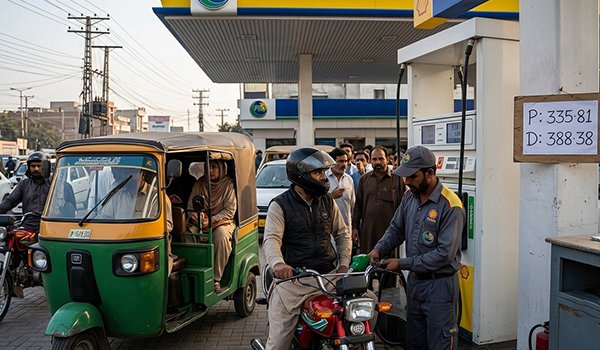
Fuel Shock Govt Hikes Petrol Price by Rs1.63 & Diesel by Rs1.55
Fuel Shock: Govt Hikes Petrol and High-Speed Diesel Prices Amid Global Market Volatility
In a fresh economic development impacting millions of commuters and businesses, another Fuel Shock Govt Hikes Petrol prices alongside high-speed diesel (HSD) across the country. Following the latest notification issued by the Petroleum Division, fuel rates have been adjusted upward to pass on the brunt of international crude market fluctuations.
Consumers across the nation are once again feeling the squeeze as this recent Fuel Shock Govt Hikes Petrol rates right when households were hoping for sustained relief at the pumps. The price adjustments reflect ongoing geopolitical friction in the Persian Gulf, which continues to trigger unpredictable spikes in global energy benchmarks.
Breakdown of the Latest Fuel Price Revisions
According to official notifications released by the Ministry of Energy (Petroleum Division), the government has sanctioned an increase of Rs1.63 per litre on motor gasoline (petrol) and Rs1.55 per litre on high-speed diesel (HSD).
With these updated figures taking effect, consumers face a direct cost adjustment at retail fuel stations nationwide.
| Fuel Type | Old Price (PKR/Litre) | Price Increase (PKR) | New Retail Price (PKR/Litre) |
| Petrol (MS-92) | Rs334.18 | +Rs1.63 | Rs335.81 |
| High-Speed Diesel (HSD) | Rs386.83 | +Rs1.55 | Rs388.38 |
Understanding the context behind this Fuel Shock Govt Hikes Petrol decision requires looking at how international market volatility directly dictates domestic retail rates. For more detailed economic context and live market data, you can read the official update on DAWN News Petroleum Reports or track regulatory press releases via the Oil and Gas Regulatory Authority (OGRA).
Taxes and Heavy Levies: What Are You Paying At the Pump?
While international oil price swings are cited as the main driver, fixed government duties remain a substantial portion of the total cost per litre. Despite public pressure for tax cuts during inflationary cycles, the federal government maintains considerable tax extractions to meet revenue targets.
Currently, the government continues to collect:
-
Rs110 per litre in combined taxes and levies on petrol.
-
Rs96 per litre in taxes and duties on high-speed diesel.
Because tax margins remain high, whenever a Fuel Shock Govt Hikes Petrol costs, the base burden falls squarely on everyday motorists and commercial transporters who cannot opt out of fuel consumption.
Historical Context: From Peak Crisis to Current Rates
To truly appreciate the scope of this update, it helps to look back at the extreme volatility seen earlier this year. When hostilities escalated in late February, fuel prices surged to historical highs across the board.
High-Speed Diesel Trajectory
High-speed diesel started its upward march from Rs281 per litre in late February. Driven by war fears and global supply bottlenecks, HSD hit an all-time peak of Rs520.35 per litre on April 3. While the current price of Rs388.38 is significantly lower than that historical peak, the recent uptick highlights that stabilization remains fragile.
Petrol Trajectory
Petrol followed a similar path, escalating from Rs266 per litre in early March to a staggering peak of Rs458.41 per litre on April 3. Although subsequent months brought gradual pullbacks, the cycle has turned upward again, demonstrating why every Fuel Shock Govt Hikes Petrol cycle causes public anxiety.
To compare historical energy trends and fiscal policies, check out detailed analysis on Business Recorder Market Insights and explore energy consumption reports on The Express Tribune Business Desk.
Transition to Daily Fuel Pricing Mechanism
One of the biggest structural changes in fuel administration has been the shift in pricing frequency. Petroleum Minister Ali Pervaiz Malik announced that petroleum prices are now adjusted on a daily basis rather than weekly or fortnightly.
Former Practice: Weekly / Fortnightly Pricing Revisions
          │
          ▼
New Regulatory Framework: Daily OGRA Pricing Based on 7-Day Global Averages
This decision, backed by the Prime Minister and the Cabinet, delegates full responsibility to OGRA to recalculate prices daily in alignment with international crude movements and exchange rate fluctuations. Consequently, every small fluctuation in global markets can lead to an immediate update, explaining why another Fuel Shock Govt Hikes Petrol notice can arrive on short notice.
Backlash from Fuel Dealers and Trade Associations
The move toward daily price revisions has not been met with universal approval. The All Pakistan Dealers Association officially rejected the daily pricing framework, citing logistical chaos and inventory loss risks.
Petroleum dealers argue that daily adjustments create severe operational hurdles:
-
Inventory Valuation Losses: Fast-changing prices make it difficult to manage stock purchased at older rates.
-
System Calibration: Updating pump meters daily leads to technical delays and friction with customers.
-
Protest Plans: The association announced it is reviewing a potential strike and protest plan to press the government into reverting to weekly or fortnightly cycles.
The friction between regulators and dealers adds another layer of uncertainty whenever news breaks that a Fuel Shock Govt Hikes Petrol and diesel rates.
Socio-Economic Impact on Everyday Citizens
Changes in fuel prices affect nearly every sector of the economy due to direct and indirect supply chain links.
┌─────────────────────────────────────────────────────────────┐
│                   Fuel Price Increase                       │
└──────────────┬────────────────────────────────┬─────────────┘
               │                                │
               ▼                                ▼
  ┌───────────────────────────┐    ┌───────────────────────────┐
  │   Petrol Price Impact     │    │    Diesel Price Impact    │
  └────────────┬──────────────┘    └────────────┬──────────────┘
               │                                │
               ▼                                ▼
  • Two-Wheelers & Rickshaws       • Heavy Freight Transport
  • Private Vehicles & Commuters   • Agricultural Machinery
  • Lower-Middle Class Budgets     • Power Generators & Industry
               │                                │
               └────────────────┬───────────────┘
                                │
                                ▼
               ┌─────────────────────────────────┐
               │  Widespread Food & Goods        │
               │         Inflation               │
               └─────────────────────────────────┘
When a Fuel Shock Govt Hikes Petrol prices, middle and lower-middle-class households bear the immediate burden. Motorcycles, Rickshaws, and small commuter vehicles rely heavily on petrol. Every rupee added to the litre price directly increases daily travel expenses for workers, students, and small business owners.
On the other hand, High-Speed Diesel powers heavy transport trucks, agricultural tractors, goods carriers, and industrial generators. An increase in diesel prices quickly trickles down to farm produce, food transportation, and manufactured goods, fueling broader consumer price index (CPI) inflation.
Compared to niche fuels like kerosene—which sees a minor monthly demand of around 10,000 tonnes—petrol and HSD dominate the market with combined monthly sales of 700,000 to 800,000 tonnes, making them the primary revenue drivers for state coffers.
What Lies Ahead for Oil Markets?
As long as geopolitical tensions linger around major trade routes in the Middle East, consumers should prepare for continued volatility. With OGRA actively adjusting prices daily, future relief or price increases will depend entirely on how international crude benchmarks trade over seven-day rolling windows.
For now, citizens must navigate another economic hurdle as this latest Fuel Shock Govt Hikes Petrol to Rs335.81 and diesel to Rs388.38 per litre. Staying informed through reliable updates and planning personal transportation budgets carefully will be key in managing these ongoing economic shifts.


Pingback: Devastating Quake 7.1 Magnitude Tremor Strikes Kumamoto