
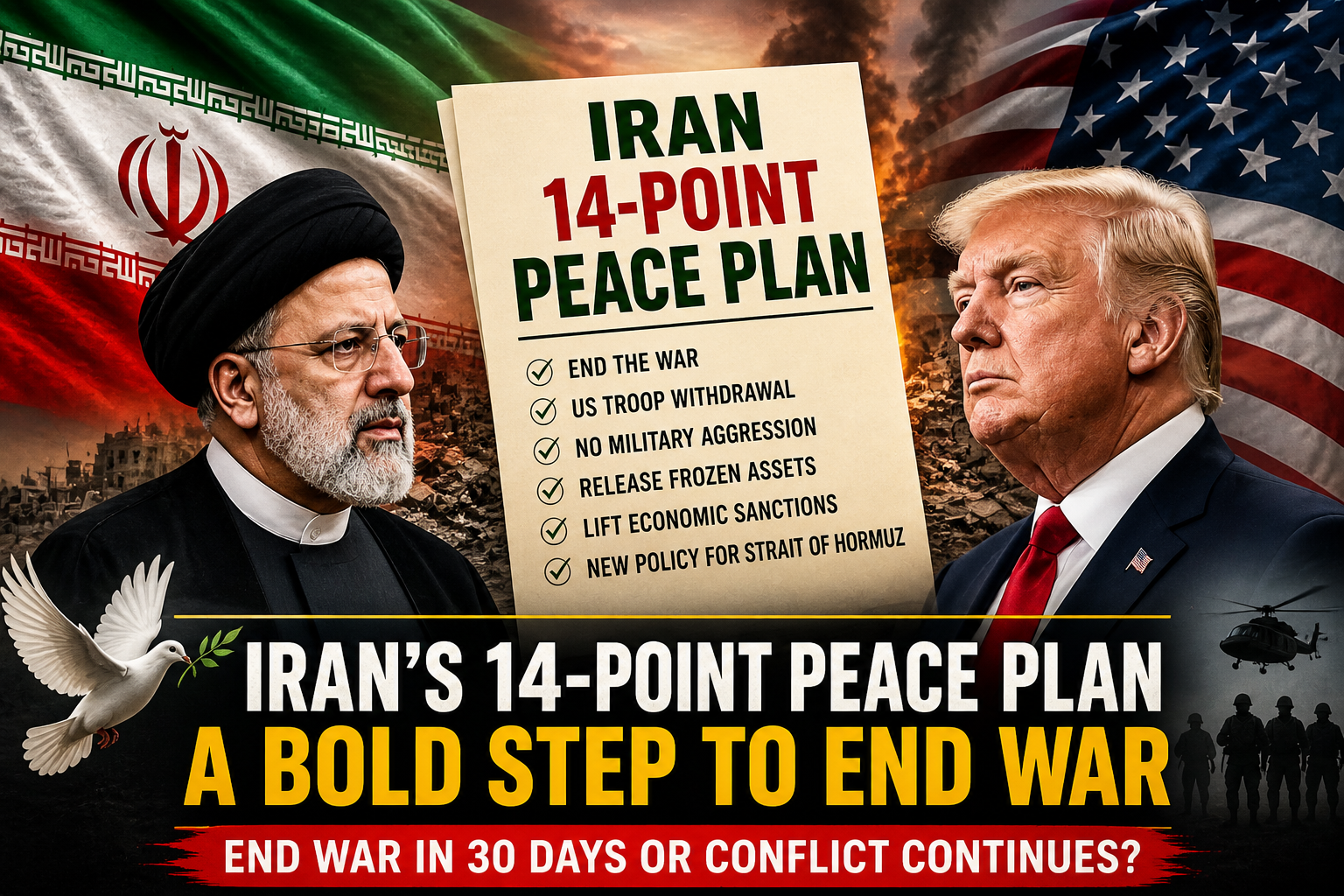
Iran 14-Point Peace Plan Sparks 1 Bold Push to End War Fast
Iran 14-Point Peace Plan: A Bold Move to End War Within 30 Days
The Middle East conflict has entered a critical phase as Iran introduces a comprehensive diplomatic proposal aimed at ending hostilities. The Iran 14-Point Peace Plan has quickly become a major topic in global politics, offering a structured path toward peace while setting strict conditions for the United States.
Unlike previous negotiations, this proposal goes beyond temporary solutions. Instead of extending a ceasefire, the Iran 14-Point Peace Plan demands a complete and permanent end to the war within just 30 days. This ambitious timeline has drawn both attention and skepticism from international observers.
A New Approach to Peace Talks
According to reports, Iran delivered the proposal through diplomatic channels using Pakistan as a mediator. The Iran 14-Point Peace Plan reflects Tehran’s growing urgency to resolve the conflict, which has already caused significant human and economic damage.
The United States had earlier suggested a two-month ceasefire to reduce tensions. However, Iran rejected this idea, arguing that temporary pauses only delay the inevitable. Instead, the Iran 14-Point Peace Plan focuses on resolving all major issues in a single, time-bound framework.
This approach signals a shift in strategy. Iran is no longer interested in gradual negotiations but is pushing for a decisive agreement that addresses the root causes of the conflict.
Key Demands in the Proposal
The Iran 14-Point Peace Plan outlines several important conditions aimed at ensuring long-term stability. One of the central demands is a complete end to military operations across all fronts, including conflict zones involving regional actors like Lebanon.
Another major component of the Iran 14-Point Peace Plan is the withdrawal of US troops from areas surrounding Iran. Tehran views the presence of foreign forces as a major source of tension and believes their removal is essential for peace.
The proposal also includes guarantees against future military aggression. Iran wants clear assurances that similar conflicts will not occur again, making this a key pillar of the Iran 14-Point Peace Plan.
Economic Relief and Sanctions
Beyond military concerns, the Iran 14-Point Peace Plan addresses economic issues that have heavily impacted the country. Iran is calling for the release of its frozen assets and the lifting of international sanctions.
These economic demands are critical for Tehran, as years of restrictions have weakened its economy. By including these conditions, the Iran 14-Point Peace Plan aims to create a balanced agreement that benefits both sides.
Experts believe that economic relief could play a major role in stabilizing the region. However, critics argue that lifting sanctions too quickly may reduce leverage in future negotiations.
Strait of Hormuz Policy Changes
Another significant element of the Iran 14-Point Peace Plan involves the Strait of Hormuz, one of the world’s most important shipping routes. Iran has proposed a new policy to manage navigation through this critical passage.
Given that a large portion of global oil supply passes through the strait, any agreement related to it carries global implications. The Iran 14-Point Peace Plan seeks to ensure secure and fair access while maintaining Iran’s strategic interests.
This aspect of the proposal has attracted attention from global markets, as stability in the Strait of Hormuz directly affects oil prices and international trade.
Official Statements and Diplomatic Signals
Iranian officials have expressed confidence in the proposal. Deputy Foreign Minister Kazem Gharibabadi stated that the Iran 14-Point Peace Plan is designed to bring a permanent end to the conflict.
He emphasized that the responsibility now lies with the United States. According to him, Washington must decide whether to pursue diplomacy or continue with confrontation.
On the other hand, US President Donald Trump has responded cautiously. While he acknowledged receiving the proposal, he also expressed doubts about its acceptability.
Challenges Ahead
Despite its comprehensive nature, the Iran 14-Point Peace Plan faces several challenges. The 30-day deadline is seen by many analysts as overly ambitious. Negotiating such complex issues in a short period may prove difficult.
Additionally, mutual distrust between the two countries remains a major obstacle. Even if both sides agree in principle, implementing the terms of the Iran 14-Point Peace Plan could take much longer.
There are also concerns about regional actors who may influence the outcome. Countries involved directly or indirectly in the conflict could impact the success of the proposal.
Global Reactions
The international community is closely watching the situation. Many countries have welcomed the Iran 14-Point Peace Plan as a positive step toward peace. However, others remain cautious, waiting to see how the United States responds.
Energy markets, in particular, are sensitive to developments in the region. Any progress toward peace could stabilize oil prices, while failure could lead to further volatility.
Diplomatic experts suggest that even if the plan is not accepted in its current form, it could serve as a starting point for future negotiations.
A Defining Moment
The Iran 14-Point Peace Plan represents a critical moment in the ongoing conflict. It highlights Iran’s willingness to engage in diplomacy while also asserting its demands.
For the United States, the proposal presents a difficult choice. Accepting the terms could lead to peace but may require significant concessions. Rejecting it could prolong the conflict and increase risks in the region.
As discussions continue, the world is watching closely. The outcome of the Iran 14-Point Peace Plan could shape the future of Middle East politics and global stability.
Final Thoughts
In a region long defined by conflict, the Iran 14-Point Peace Plan offers a rare opportunity for resolution. While challenges remain, the proposal signals a serious attempt to move toward peace.
Whether this effort succeeds will depend on the willingness of both sides to compromise and prioritize long-term stability over short-term gains. One thing is certain: the coming weeks will be crucial in determining the future of this conflict.


Pingback: Tearing Her Skin Apart 1 Shocking Crisis Hits Sydney Family
Pingback: Iran Issues 1 Fierce Warning as Trump Pushes Risky Hormuz