Iran Demands 7 Firm Steps to Reopen Blocked Strait of Hormuz Route
The geopolitical standoff in the Middle East has entered a critical new phase as Tehran stands firm on its strategic maritime boundary. In a decisive announcement following the receipt of a diplomatic response from Washington, Iranian Parliament Speaker Mohammad Bagher Ghalibaf made it clear that the vital maritime choke point will remain shut.
As Iran Demands 7 Firm Steps rooted in the Islamabad Memorandum of Understanding (MoU), the Islamic Republic insists that the United States must meet all its key stipulations before any international shipping traffic can safely resume.
The announcement highlights growing frustration in Tehran over what Iranian leadership describes as American stalling tactics and unilateral demands. Speaking directly to parliament, Ghalibaf declared that the era of Washington dictating terms while dragging out negotiations has come to an end.
As Iran Demands 7 Firm Steps, Iranian authorities emphasize that their stance is entirely clear, unyielding, and non-negotiable until the conditions agreed upon during June’s interim framework are fully satisfied.
Diplomatic Impasse and Maritime Security
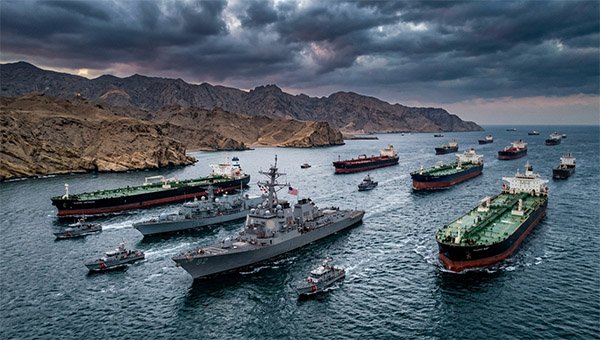
The Strait of Hormuz, through which a significant portion of the world’s petroleum flows, remains the centerpiece of the ongoing crisis. Tehran’s position has hardened as diplomatic efforts through international mediators continue to stall. Officials maintain that as Iran Demands 7 Firm Steps, any attempt to bypass the framework laid out in the Islamabad MoU will be met with immediate resistance.
“The position of the Islamic Republic of Iran is completely clear and firm, and the Strait of Hormuz will not be opened until our seven conditions, based on the Islamabad Memorandum of Understanding, are met,” Ghalibaf stated, according to reports by Nournews.
Iranian Foreign Minister Abbas Araghchi reinforced this perspective during an address to foreign ambassadors, asserting that military aggression or economic pressure will fail to force Tehran’s hand. Araghchi reiterated that there is no military solution to the conflict, warning that any further armed confrontation by hostiles will prompt a stronger defense than before.
Dual Strategy: Military Readiness Meets Diplomacy
Iranian leadership has adopted a dual posture of defense and diplomacy. Speaker Ghalibaf highlighted that Tehran is “neither excited nor intimidated” by military movements or sanctions from Washington. While diplomats continue utilizing international channels to press their case, the Iranian armed forces remain fully deployed in the region.
As Iran Demands 7 Firm Steps on the diplomatic stage, the nation’s military apparatus is actively preparing for extended readiness. The Iranian army recently announced plans to launch a volunteer training initiative aimed at preparing citizens for national defense. Officials assert that while diplomacy remains the primary path to enforcing the rights of the Iranian people, military strength will be used to ensure total tactical superiority if challenged.
                 ========================================
                 SUMMARY OF IRAN'S KEY DIPLOMATIC DEMANDS
                 ========================================
                 1. Full adherence to the Islamabad MoU
                 2. Lifting of maritime and economic sanctions
                 3. Respect for sovereign civilian nuclear rights
                 4. Implementation of all 7 interim conditions
                 ========================================
Regional Operations and American Naval Deployment
While Iran Demands 7 Firm Steps before easing its blockade, the United States continues its military presence in surrounding international waters. The Nimitz-class aircraft carrier USS George H.W. Bush, carrying roughly 4,800 personnel, recently docked off Phuket, Thailand, for a scheduled rest-and-recreation port call following months of intense operations in the Arabian Sea.
The deployment of heavy naval assets underscores the persistent security friction in the region. However, US President Donald Trump recently suggested in public remarks that Tehran had “virtually given up” plans for nuclear weapons development—a claim long aligned with Iranian official statements that its nuclear efforts remain purely peaceful and subject to international verification. Despite these assertions, economic sanctions and naval standoffs continue to dictate the terms of engagement.
Firm Stance on Economic and Nuclear Sovereignty
Iranian officials, including President Masoud Pezeshkian, have repeatedly confirmed that Tehran is willing to address international concerns regarding uranium enrichment provided all foreign sanctions are removed. However, structural concessions without proportional relief remain off the table.
As Iran Demands 7 Firm Steps, the core focus remains on compelling Washington to fulfill its promises under the Islamabad MoU. Until those conditions are met in full, the critical oil transit route will remain closed, keeping global energy markets on edge and ensuring the standoff remains the primary focus of international diplomacy.
The world watches closely as Iran Demands 7 Firm Steps to resolve the dispute. With Tehran refusing to yield under external pressure and Washington weighing its strategic options, the fulfillment of the Islamabad Memorandum remains the sole path toward reopening the Strait of Hormuz.