
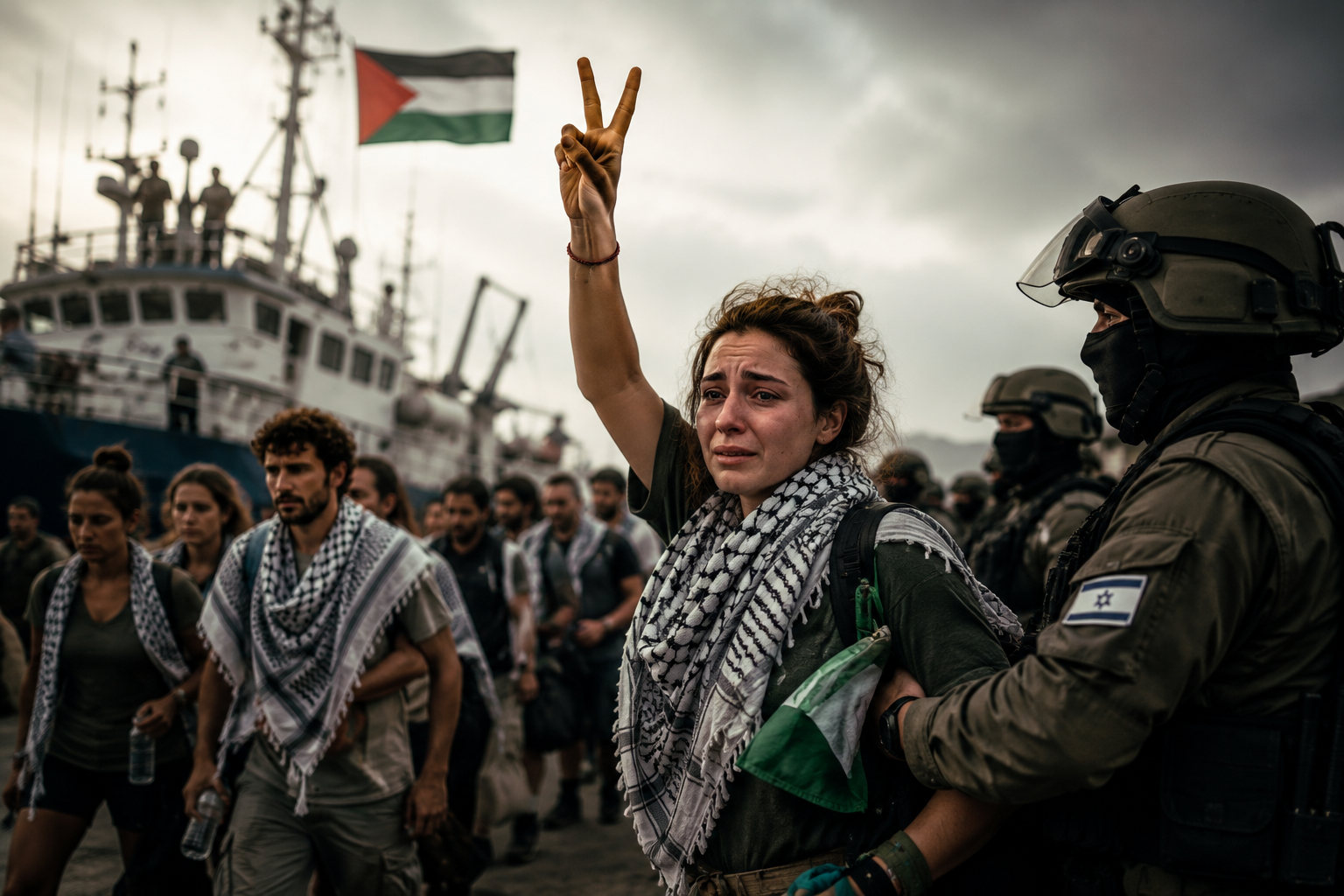
Israel Deports Gaza Aid Flotilla Activists Amid Global Outcry: 7 Shocking Facts
Israel Deports Gaza Aid Flotilla Activists Amid Global Anger and Human Rights Concerns
The latest humanitarian crisis in the Middle East has sparked worldwide outrage after Israel Deports Gaza Aid Flotilla Activists who were intercepted while attempting to deliver aid to Gaza. The incident has triggered criticism from several countries, human rights organizations, and political leaders who condemned both the arrests and the treatment of the activists in Israeli custody.
The controversy began when Israeli naval forces intercepted a large humanitarian flotilla carrying hundreds of foreign activists sailing toward Gaza. The mission, organized under the Global Sumud Flotilla campaign, aimed to challenge the naval blockade and deliver humanitarian assistance to Palestinians suffering from severe shortages of food, medicine, and essential supplies.
As news spread that Israel Deports Gaza Aid Flotilla Activists, international reactions intensified. Activists from countries including Turkiye, France, Spain, Italy, Belgium, and Jordan were detained after Israeli forces boarded the vessels in international waters. Many participants later described harsh treatment, physical abuse, and humiliating conditions during detention.
Activists Return Home After Deportation
In Turkiye, emotional scenes unfolded at Istanbul Airport as dozens of returning activists were welcomed by supporters waving Palestinian flags and chanting slogans for peace. Some of the activists arrived wearing keffiyehs while flashing peace signs to crowds gathered to greet them.
Turkish authorities arranged charter flights to evacuate hundreds of participants. Reports confirmed that more than 400 people were transported safely, including dozens of Turkish nationals. Medical teams and ambulances were also dispatched to assist those injured during the incident.
The global spotlight intensified after Israel Deports Gaza Aid Flotilla Activists became one of the most discussed international political topics of the week. Several activists claimed they faced violence during the raids and while being held in detention centers.
Belgian activist Julien Cabral revealed that he suffered injuries after allegedly being punched by Israeli marines during the boarding operation. According to his testimony, detainees were verbally abused and denied proper access to food, water, and sanitary supplies.
Italian journalist Alessandro Mantovani also shared disturbing details after his deportation. He stated that detainees were transported in handcuffs with chains around their feet before being placed on deportation flights. Mantovani further alleged that some activists were kicked and punched while in custody.
International Criticism Grows
The moment Israel Deports Gaza Aid Flotilla Activists, governments around the world quickly condemned the operation. Foreign ministers from multiple nations described the raids as violations of international law and humanitarian principles.
Countries such as France, Spain, Canada, Portugal, and the Netherlands summoned Israeli ambassadors to formally express their concerns. European leaders also criticized the treatment of detainees, especially after controversial footage emerged online showing Israeli officials mocking activists during detention.
European Council President Antonio Costa publicly stated that the treatment of the activists was “completely unacceptable.” Italy’s Foreign Minister Antonio Tajani demanded an official apology and called for discussions on possible sanctions against Israeli officials involved in the incident.
The phrase Israel Deports Gaza Aid Flotilla Activists continued trending across international media outlets as legal experts questioned the legality of intercepting civilian aid ships in international waters.
Ben-Gvir Video Sparks More Outrage
Public anger intensified after Israeli National Security Minister Itamar Ben-Gvir shared a video online appearing to mock detained activists. In the footage, activists were shown kneeling with their hands restrained behind their backs while Ben-Gvir made sarcastic remarks.
The video triggered backlash not only internationally but also within Israel itself. Critics argued that the footage damaged Israel’s global image and increased diplomatic pressure on Prime Minister Benjamin Netanyahu’s government.
Even Netanyahu issued a rare criticism of Ben-Gvir, saying the minister’s actions did not reflect Israel’s official values. However, Netanyahu defended the interception operation itself, insisting Israel had the right to prevent flotillas from breaching the Gaza blockade.
Still, many observers believe the situation became a public relations disaster after Israel Deports Gaza Aid Flotilla Activists under highly controversial circumstances.
Human Rights Organizations Raise Concerns
Several human rights groups have called for independent investigations into the flotilla raid. Legal organizations argue that the interception may have violated international maritime law because the vessels were reportedly operating in international waters when Israeli forces boarded them.
The legal center Adalah stated that most detainees were deported from Ramon Airport in southern Israel, while others departed through Ben Gurion Airport near Tel Aviv. Lawyers representing activists claimed detainees experienced intimidation and were denied proper legal access during their detention.
As Israel Deports Gaza Aid Flotilla Activists, advocacy groups continue demanding accountability and transparency regarding the treatment of those arrested.
Humanitarian organizations also warned that the focus should remain on the worsening humanitarian crisis inside Gaza. Aid agencies say millions of Palestinians are facing severe shortages of food, medicine, and clean water due to ongoing conflict and restrictions.
Gaza Blockade Remains a Global Flashpoint
The flotilla incident has once again drawn international attention to the long-running blockade on Gaza. Supporters of the aid mission argued that the flotilla was a peaceful humanitarian effort intended to deliver urgently needed assistance.
Israel, however, maintains that the blockade is necessary for national security and to prevent weapons from reaching militant groups operating in Gaza.
The debate surrounding the blockade intensified after Israel Deports Gaza Aid Flotilla Activists, with many governments urging both sides to avoid escalation and prioritize humanitarian solutions.
Political analysts believe the incident may further strain Israel’s diplomatic relationships with several European nations and Middle Eastern countries. Public demonstrations supporting the flotilla activists have already taken place in cities across Europe, Turkiye, and Latin America.
Why the Story Matters Globally
The reason this story has attracted so much international attention is because it combines humanitarian concerns, international law, diplomacy, and human rights issues into one highly emotional event.
When Israel Deports Gaza Aid Flotilla Activists, it does not only affect the individuals involved. The incident also impacts global discussions about freedom of navigation, humanitarian access, and the treatment of civilians during political conflicts.
For many activists, the flotilla mission represented solidarity with Palestinians living under difficult conditions. For Israel, the operation was framed as a security measure designed to protect national borders.
The conflicting narratives have fueled intense online debate, with social media users around the world sharing footage, testimonies, and political reactions related to the incident.
Conclusion
The international reaction after Israel Deports Gaza Aid Flotilla Activists shows how sensitive and globally significant the Gaza conflict remains. While deported activists continue returning to their home countries, calls for investigations and diplomatic accountability are growing louder.
The flotilla incident has become more than just a maritime confrontation. It now represents a broader global conversation about humanitarian rights, international law, and the ongoing suffering in Gaza.
As governments continue responding to the controversy, pressure is mounting on world leaders to address not only the treatment of the activists but also the deeper humanitarian crisis affecting millions of Palestinians.



Pingback: Historic Iran Mission CDF Asim Munir Leads High-Stakes 2026