
Cancer Devastating Blow $6,500 Gap Leaves Survivors Without Vital Support
Cancer Devastating Blow: $6,500 Cost Leaves Australian Survivor Without an Eye Prosthesis
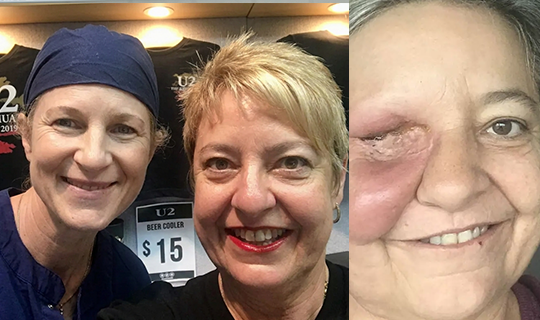
Australian cancer survivor Angela Little, stepping outside her home often means dealing with unwanted attention from strangers. After losing her eye to an aggressive form of cancer, she has spent years facing medical complications, painful surgeries and emotional challenges. Now, despite finally receiving medical clearance for an artificial eye, another major obstacle stands in her way: the $6,500 cost.
Little, who lives in Sydney, has developed a sense of humour about her appearance, even joking that she sometimes scares small children. However, behind her humour is a difficult journey that highlights the financial and emotional struggles many cancer survivors face after life-saving treatment.
Her experience represents a Cancer Devastating Blow that has affected not only her physical health but also her confidence, independence and quality of life.
From Sinus Infection to Aggressive Cancer Diagnosis
Little’s medical journey began when doctors initially believed she was suffering from chronic sinusitis. However, the condition turned out to be an aggressive squamous cell carcinoma, a type of skin cancer that can affect areas of the head and neck.
On Christmas Eve in 2019, she underwent emergency surgery to remove her eye after doctors discovered the seriousness of the disease.
Little recalled how quickly her situation changed, explaining that what initially appeared to be a short hospital stay eventually became a life-changing medical emergency.
She later discovered that the cancer had spread towards her brain and lymph nodes, making further treatment necessary.
The diagnosis marked the beginning of an extremely difficult period in her life, with years of medical procedures required to manage the disease and its complications.
Years of Cancer Treatment and Reconstructive Surgery
Following the removal of her eye, Little underwent an extensive treatment programme that included 30 radiation sessions, six rounds of chemotherapy and five major reconstructive operations.
Although these treatments were necessary to fight the cancer, they also caused severe damage to her facial structure.
Radiation treatment weakened the bones in her face, eventually causing her nose to collapse. Persistent infections created further complications, forcing surgeons to remove her eyelids and leaving an empty eye socket.
The physical consequences of treatment have continued to affect her daily life.
For Little, this Cancer Devastating Blow has meant more than surviving a serious illness. It has also involved learning to live with permanent changes to her appearance and the psychological impact of repeated medical procedures.
After years of managing complications, she has finally received medical clearance to be fitted with a prosthetic eye.
However, the cost of getting one remains a major concern.
Why Does an Artificial Eye Cost $6,500?
Little has been told that her prosthetic eye will cost approximately $6,500, an amount she cannot easily afford.
She is currently unemployed and does not have private health insurance. Paying the full amount herself would place considerable pressure on her finances.
The situation is particularly difficult because an artificial eye is not a permanent solution. According to the information provided, the prosthesis generally needs replacing after approximately four years.
Little believes that receiving an artificial eye should be considered an essential part of cancer recovery rather than an optional cosmetic procedure.
She argues that losing an eye was not her choice and that survivors should not have to pay thousands of dollars simply to restore some normality to their lives.
For her, the issue is not about improving her appearance for other people. It is about being able to look in the mirror without constantly being reminded of the physical damage caused by cancer.
This Cancer Devastating Blow has also affected her mental health, making access to an affordable prosthesis particularly important.
Why Medicare and NDIS Do Not Cover Facial Prostheses
One of the biggest problems highlighted by Little’s experience is the limited financial support available for people who need external facial prostheses in Australia.
These devices are often classified as elective or cosmetic products, meaning they generally do not receive funding through Medicare or the National Disability Insurance Scheme (NDIS).
As a result, patients who lose an eye, nose or ear because of cancer treatment can face substantial personal expenses. Cancer Devastating Blow
Health advocates argue that this funding arrangement creates an unfair difference between patients who lose different parts of their bodies during cancer treatment.
For example, women who lose a breast because of cancer can receive financial assistance through the federal External Breast Prostheses Reimbursement Program.
Under that programme, eligible patients can receive up to $400 towards an external breast prosthesis. Cancer Devastating Blow
However, people who require artificial eyes, ears or noses following life-saving cancer treatment do not receive equivalent support through a comparable national programme.
This funding gap has become a major concern for cancer survivors and healthcare organisations. Cancer Devastating Blow
Government Review Highlights Inequality in Australia
An independent review commissioned by Australia’s Department of Health was completed in August 2025 and publicly released in May 2026.
The report examined the existing arrangements for funding external facial prostheses and highlighted significant gaps in the system.
It found that Australia does not currently have a national programme offering broad financial coverage for people who require facial prostheses.
Only a limited number of patients can access assistance through specific arrangements, including private health insurance and support from the Department of Veterans’ Affairs.
The review also highlighted differences between Australia and several other developed countries.
Canada, the Netherlands, New Zealand and the United Kingdom have established public funding arrangements that help patients access facial prostheses. Cancer Devastating Blow
New Zealand, the Netherlands and the UK provide fully funded prostheses through their respective arrangements, while Canada offers partial public funding.
The findings have strengthened calls for Australia to reconsider its current approach. Cancer Devastating Blow
For many patients, this Cancer Devastating Blow is made worse by a funding system that provides limited assistance after they have already endured expensive and exhausting medical treatment. Cancer Devastating Blow
National Facial Prostheses Programme Could Cost Millions
The independent review also examined the potential financial cost of introducing a dedicated national programme in Australia.
According to the report, establishing such a scheme could cost between $2.91 million and $6.21 million annually over the next decade.
Health advocates believe the estimated expenditure should be considered alongside the significant benefits for patients who need artificial facial features after cancer treatment.
A national programme could help eligible patients access prosthetic eyes, ears and noses without facing overwhelming out-of-pocket expenses.
It could also establish clearer eligibility requirements and create a more consistent system across different Australian states and territories.
Cancer Advocates Demand Government Action
Head and Neck Cancer Australia chief executive Nadia Rosin has called on the federal government to take meaningful action following the release of the independent review.
Rosin said the government now has both the evidence and recommendations needed to address the funding inequality. Cancer Devastating Blow
The federal government has recently established a Prostheses Equity Working Group to examine how the recommendations from the KPMG review could be implemented.
However, cancer advocates remain concerned that establishing a working group does not automatically guarantee financial assistance for patients. Cancer Devastating Blow
Rosin stressed that people should have access to the prostheses they need regardless of their financial circumstances or where they live.
Her organisation wants the government to make a clear commitment towards establishing a nationally funded programme.
Government Responds to Calls for Better Support
A spokesperson for Australia’s Department of Health acknowledged the serious impact of head and neck cancer on patients and their families.
The department also recognised that facial prostheses can play an important role in recovery, social participation and overall quality of life.
According to the spokesperson, improving access requires cooperation between federal and state governments, healthcare services and specialist providers.
The government is continuing discussions with relevant stakeholders to better understand the barriers faced by patients.
These discussions include service planning, specialist workforce capacity, referral pathways and possible patient support arrangements.
However, the department has not yet provided a confirmed commitment to establish a fully funded national facial prostheses scheme.
What Angela Little’s Story Means for Cancer Survivors
Angela Little’s experience highlights an important issue in Australia’s healthcare system: surviving cancer does not always mean the end of a patient’s struggles.
Many survivors continue to deal with permanent physical changes, psychological challenges and financial pressures long after their treatment has finished.
For Little, receiving a prosthetic eye could help restore confidence and make everyday social interactions easier.
Cancer Devastating Blow, But the $6,500 price tag remains a major barrier.
Her story has brought renewed attention to the need for fairer support for people who lose facial features because of life-saving cancer treatment.
This Cancer Devastating Blow should not leave survivors facing another financial battle when they are trying to rebuild their lives.
Whether Australia introduces a national funding programme will depend on future government decisions and the recommendations being considered by the Prostheses Equity Working Group.
For now, Little’s experience serves as a reminder that cancer recovery should include not only medical treatment but also the practical and emotional support patients need to live with dignity. Cancer Devastating Blow