Major Political Shake Up Eisenkot Gets 1 Chance to Form Israeli Govt
Major Political Shake Up Eisenkot: 67 Votes Give Opposition Leader First Chance to Form Israel Government
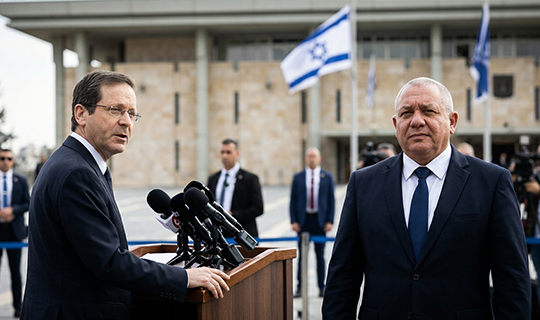
Israel is facing another major political turning point after President Isaac Herzog announced that opposition leader Gadi Eisenkot would receive the first opportunity to form a new coalition government. The decision follows an election that left both major political blocs short of the seats required to secure a parliamentary majority.
The latest development has created fresh uncertainty over Israel’s political future, particularly as Prime Minister Benjamin Netanyahu’s right-wing alliance failed to secure enough support to continue governing independently.
The announcement marks a Major Political Shake Up Eisenkot supporters and political observers have been watching closely. Eisenkot now faces the difficult task of bringing together different political parties to establish a stable government in the country’s 120-member parliament, known as the Knesset.
President Herzog made the announcement after holding consultations with representatives of political parties that won seats in last week’s election.
Herzog Gives Eisenkot 28 Days to Form Government
According to the president’s office, Eisenkot will have 28 days to negotiate with political parties and attempt to form a coalition administration. He could also receive an additional 14 days if more time is needed to complete negotiations.
Eisenkot, a former military chief, welcomed the opportunity and called for the formation of a national emergency government.
In a statement shared on X, he said: “Now is the time to form a national emergency government. I will do everything to ensure we are worthy.”
His comments indicate that he intends to pursue negotiations aimed at bringing different political groups together despite the deep divisions within Israel’s political system.
Election Results Leave Both Political Blocs Without a Majority
The latest election results have produced a divided parliament, with neither major political bloc winning enough seats to govern alone.
Netanyahu’s right-wing Likud party and its far-right and ultra-Orthodox Jewish allies secured 53 seats in the Knesset.
Meanwhile, Eisenkot’s centrist Yashar party and three other Jewish opposition parties within his political bloc won a combined 48 seats.
The remaining 19 seats went to two Arab-led alliances, the United Arab List and the Joint List.
Their strong performance, supported by increased turnout among Arab voters, has given them an important position in the coalition negotiations.
With 120 seats in parliament, a government generally needs the support of at least 61 members to secure a majority.
The election results therefore leave both major political camps facing difficult negotiations.
Arab Parties Could Become Key Players in Coalition Talks
The combined 19 seats held by the Arab-led alliances could prove decisive in determining which political bloc forms the next government.
Their parliamentary strength gives them considerable influence, particularly because neither Eisenkot nor Netanyahu has secured enough support independently.
However, forming an alliance with Arab parties could be politically challenging.
Most Jewish political parties, apart from one, had pledged before the election that they would not cooperate with Arab-led groups to establish a government.
Eisenkot and nearly all members of his political bloc have also previously rejected entering a government with Arab parties.
Nevertheless, the election outcome has increased speculation that political leaders could reconsider their positions to avoid another election.
This makes the Major Political Shake Up Eisenkot development particularly significant, as coalition negotiations may require compromises that were previously considered unacceptable.
Herzog Receives More Support for Eisenkot Than Netanyahu
President Herzog’s decision followed formal consultations with representatives of the newly elected parliament.
According to a statement from the president’s office, Eisenkot received 67 recommendations to become prime minister, compared with 46 recommendations for Netanyahu.
These recommendations played an important role in Herzog’s decision to give Eisenkot the first opportunity to form a government.
However, the president has considerable discretion when selecting a candidate for the task.
He is not legally required to choose the leader of the party that won the highest number of parliamentary seats. Instead, he can select the individual he believes has the strongest chance of building a governing coalition.
The outcome of the consultations therefore reflects the political support available to Eisenkot at the beginning of the government formation process.
Three Possible Scenarios for Israel’s Next Government
The election results have created three main possibilities for forming the next Israeli government.
1. A National Unity Government
One possibility is an agreement between Eisenkot and Netanyahu to establish a national unity administration. Major Political Shake Up Eisenkot Gets 1 Chance to Form Israeli Govt
Such an arrangement could bring together rival political groups and potentially provide the parliamentary support needed for a stable government.
However, political differences between the two leaders could make negotiations difficult. Major Political Shake Up Eisenkot Gets 1 Chance to Form Israeli Govt
2. A New Right-Wing Coalition
Another possibility is that Netanyahu could attempt to form a new right-wing coalition by attracting politicians who defect from Eisenkot’s political bloc.
This would allow Netanyahu to remain politically influential despite his alliance failing to secure a majority in the election.
However, convincing opposition lawmakers to change sides could prove challenging.
3. An Eisenkot-Led Government Supported by Arab Parties
The third possibility involves Eisenkot forming a government with support from Arab-led political alliances.
Their combined 19 parliamentary seats could provide the additional support required to reach a majority.
However, this arrangement would require significant political compromises because several members of Eisenkot’s bloc have previously rejected cooperation with Arab parties.
These three possibilities demonstrate why the Major Political Shake Up Eisenkot faces is more complicated than simply receiving the president’s nomination.
Ultra-Orthodox Parties Could Influence Negotiations
Apart from the Arab-led alliances, ultra-Orthodox Jewish parties could also become important players in the coalition negotiations.
Eisenkot may attempt to reach an agreement with these groups to secure additional parliamentary support.
However, such an arrangement could involve difficult discussions over political priorities, religious policies and government responsibilities.
The positions of these parties could influence whether Eisenkot succeeds in building a coalition or whether negotiations eventually collapse.
For now, it remains unclear which political groups will agree to participate in the next administration.
Israel Has Faced Similar Political Deadlocks Before
Israel’s political system has experienced repeated coalition difficulties in recent years.
Between 2019 and 2022, the country went through five separate elections as Netanyahu and his political rivals repeatedly struggled to establish a stable government.
The prolonged political uncertainty demonstrated how difficult it can be for competing parties to cooperate in a fragmented parliament.
There is also a previous example of a national unity arrangement.
In 2020, after three inconclusive elections, Netanyahu and his centrist rival Benny Gantz agreed to form a power-sharing government.
Under that arrangement, the two leaders agreed to rotate the position of prime minister. Major Political Shake Up Eisenkot Gets 1 Chance to Form Israeli Govt
President Herzog has referred to the importance of avoiding another election and encouraging political representatives to recognise that compromises may be necessary. Major Political Shake Up Eisenkot Gets 1 Chance to Form Israeli Govt
His message suggests that Israel needs a government capable of addressing national challenges rather than remaining trapped in prolonged political negotiations.
What Happens Next in Israel’s Political Crisis?
Eisenkot’s next 28 days will be crucial for determining Israel’s political direction.
He must negotiate with rival political parties, address disagreements and secure enough parliamentary support to establish a government.
Although receiving 67 recommendations gives him an initial advantage, it does not guarantee that he will successfully form a coalition.
The coming weeks will reveal whether opposition parties can overcome their differences and agree on a common political programme.
If negotiations fail, Israel could face another period of political uncertainty, potentially increasing pressure for fresh elections. Major Political Shake Up Eisenkot Gets 1 Chance to Form Israeli Govt
For now, Eisenkot has the first opportunity to form the next government, while Netanyahu and his allies will be watching the negotiations closely. Major Political Shake Up Eisenkot Gets 1 Chance to Form Israeli Govt
The final outcome will depend on whether Eisenkot can turn parliamentary recommendations into a workable coalition and secure the support needed to govern Israel. Major Political Shake Up Eisenkot Gets 1 Chance to Form Israeli Govt