
Pakistan military 100% cautiously optimistic on vital Iran-US peace
Pakistan Military Cautiously Optimistic on High-Stakes Iran-US Mediation
In a period marked by escalating regional turbulence, official statements from Rawalpindi have cast a beam of measured hope across the diplomatic landscape. Speaking from the garrison town where the armed forces maintain their headquarters, Lieutenant General Ahmed Sharif Chaudhry—Director General of Inter-Services Public Relations (ISPR)—addressed the nation’s recent high-level diplomatic outreach.
The core message remains clear: the Pakistan military 100% cautiously optimistic posture reflects both the promise of recent dialogue and the complex realities on the ground.
As the conflict involving Iran and the United States stretches into its eighth month, regional powers have intensified efforts to prevent a broader flare-up. At the center of these diplomatic maneuvers is Army Chief Field Marshal Asim Munir, who has undertaken multiple trips to Tehran to shepherd de-escalation efforts.
High-Level Diplomacy in Tehran
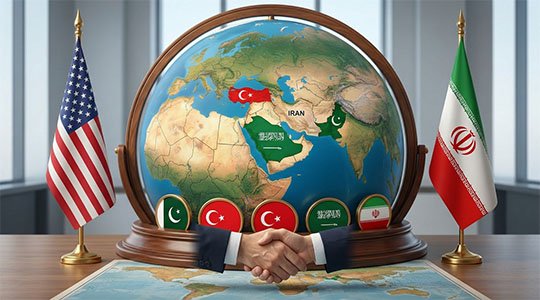
The frequency of top-level visits underscores the gravity of the initiative. Field Marshal Asim Munir visited Tehran twice in a single month, most recently accompanied by prominent regional figures including Saudi Defence Minister Prince Khalid bin Salman and Turkish intelligence chief Ibrahim Kalin.
Addressing inquiries about these diplomatic engagements, the ISPR spokesman highlighted that such persistent efforts signal real potential. It is precisely within this context that observers note how the Pakistan military 100% cautiously optimistic approach balances genuine diplomatic progress against lingering geopolitical hurdles.
“Why would the Field Marshal be going twice if it is not for some positivity? So yes, of course,” noted Lieutenant General Chaudhry, reinforcing that every shuttle mission is aimed at finding tangible common ground.
Despite the positive momentum, official statements acknowledge that the path to lasting peace is rarely linear. Spoilers and detractors who view continued conflict as beneficial to their self-interests remain active, requiring a careful, step-by-step approach to mediation.
The Mecca Joint Defence Agreement and Regional Security
A pivotal element of this evolving diplomatic framework is the trilateral defence architecture established earlier this year. On August 7, Pakistan, Saudi Arabia, and Turkey signed the landmark Mecca Joint Defence Agreement, stipulating that an attack on any single signatory will be treated as an attack on all.
+-------------------------------------------------------------------+
|               MECCA JOINT DEFENCE AGREEMENT                       |
+-------------------------------------------------------------------+
|  Signatories:  Pakistan | Saudi Arabia | Turkey                   |
|  Core Principle: Collective deterrence & mutual defense           |
|  Inclusivity:  Open to nations with shared security visions       |
+-------------------------------------------------------------------+
While analysts view the pact as a mechanism to manage the severe fallout from the Iran-US confrontation, military officials emphasize its open-ended, peace-oriented design. When asked whether neighboring countries like Iran could eventually join the framework, the military spokesman reaffirmed an inclusive stance. This inclusive vision explains why the Pakistan military 100% cautiously optimistic perspective extends beyond immediate crisis management to long-term structural stability.
Key highlights regarding the defence agreement include:
-
Collective Deterrence: Designed primarily to safeguard regional peace and prevent external aggression.
-
Open Membership: The pact does not restrict new members who share a common vision of collective security.
-
Commitment to Saudi Defense: Reaffirmation of Pakistan’s unwavering commitment to defending Saudi Arabia and the holy sites of Mecca and Medina.
-
Non-Intervention: Explicit clarification that Pakistan remains non-aligned in internal regional struggles, such as the intra-Yemeni conflict.
Strategic Balance in a Complex Environment
Navigating Middle Eastern security demands exceptional balance. Iranian officials, including Mohsen Rezaei, Secretary of Iran’s Supreme National Security Council, have repeatedly asserted that regional security must be maintained by regional states without foreign interference.
By coordinating closely with Riyadh, Ankara, and Tehran, Islamabad seeks to act as a trustworthy bridge builder. This delicate balancing act is why the Pakistan military 100% cautiously optimistic stance resonates across diplomatic circles, acknowledging the sheer scale of the challenge while actively pursuing peace.
       [ Saudi Arabia ] <---> [ PAKISTAN ] <---> [ Turkey ]
                                  |
                                  v
                           [ Tehran Dialogue ]
                                  |
                                  v
                      [ Iran-US De-escalation ]
As diplomatic conversations progress, military leaders maintain that final decisions regarding troop deployments or expanding regional pacts rest squarely with the elected political leadership of all participating nations.
Domestic Counter-Terrorism and Internal Governance
Alongside international diplomacy, domestic security developments in Pakistan remain a priority. Following the suspension of the provincial government in Khyber Pakhtunkhwa on October 11, questions arose regarding the military’s operational strategy in the region.
Addressing concerns over potential large-scale operations, the ISPR clarified that counter-terrorism measures will strictly adhere to focused, intelligence-driven methodologies. It is this precise, focused approach to security that keeps the Pakistan military 100% cautiously calibrated when tackling internal threats.
+-------------------------------------------------------------------+
|                   COUNTER-TERRORISM STRATEGY                      |
+-------------------------------------------------------------------+
|  Framework:    Intelligence-Based Operations (IBOs)               |
|  Focus:        Targeted precision over broad sweeps               |
|  Objective:    Dismantling militant networks safely               |
+-------------------------------------------------------------------+
Rather than launching broad military campaigns, security forces rely on Intelligence-Based Operations (IBOs) to maintain stability while minimizing disruption to local populations. Operational freedom for these IBOs continues to expand to counter emerging threats effectively.
Political Neutrality Amid Domestic Realities
The political backdrop in Khyber Pakhtunkhwa remains closely watched following the February 2024 elections, where independent candidates backed by the Pakistan Tehreek-e-Insaf (PTI) secured significant representation. Despite political friction surrounding federal actions in the province, military spokespersons reiterated that security operations are strictly aimed at counter-terrorism and maintaining public order.
In every domain—from domestic stabilization to complex international mediation—a clear consistency emerges. The mindset of being Pakistan military 100% cautiously oriented ensures that security frameworks remain agile and responsive to changing conditions.
The Broader Outlook for Peace
As international stakeholders observe the ongoing negotiations, the dialogue facilitated by Pakistan, Saudi Arabia, and Turkey represents one of the most structured diplomatic efforts currently active in the region.
           DIPLOMATIC PATHWAY TO REGIONAL STABILITY

     [ Multi-Nation ]     [ Continuous ]     [ Lasting Regional ]
     [  Engagement  ] --> [ Mediation  ] --> [    Stability     ]
Reiterating that diplomatic progress requires patience and strategic resolve, official sources maintain that peace remains achievable if regional partners work together. This persistent effort demonstrates why the Pakistan military 100% cautiously optimistic framework continues to guide the nation’s posture.
Whether examining international defense pacts or internal security measures, the emphasis remains firmly on deterrence, dialogue, and stability. Maintaining a Pakistan military 100% cautiously realistic outlook helps manage expectations while leaving the door wide open for breakthrough agreements.
Through sustained engagement with Tehran, Riyadh, and Ankara, Islamabad continues to push for a peaceful resolution. Ultimately, a Pakistan military 100% cautiously forward-looking diplomacy offers a pragmatic pathway out of a volatile crisis, keeping the focus on constructive dialogue and long-term peace.


Pingback: Cops smash 1 great Halloween blowout at a massive $10M Syd