
Pakistani leadership strongly urges vital unity and key reforms on 79th day
79 Years of Resilience: Pakistani Leadership Strongly Calls for Reforms, Unity, and Regional Peace
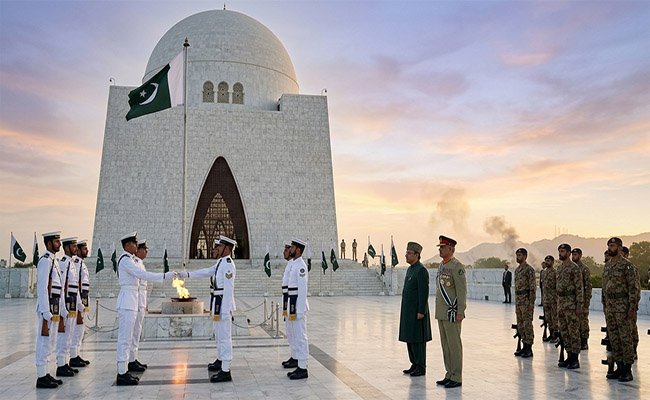
As the sun rose across the country, Pakistan marked a major milestone in its national history. Celebrating 79 years of freedom, the nation commemorated the day with traditional patriotism, ceremonial gun salutes in the capital and provincial headquarters, and high-profile tributes at the mausoleum of Quaid-i-Azam Muhammad Ali Jinnah.
However, beyond the ceremonial pride, this year’s message carried a distinct sense of urgency and national reflection. The nation’s civil and military authorities took center stage to address the economic, security, and diplomatic priorities required to navigate an increasingly complex global landscape. Across all addresses, the Pakistani leadership strongly emphasized that political stability, systemic governance reforms, and unshakeable national unity are the non-negotiable pillars needed to safeguard the country’s future.
Reflecting on Historical Sacrifices and National Strength
In his official address to the nation, President Asif Ali Zardari paid homage to the founding fathers of the Pakistan Movement. He highlighted the immense sacrifices made by previous generations who surrendered their security, homes, and livelihoods to establish an independent homeland.
Yet, the president reminded citizens that sovereignty is not merely a inherited trophy from history—it is a continuous duty. The Pakistani leadership strongly believes that preserving independence requires active, everyday dedication. Building a prosperous nation means expanding on the legacy of the past through modern economic development, institutional integrity, and democratic resilience.
Looking back at recent regional challenges—specifically recalling last year’s military standoff referred to as Marka-i-Haq—the nation demonstrated both its defensive readiness and its ultimate desire for peaceful resolution. The Pakistani leadership strongly noted that true military strength should serve as a deterrent to protect peace, shield sovereignty, and prevent wider conflict in South Asia.
Defense, Regional Security, and Diplomatic Outreach
Sovereignty comes with a steep price tag, a reality honored by paying tribute to the martyrs of the armed forces, law enforcement agencies, and police personnel. Their sacrifices have kept external threats and the internal menace of terrorism at bay.
At the same time, the Pakistani leadership strongly reaffirmed its commitment to international diplomacy and regional dialogue. By utilizing its strategic geopolitical location and diplomatic ties, Pakistan continues to urge calm and de-escalation in a volatile region. National security remains directly linked to the peace and stability of neighboring nations.
┌─────────────────────────────────────────────────────────────────┐
│               PAKISTAN'S REGIONAL & SECURITY PRIORITIES          │
├─────────────────────────────────────────────────────────────────┤
│  1. Deterrence & Defense   ► Defending national sovereignty    │
│  2. Diplomatic Outreach    ► Promoting de-escalation & dialogue│
│  3. Counter-Terrorism      ► Zero tolerance for hostile groups │
│  4. Kashmir Resolution     ► Supporting UN-backed self-determ. │
└─────────────────────────────────────────────────────────────────┘
However, peace requires mutual respect. While upholding national sovereignty for neighbors like Afghanistan, the Pakistani leadership strongly condemned the misuse of Afghan territory by hostile non-state actors and cross-border terror networks. Pakistan called on border authorities to dismantle these threat vectors, maintaining that the armed forces stand fully capable of defeating any aggressive designs aimed at undermining domestic security.
Empowering Youth and Driving Economic Reform
A recurring theme of this year’s Independence Day address was the realization that military security must be matched by economic power. For the average citizen, national progress isn’t evaluated through political rhetoric; it is measured by real, daily improvements in quality of life.
To build a resilient economy, the Pakistani leadership strongly advocated for deep structural reforms across governance, education, healthcare, and trade.
| Key Focus Area | Strategic Objective | Expected Impact |
| Youth Empowerment | Technical training, STEM education, & digital skills | Transforming demographic scale into productive economic output. |
| Economic Reforms | Market stabilization, trade access, & structural shifts | Providing confidence for local traders, farmers, and foreign investors. |
| Institutional Governance | Modernizing public sector services & legal frameworks | Ensuring development benefits reach underserved local communities. |
The youth demographic remains Pakistan’s most promising asset. Young Pakistanis continue to showcase exceptional talent in software engineering, scientific research, entrepreneurship, and creative industries worldwide. By providing modern tools, educational infrastructure, and career opportunities, the state can empower young minds to serve as the engine of long-term economic growth.
Unwavering Support for Jammu & Kashmir
On the international front, the Pakistani leadership strongly reiterated its principled moral, political, and diplomatic support for the people of Indian-Illegally Occupied Jammu and Kashmir (IIOJK).
Pakistan’s position remains firm: a lasting peace in South Asia can only be achieved when the Kashmir dispute is resolved peacefully, in alignment with the aspirations of the Kashmiri people and relevant United Nations Security Council resolutions.
The Path Ahead: Unity as the Ultimate Shield
As 79th Independence Day celebrations concluded across the provinces, the core message echoed clear from the capital to every corner of the country: progress demands purpose, patience, and absolute unity.
The Pakistani leadership strongly concluded that while national challenges—from economic rebalancing to regional security—are significant, they are by no means insurmountable. By combining structural governance reforms with national solidarity, Pakistan can secure its position as a prosperous, peaceful, and self-reliant nation on the global stage.
This video covers the official Independence Day messages from Pakistan’s leadership, reflecting the core themes of unity, defense, and national reform discussed in the article.

Pingback: Armed Forces warmly greet brave nation on 79th Independence