
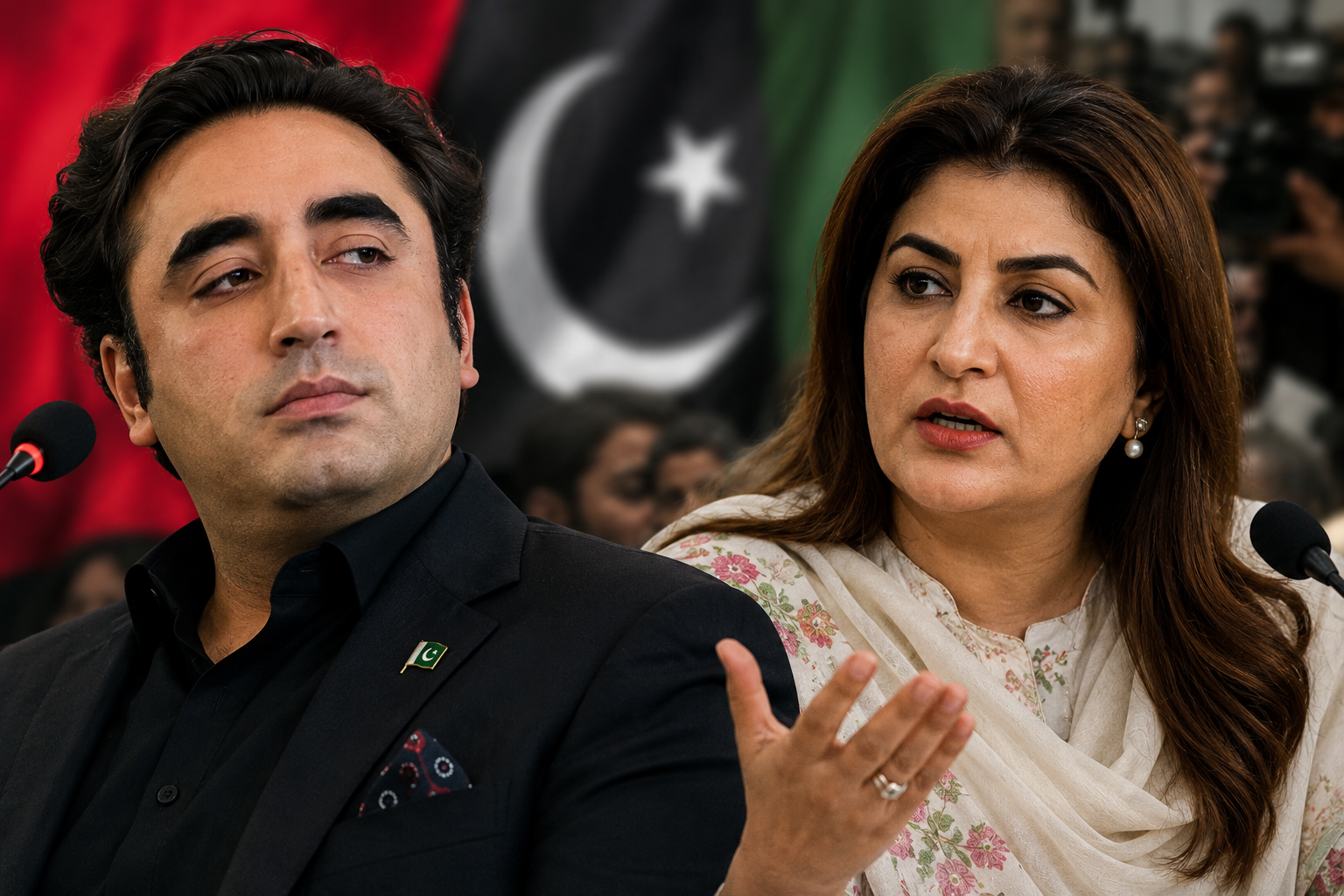
PPP Shazia Marri Defends Bilawal After 1 Explosive Press Conference Moment
PPP Shazia Marri Defends Bilawal After Viral Press Conference Exchange
A brief but tense interaction between Bilawal Bhutto Zardari and senior Shazia Marri during a press conference has sparked widespread debate across Pakistani social media and political circles. What began as a routine media briefing after a parliamentary party meeting quickly turned into a viral moment that drew criticism, political commentary, and discussions about leadership style, gender dynamics, and public conduct in politics.
The phrase PPP Shazia Marri Defends Bilawal has now become one of the most talked-about political topics online as supporters and critics continue debating the incident.
Viral Press Conference Clip Triggers Debate
The incident took place after a parliamentary party meeting held at the Parliament House in Islamabad. During the press conference, journalists questioned Bilawal Bhutto-Zardari regarding reports suggesting that the federal government was considering changes related to the 18th Constitutional Amendment.
A reporter specifically asked Bilawal about comments allegedly made by government officials concerning the possibility of returning subjects like education, health, and the Benazir Income Support Programme to federal control under a proposed 28th Constitutional Amendment.
As Bilawal attempted to answer, he stated that he was unaware of which federal minister the journalist was referring to. At that moment, Shazia Marri interrupted to clarify that the statement had reportedly come from Minister of State for Religious Affairs and Interfaith Harmony Kesoo Mal Kheal Das.
Bilawal immediately responded with the remark, “I am not asking you.”
Marri then appeared to apologise before Bilawal ended the exchange by saying, “Thank you.”
Within hours, clips of the moment spread rapidly online, leading to criticism and intense political discussion. As the debate grew, PPP Shazia Marri Defends Bilawal became a trending political phrase on social media platforms.
Shazia Marri Responds to the Backlash
Following the viral reaction, Shazia Marri addressed the issue in a post shared online. Without directly escalating the controversy, she urged people not to judge years of professional collaboration based on a single public interaction.
Her response emphasized that one isolated moment should not overshadow the broader working relationship between party members who have served together for years.
The statement became central to the narrative surrounding PPP Shazia Marri Defends Bilawal, as many observers interpreted it as an effort to calm tensions and shift focus back toward political work and public service.
Marri wrote that the Pakistan Peoples Party has always prioritized collective public interest and that the viral attention given to one brief exchange should not distract from the party’s larger mission.
Her comments were viewed by supporters as mature and measured, while critics argued that the incident still reflected deeper issues within political culture. PPP Shazia Marri Defends Bilawal After 1 Explosive Press Conference Moment
Political and Social Reactions Intensify
The video sparked strong reactions from journalists, political analysts, activists, and ordinary citizens. Some defended Bilawal, saying the exchange was minor and taken out of context, while others described it as dismissive and disrespectful toward a senior female politician.
Digital rights activist Usama Khilji criticized the interaction publicly. He stated that speaking to a senior elected woman politician in such a manner sent a poor message, especially from a party historically associated with progressive politics and women’s representation.
His criticism added more momentum to discussions surrounding PPP Shazia Marri Defends Bilawal, with many social media users debating whether Bilawal owed Marri a public apology. PPP Shazia Marri Defends Bilawal After 1 Explosive Press Conference Moment
Khilji also referenced the legacy of former Prime Minister Benazir Bhutto, highlighting how the Pakistan Peoples Party has long presented itself as a supporter of women’s political empowerment.
Analysts Say the Incident Damaged Bilawal’s Image
Political commentator Imtiaz Gul also weighed in on the controversy, calling the exchange embarrassing for Shazia Marri and damaging for Bilawal Bhutto-Zardari’s public image. PPP Shazia Marri Defends Bilawal After 1 Explosive Press Conference Moment
According to Gul, the moment reflected a style of political arrogance that many Pakistanis strongly criticize in traditional feudal political culture. His comments quickly spread online and fueled further debate over leadership behavior in Pakistani politics.
As criticism grew, PPP Shazia Marri Defends Bilawal continued trending across political discussions and online forums.
Some political observers argued that public figures, especially senior party leaders, are constantly under pressure during media briefings and can occasionally react sharply in stressful situations. Others insisted that leaders must maintain composure and respect, particularly when interacting with colleagues publicly.
Debate Over Women’s Representation in Politics
The controversy also reopened broader conversations about the challenges faced by women in Pakistani politics. Shazia Marri is considered one of the most experienced female politicians within the Pakistan Peoples Party and has served in multiple parliamentary and ministerial roles.
Many supporters felt the viral exchange reflected how female politicians are sometimes treated dismissively even within major political parties.
The discussion surrounding PPP Shazia Marri Defends Bilawal therefore expanded beyond a single press conference moment and evolved into a larger debate about respect, hierarchy, and gender representation in political spaces.
Women’s rights activists pointed out that female politicians often face both public scrutiny and internal political challenges despite years of experience and service.
At the same time, PPP supporters argued that critics were exaggerating the situation for political point-scoring and ignoring the long-standing working relationship between Bilawal and Marri.
The Political Context Behind the Question
The original question during the press conference focused on reports regarding the future of the 18th Constitutional Amendment. Passed in 2010, the amendment significantly increased provincial autonomy by transferring several powers, including education and health, from the federal government to provinces.
Recent suggestions about potentially revisiting parts of the amendment have sparked concern among opposition parties and provincial leaders.
The mention of the Benazir Income Support Programme added even more sensitivity to the issue because the program remains one of Pakistan’s largest social welfare initiatives.
This political backdrop helped intensify media attention around the exchange, making PPP Shazia Marri Defends Bilawal one of the biggest political discussion topics of the week.
Social Media Amplified the Controversy
One reason the incident gained so much attention was the speed at which short video clips circulated online. In modern politics, even a few seconds of footage can dominate headlines and shape public perception.
Supporters of Bilawal argued that the clip lacked full context and exaggerated what was essentially a brief interruption during a busy press conference. Critics, however, argued that public interactions matter greatly because they reveal leadership style and attitude under pressure.
The entire controversy demonstrates how political communication has changed in the digital age, where every gesture, tone, and reaction can quickly become national news.
That reality is exactly why PPP Shazia Marri Defends Bilawal remained a trending issue long after the press conference ended.
Final Thoughts
The viral exchange between Bilawal Bhutto-Zardari and Shazia Marri may have lasted only a few seconds, but it sparked a nationwide debate about political behavior, respect, gender dynamics, and leadership in Pakistan.
While Shazia Marri attempted to downplay the controversy by emphasizing years of teamwork and public service, the incident continues generating strong reactions online and in political circles.
For supporters of the Pakistan Peoples Party, the focus remains on the party’s policies and parliamentary role. For critics, however, the moment raised uncomfortable questions about how senior leaders interact publicly with colleagues.
As discussions continue, one thing remains clear: PPP Shazia Marri Defends Bilawal has become far more than just a viral clip. It has evolved into a broader political conversation about accountability, communication, and public image in modern Pakistani politics.


Pingback: Islamabad and Baku Powerful Ties Deepen: 3 Strong Signs