
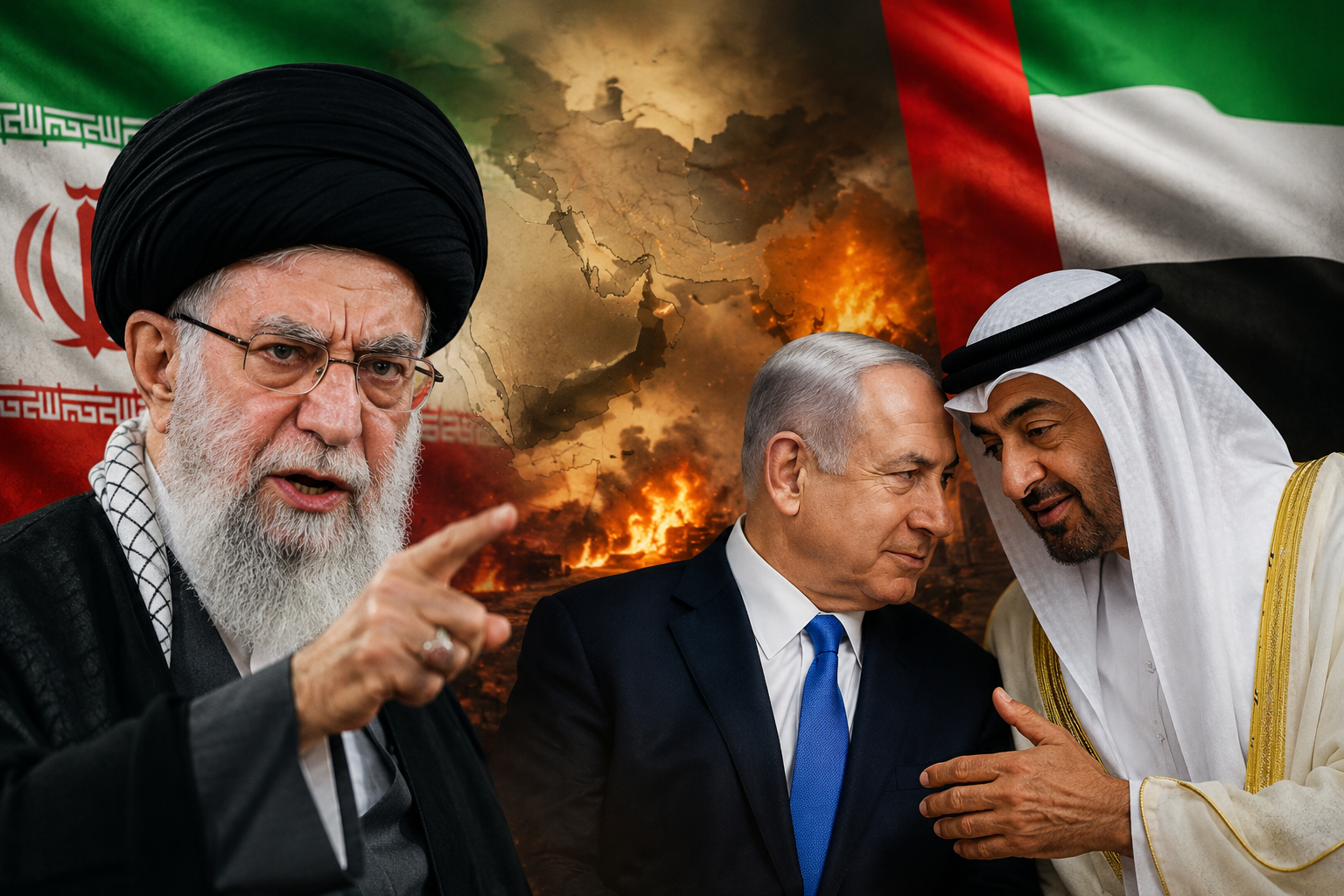
Three Explosive Reasons Tehran Slams UAE Over Netanyahu Secret Visit
Explosive Reasons Tehran Slams UAE as Middle East Tensions Deepen
The Middle East is once again facing rising political and military tensions after reports emerged that Israeli Prime Minister Benjamin Netanyahu secretly visited the United Arab Emirates for high-level talks with UAE President Mohamed bin Zayed Al Nahyan. The reports sparked outrage in Iran, with Tehran accusing regional powers of “collusion” with Israel during one of the most sensitive moments in the region’s recent history.
The growing controversy has become one of the biggest diplomatic stories in the Middle East this week, and many analysts believe the Explosive Reasons Tehran Slams UAE go far beyond a simple political meeting. From regional security concerns to the ongoing war in Gaza and Lebanon, the situation reflects deeper divisions that continue to reshape alliances across the region.
Secret Netanyahu Visit Creates Political Shockwaves
According to Israeli media reports, Netanyahu traveled secretly to the UAE city of Al Ain near the Omani border on March 26. Reports claim the meeting between Netanyahu and Sheikh Mohamed bin Zayed lasted several hours and focused on regional security, Iran, and future cooperation between the two countries.
Former Netanyahu spokesperson Ziv Agmon claimed he accompanied the Israeli prime minister during the visit. He described Netanyahu being welcomed “with the honour of kings” in Abu Dhabi before being transported by the UAE president himself.
However, Emirati authorities strongly denied that the visit was secretive or hidden. In an official statement shared through UAE state media, the government stated that relations between Israel and the UAE are already public and transparent under the Abraham Accords.
Still, the Explosive Reasons Tehran Slams UAE became immediately clear after Iranian officials reacted harshly to the reports. Tehran views growing UAE-Israel ties as a direct threat to regional stability and Iranian national security.
Iran’s Anger Over UAE-Israel Relations
Iran has consistently criticized Arab nations that normalize diplomatic relations with Israel. Iranian leaders argue these partnerships strengthen Israel politically and militarily while Palestinians continue suffering under occupation and war.
The latest reports intensified Iranian concerns because the meeting allegedly happened during escalating violence in Lebanon and Gaza. Iranian officials believe secret coordination between Israel and Gulf countries could influence military operations across the region.
For Tehran, the Explosive Reasons Tehran Slams UAE are connected to fears that regional alliances are being formed against Iran’s influence in the Middle East. Iran has repeatedly accused Israel of attempting to isolate Tehran through partnerships with Gulf nations.
Political analysts say the UAE’s growing cooperation with Israel in areas like defense, intelligence, technology, and trade has created increasing distrust between Abu Dhabi and Tehran.
Lebanese Crisis Raises Regional Fears
At the same time, tensions in Lebanon continue to worsen. The Israeli military recently ordered residents of eight Lebanese towns and villages to evacuate immediately, warning that remaining in those areas could place civilians in danger.
The affected locations included Libbaya, Yohmor, Ayn al-Tineh, Sohmor, Kfer Melki, Houmin al-Fawqa, Tefahta, and Mazraat Sinay. These forced displacement orders have increased fears that the conflict between Israel and Hezbollah could expand further.
The humanitarian situation in Lebanon is also becoming more severe. According to UNICEF, more than 770,000 Lebanese children are facing serious mental health risks due to continuous violence, displacement, and instability.
UNICEF regional director Edouard Beigbeder warned that children are experiencing repeated trauma from conflict and uncertainty. The organization stressed that without immediate psychological support, long-term emotional damage could affect an entire generation.
These humanitarian concerns are another factor behind the Explosive Reasons Tehran Slams UAE, as Iran sees Gulf cooperation with Israel happening while civilians across Gaza and Lebanon continue to suffer.
Gaza’s Humanitarian and Economic Struggles Continue
Meanwhile, life inside Gaza remains extremely difficult despite ceasefire discussions. Two years after Israel’s devastating military campaign in the territory, reconstruction efforts remain slow and economic conditions continue to deteriorate.
Transport costs have skyrocketed, cash shortages have worsened, and daily life remains unstable for many Palestinians. However, despite the hardships, young innovators in Gaza are still trying to create solutions for their communities.
At the Taqat Gaza co-working space, 23-year-old Palestinian programmer Saja al-Ghoul is developing a mobile application called “Waselni,” which means “help me reach my destination” in Arabic. The app aims to help residents share transportation and reduce travel costs by organizing ride-sharing services.
The app also includes a prepaid digital wallet system designed to bypass the growing cash crisis caused by ongoing conflict and economic restrictions.
Stories like these highlight the human side of the conflict while also explaining some of the Explosive Reasons Tehran Slams UAE. Iranian officials argue that Arab governments should focus more on supporting Palestinians rather than strengthening relations with Israel.
Iranian Football Fans Show National Unity
While political tensions dominate headlines, scenes from Tehran also showed another side of Iranian society this week. Thousands of football fans gathered at Revolution Square in Tehran to send off Iran’s national football team ahead of the FIFA World Cup 2026 campaign.
Iranian coach Amir Ghalenoei unveiled the team’s new World Cup jersey during the public event as crowds cheered and waved national flags. Three Explosive Reasons Tehran Slams UAE Over Netanyahu Secret Visit 2026
The gathering demonstrated how sports continue to unite people during difficult political and economic times. However, even celebrations like this occur under the shadow of regional tensions and growing geopolitical uncertainty. Three Explosive Reasons Tehran Slams UAE Over Netanyahu Secret Visit 2026
Many observers say the contrast between national pride and regional instability perfectly captures the mood across the Middle East today.
Why Regional Tensions Could Grow Further
Experts believe the current diplomatic conflict may not disappear anytime soon. The Explosive Reasons Tehran Slams UAE reflect much deeper geopolitical struggles involving military influence, economic partnerships, and regional power competition.
Iran remains deeply suspicious of Israeli cooperation with Gulf nations. At the same time, countries like the UAE argue that engagement and diplomacy are necessary for economic growth and regional modernization.
The situation becomes even more complicated because of ongoing conflicts in Gaza, Lebanon, and Syria. Any major escalation between Israel and Iran-backed groups could quickly involve multiple countries across the region.
International powers including the United States continue monitoring developments closely, fearing that further instability could threaten global energy markets and international security.
Conclusion
The latest reports surrounding Netanyahu’s alleged secret visit to the UAE have reignited political tensions across the Middle East. From Iran’s accusations of collusion to worsening humanitarian crises in Gaza and Lebanon, the story reflects the fragile and rapidly changing balance of power in the region. Three Explosive Reasons Tehran Slams UAE Over Netanyahu Secret Visit 2026
The Explosive Reasons Tehran Slams UAE are rooted in years of distrust, shifting alliances, and competing regional ambitions. As diplomatic tensions continue rising, many fear the situation could trigger even greater instability in the months ahead.
For now, the Middle East remains caught between conflict, diplomacy, and uncertainty, with every political meeting carrying consequences far beyond closed doors. Three Explosive Reasons Tehran Slams UAE Over Netanyahu Secret Visit 2026