
MQM-P Backs 32 Units to Elevate Pakistan’s Destiny with Great Power
A Resolute Stand at Koh-i-Noor Chowk
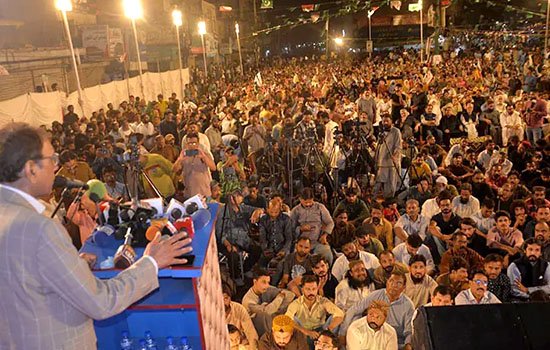
Addressing a Defence Day rally in Hyderabad, the leadership of Muttahida Qaumi Movement-Pakistan (MQM-P) reiterated that establishing new administrative divisions across the country is no longer merely an option—it has become the inevitable destiny of the nation. Party Chairman Dr. Khalid Maqbool Siddiqui, flanked by senior leaders Mustafa Kamal and Dr. Farooq Sattar, emphasized that structural reform is required to sustain Pakistan’s geopolitical and external gains made over the past year.
As political leaders gathered to honor national sacrifices, MQM-P Backs 32 Units as a core constitutional formula to decentralize governance and empower local communities across every corner of the country.
Constitutional Framework and Population Dynamics
Dr. Khalid Maqbool Siddiqui addressed misconceptions surrounding provincial division, clarifying that national integrity remains untouchable while provincial boundaries are subject to democratic adjustment. He noted that the Constitution not only provides a procedure for redrawing boundaries but actively demands administrative realignment as populations grow.
+-----------------------------------------------------------------------------------+
|                  MQM-P ADMINISTRATIVE RESTRUCTURING PARADIGM                     |
+--------------------------+--------------------------------------------------------+
| Core Objective           | Devolution of fiscal and decision-making power         |
| Constitutional Basis     | Population-proportional division under Article 140-A   |
| Administrative Goal      | Replacing centralized control with local governance    |
| Governance Scope         | Creation of streamlined units across all provinces     |
+--------------------------+--------------------------------------------------------+
Drawing historical parallels to regional growth, Dr. Siddiqui highlighted how administrative units expanded historically to accommodate swelling populations. When explaining the rationale behind restructuring, MQM-P Backs 32 Units to ensure that administrative governance remains accessible to ordinary citizens rather than concentrated within elite political circles.
Overcoming the Pitfalls of Centralized Governance
Addressing the aftermath of historical legislation, MQM-P leadership reflected on the 18th Constitutional Amendment. While initially intended to transfer democratic authority to grass-root levels, the party argued that powers became entrenched at the provincial capital level rather than trickling down to municipal institutions.
-
Accumulation of Resources: Federal disbursements reaching trillions fail to resolve basic urban and rural emergencies.
-
Institutional Neglect: Healthcare infrastructure and basic civic utilities suffer due to bureaucratic bottlenecks.
-
Socioeconomic Disenfranchisement: Rural and urban citizens alike remain distanced from active decision-making processes.
By demanding systemic administrative changes, MQM-P Backs 32 Units across the federation to break up centralized monopolies and restore direct accountability.
Aligning Internal Stability with External Strength
Former Karachi Mayor and senior leader Mustafa Kamal highlighted the contrast between Pakistan’s diplomatic achievements and its internal governance challenges. Pointing to international diplomatic successes and regional mediation roles, he noted that external strength must be matched by robust internal public administration.
Kamal stressed that critical public health issues, vaccine distribution, and local infrastructure cannot be managed by federal or military institutions alone. As internal governance models require urgent modernizing, MQM-P Backs 32 Units to create streamlined municipal frameworks that directly serve human development needs.
Bridging the Gap Between Citizens and State
Dr. Farooq Sattar reiterated that true national reform requires closing the gap between the public and government institutions. He argued that major economic engines generating national revenue require localized authority to manage resources effectively.
When advocating for systemic reform, MQM-P Backs 32 Units to give citizens immediate oversight over local budgets, public services, and municipal leadership.
+-----------------------------------------------------------------------------------+
|                   PRIMARY ADVANTAGES OF SMALLER UNITS                             |
+--------------------------+--------------------------------------------------------+
| Accountability           | Direct citizen access to provincial leadership         |
| Resource Distribution    | Targeted fund allocation for healthcare and education   |
| Public Safety            | Localized civic management and emergency response      |
| Political Stability      | Reduced urban-rural divide through equal representation|
+--------------------------+--------------------------------------------------------+
A Vision for Future Governance and Stability
The leadership affirmed that the call for new provinces is not an effort to divide any specific region along linguistic lines, but a nationwide initiative aimed at empowering every citizen.
Through structured political dialogue, MQM-P Backs 32 Units to establish a modern administrative blueprint for Pakistan. In advocating for localized governance, MQM-P Backs 32 Units to guarantee that development funds reach grass-root communities directly. As the party continues its constitutional push, MQM-P Backs 32 Units to build an administrative structure capable of sustaining long-term national prosperity.
To safeguard democratic values, MQM-P Backs 32 Units as the ultimate path toward equitable power-sharing. Ultimately, as public engagement grows across political platforms, MQM-P Backs 32 Units to redefine administrative management for future generations.



Pingback: Tensions Rise as Iran Threatens 3 Critical US Gulf Energy