
Table of Contents
ToggleUS-Iran Talks Reveal 7 Powerful Breakthroughs After Encouraging Progress
US-Iran Talks Reveal 7 Powerful Breakthroughs After Encouraging Progress
Diplomatic efforts to end months of tensions and conflict between the United States and Iran have taken an important step forward. US-Iran Talks Reveal 7 Powerful developments after the first round of high-level negotiations concluded with what mediators described as “encouraging progress.”
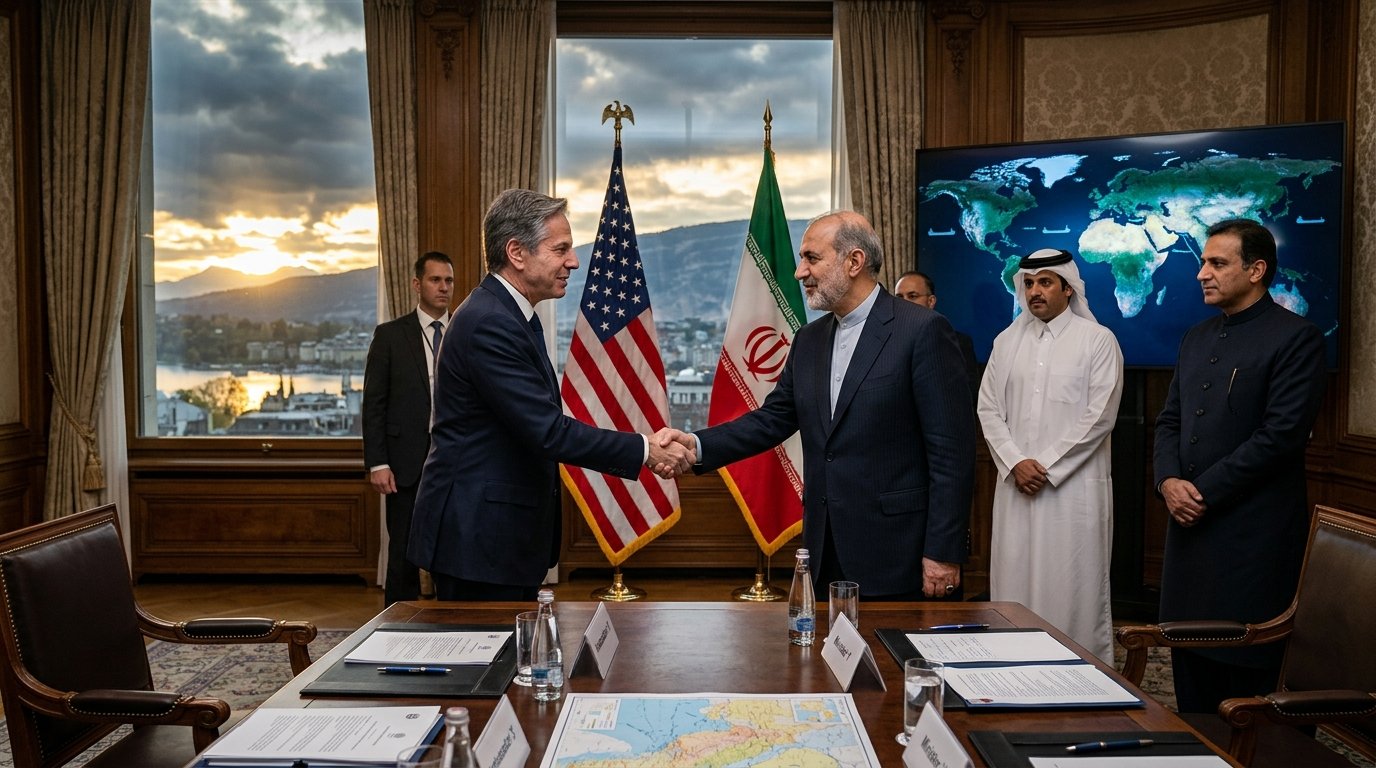
Representatives from both countries met in Switzerland following an initial agreement reached last week. Mediators from Qatar and Pakistan announced that the discussions had resulted in a roadmap aimed at achieving a comprehensive peace deal within the next 60 days. Technical negotiations are expected to continue throughout the week as both sides seek solutions to remaining issues.
1. US-Iran Talks Reveal 7 Powerful Steps Toward a Final Agreement
The first round of discussions focused on creating a framework for long-term peace. According to a joint statement issued by Qatar and Pakistan, a High-Level Committee has been formed to oversee negotiations and ensure that both parties continue working toward a final settlement.
This development marks a significant milestone because it creates a clear structure for future discussions. The announcement that negotiations will continue over the next two months has raised hopes among international observers.
2. New Communication Channel Established for Strait of Hormuz
One of the major topics discussed in Switzerland was the security of the Strait of Hormuz. The waterway handles nearly 20 percent of global oil and natural gas shipments, making it one of the world’s most important trade routes.
Mediators announced that a direct communication line had been created to avoid misunderstandings and ensure safe passage for commercial vessels. This move is expected to reduce the risk of incidents that could affect global energy supplies.
3. Lebanon Ceasefire Remains a Priority
Despite progress in negotiations, violence in southern Lebanon remains a concern. Recent clashes between Hezbollah and Israeli forces resulted in civilian casualties and renewed fears of regional escalation.
To address the issue, negotiators agreed to establish a special deconfliction mechanism involving Lebanon and the mediating countries. The goal is to ensure compliance with ceasefire arrangements and prevent new military confrontations.
These efforts demonstrate how US-Iran Talks Reveal 7 Powerful initiatives aimed at preventing wider instability in the Middle East.
4. Nuclear Discussions Continue
Another critical subject on the agenda is Iran’s nuclear program. Although Iran insists that its activities are peaceful, Washington continues to seek guarantees regarding long-term limitations.
A US diplomat involved in the talks said that discussions on the nuclear issue are ongoing and will form an essential part of future technical meetings. Both sides are expected to use the latest negotiations as a foundation for more detailed agreements.
Observers note that US-Iran Talks Reveal 7 Powerful opportunities to address one of the most sensitive disputes between the two countries.
5. Strong Statements from Washington and Tehran
As negotiations began in Lucerne, US President Donald Trump issued a warning to Iran, demanding that Tehran stop supporting groups operating in Lebanon. He also warned that further instability could trigger a strong American response.
Iranian negotiator Mohammad Bagher Ghalibaf responded firmly, arguing that pressure and threats would not influence Iran’s decisions.
Despite the exchange of sharp rhetoric, analysts believe US-Iran Talks Reveal 7 Powerful indications that both governments remain committed to diplomacy rather than confrontation.
6. Key Leaders Support the Peace Process
The negotiations attracted several influential figures. US Vice-President JD Vance led the American delegation alongside special envoy Steve Witkoff and Jared Kushner. Iran’s team was headed by Mohammad Bagher Ghalibaf and Foreign Minister Abbas Araghchi.
Pakistan and Qatar also played important roles in facilitating discussions. Pakistan’s prime minister and military leadership participated in diplomatic efforts, while Qatari Prime Minister Sheikh Mohammed bin Abdul Rahman Al Thani welcomed the continuation of talks.
International support is another reason why US-Iran Talks Reveal 7 Powerful possibilities for achieving a lasting settlement.
7. Economic Benefits Could Transform Relations
The initial agreement reached earlier this week included plans to reopen the Strait of Hormuz and ease restrictions affecting trade. Reports suggest the deal also contains a proposed $300 billion reconstruction package and the removal of several economic sanctions.
If fully implemented, these measures could strengthen Iran’s economy and improve relations with the United States after years of hostility.
Financial experts say US-Iran Talks Reveal 7 Powerful economic opportunities that could benefit both nations and reduce uncertainty in global markets.
Regional Tensions Still Pose Challenges
Despite encouraging developments, significant obstacles remain. Fighting in Lebanon has not completely stopped, and disagreements over Iran’s nuclear ambitions continue to create tensions.
Israeli Prime Minister Benjamin Netanyahu has insisted that Israeli forces will remain in southern Lebanon to protect northern Israel. Hezbollah leader Naim Qassem, however, rejected any Israeli military presence and promised resistance.
These issues highlight the complexity of the peace process. Nevertheless, US-Iran Talks Reveal 7 Powerful signs that diplomatic engagement remains active despite continuing challenges.
A New Chapter in US-Iran Relations?
Before the talks, JD Vance stated that President Trump wanted to “turn over a new leaf” in relations with Iran. He emphasized that if Tehran abandoned activities viewed as destabilizing and agreed to long-term limits on nuclear ambitions, Washington would be prepared to fundamentally transform bilateral ties.
Iran, meanwhile, continues to insist that its nuclear program is intended solely for peaceful purposes.
As technical negotiations continue, many observers remain cautiously optimistic. The coming weeks will determine whether the current momentum can produce a lasting agreement.
For now, US-Iran Talks Reveal 7 Powerful reasons for hope. Diplomacy appears to be replacing confrontation, and both sides have shown willingness to continue discussions. If negotiators succeed in overcoming remaining differences, the talks could mark the beginning of a new era of stability in the Middle East and improved relations between two longtime rivals.

Pingback: 8 Terrorists Killed in Powerful Intelligence Operations in