
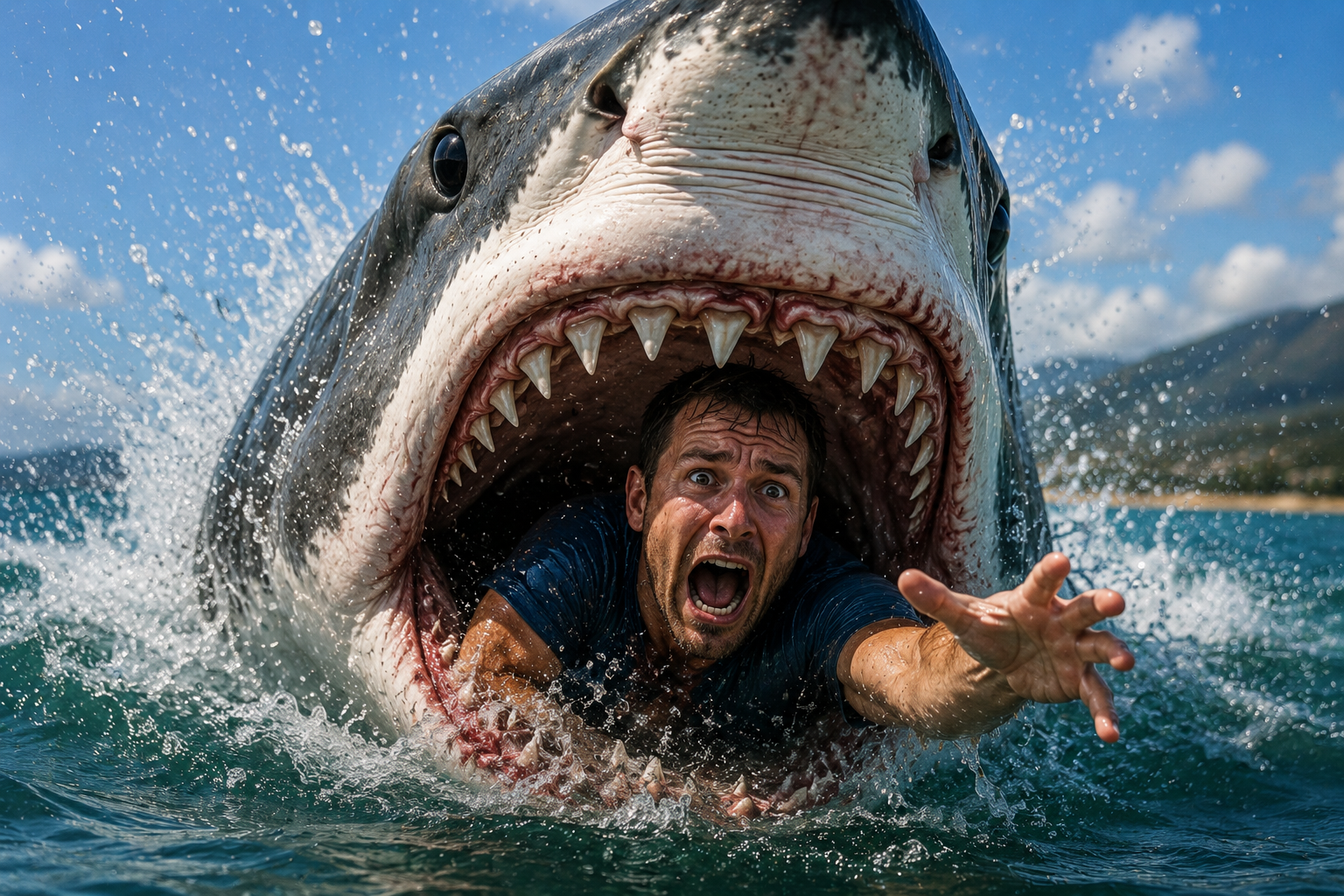
Man Killed in 3rd Brutal Shark Attack in Far North Queensland Waters
Man Killed in 3rd Brutal Shark Attack as Australia Faces Rising Fear
Australia is once again mourning a tragic loss after a deadly shark attack claimed the life of a man off the coast of Far North Queensland. The shocking incident has intensified concerns about marine safety as the country experiences another deadly year in its coastal waters. News of the Man Killed in 3rd Brutal Shark attack quickly spread across the nation, leaving beachgoers and tourists deeply shaken.
Emergency crews rushed to Hull Heads Beach, located about 160 kilometres south of Cairns, shortly after midday following reports that a man had been bitten by a shark while surfing near Kennedy Shoal.
The victim, a 39-year-old man, was brought back to shore at the Hull River Boat Ramp where paramedics immediately began emergency treatment. Despite desperate efforts to save him, Queensland Police later confirmed the man had died from severe injuries sustained during the attack.
The devastating incident marks the latest tragedy in what has become a deeply troubling year for shark-related fatalities in Australia. The phrase Man Killed in 3rd Brutal Shark attack is now dominating headlines as communities grapple with growing concerns over water safety.
Attack Happened Near Popular Tourist Area
The fatal attack occurred on the Cassowary Coast, one of Queensland’s most scenic and popular coastal regions. Positioned between Cairns and Townsville, the area attracts thousands of visitors every year thanks to its tropical beaches and close proximity to the Great Barrier Reef.
Hull Heads Beach lies just south of the famous tourist destination Mission Beach, an area known for snorkelling, scuba diving, fishing, and island tours.
Tourism operators and local residents described the attack as both heartbreaking and frightening. Many visitors come to the region specifically for water activities, making the news even more alarming for the tourism industry.
The tragic Man Killed in 3rd Brutal Shark attack has now renewed debate over shark monitoring systems and beach safety measures across northern Australia.
Third Fatal Shark Attack in Australia This Year
Authorities confirmed this latest death is the third fatal shark attack recorded in Australia this year alone.
In January, 12-year-old Nico Antic died after a suspected bull shark attack near Shark Bay in Sydney’s Vaucluse area. The tragedy shocked Australians nationwide and sparked calls for stronger coastal protections.
Just last week, 38-year-old spearfisher Steve Mattabonni was killed near Rottnest Island after reportedly being attacked by a great white shark.
With three deadly incidents occurring within months, public anxiety surrounding sharks has significantly increased. Many experts believe environmental conditions may be contributing to the unusual spike in shark activity.
The phrase Man Killed in 3rd Brutal Shark attack has become symbolic of growing fears surrounding Australia’s coastlines in 2026.
Weather Conditions Raising Shark Concerns
Marine experts say recent weather patterns may be playing a major role in increased shark encounters. Sydney and parts of Queensland have experienced heavy rainfall and flooding in recent months, creating murky and brackish water conditions near beaches and river mouths.
These conditions are especially attractive to bull sharks, which are known for swimming close to shore and entering estuaries and rivers.
Earlier this year, Sydney experienced multiple shark sightings and attacks linked to poor water clarity caused by storm systems. Authorities warned residents to avoid swimming in affected areas during periods of heavy rain.
Similar weather conditions returned this weekend, leading officials to once again urge beachgoers to stay out of the water until conditions improve.
The recent Man Killed in 3rd Brutal Shark tragedy has reinforced warnings from marine biologists about heightened shark risks during unstable weather periods.
Community Left in Shock
Residents along the Cassowary Coast described the atmosphere after the attack as emotional and tense. Many locals say shark sightings are not uncommon in the region, but fatal incidents remain rare enough to deeply affect the community.
Tour operators near Mission Beach said visitors have already started asking questions about shark risks and water safety following the incident.
Local businesses fear the attack could temporarily affect tourism activity, particularly among families planning reef excursions or beach holidays.
At the same time, some marine conservation experts are urging the public not to react with fear or anger toward sharks themselves. They argue that sharks are naturally part of Australia’s marine ecosystem and that human activity in ocean habitats always carries some level of risk.
Still, the emotional impact of another Man Killed in 3rd Brutal Shark attack is impossible to ignore for many Australians.
Authorities Launch Investigation
Queensland Police confirmed that a report will be prepared for the coroner as part of the official investigation into the incident.
Authorities are also expected to review witness statements, weather conditions, and shark activity data from the area.
Marine authorities may examine whether additional warning systems or temporary beach closures are necessary in nearby regions while investigations continue.
Local councils and tourism operators often work closely with marine experts to monitor shark movements, especially during periods of increased sightings.
The latest Man Killed in 3rd Brutal Shark incident is likely to intensify discussions around beach surveillance technology, drone patrols, and shark detection systems.
Australia’s Long Relationship With Sharks
Australia has one of the world’s highest numbers of shark encounters due to its massive coastline and strong beach culture. Millions of Australians swim, surf, fish, and dive every year, making interaction with marine predators relatively common.
However, fatal shark attacks remain statistically rare compared to the number of people entering the water daily.
Experts consistently remind the public that shark behaviour can be unpredictable and that environmental conditions often influence attack risks.
Safety recommendations typically include:
- Avoid swimming at dawn or dusk
- Stay out of murky water
- Avoid swimming near schools of fish
- Follow local beach warnings
- Never enter closed beaches
Tourism Industry Watching Closely
Queensland’s tourism sector depends heavily on its beaches and reef attractions. Areas near Mission Beach and the Great Barrier Reef attract international visitors throughout the year.
While isolated shark incidents rarely create long-term tourism damage, repeated attacks within a short period can affect public confidence.
Tour operators are now expected to increase safety messaging and closely monitor updates from marine authorities.
Industry leaders say maintaining public trust while ensuring visitor safety will be critical in the coming weeks.
The latest Man Killed in 3rd Brutal Shark attack has already become one of the most discussed national stories across Australian media.
Final Thoughts
The death of the 39-year-old Queensland man is another heartbreaking reminder of the risks associated with Australia’s coastal waters. As authorities investigate the incident, communities across the country are once again debating how best to balance marine conservation with public safety.
While shark attacks remain uncommon, three fatal incidents in a single year have raised serious questions about changing ocean conditions and coastal awareness.
For now, Australians are mourning another tragic loss while hoping stronger safety measures can help prevent future incidents.
The shocking Man Killed in 3rd Brutal Shark attack will likely remain a major topic of national discussion as beach communities, marine experts, and authorities search for answers.



Pingback: Pakistan China Relations 11 Powerful Truths Behind Xi’s