Deadly Ebola Surge 7 Critical Warnings Issued in DR Congo
Deadly Ebola Surge Pushes DR Congo Into Very High Health Alert
The World Health Organization (WHO) has officially raised the public health risk level linked to the current Ebola outbreak in the Democratic Republic of Congo from “high” to “very high.” The decision comes as the number of infections and deaths continues to rise, increasing fears that the deadly virus could spread further across the African region if urgent action is not taken.
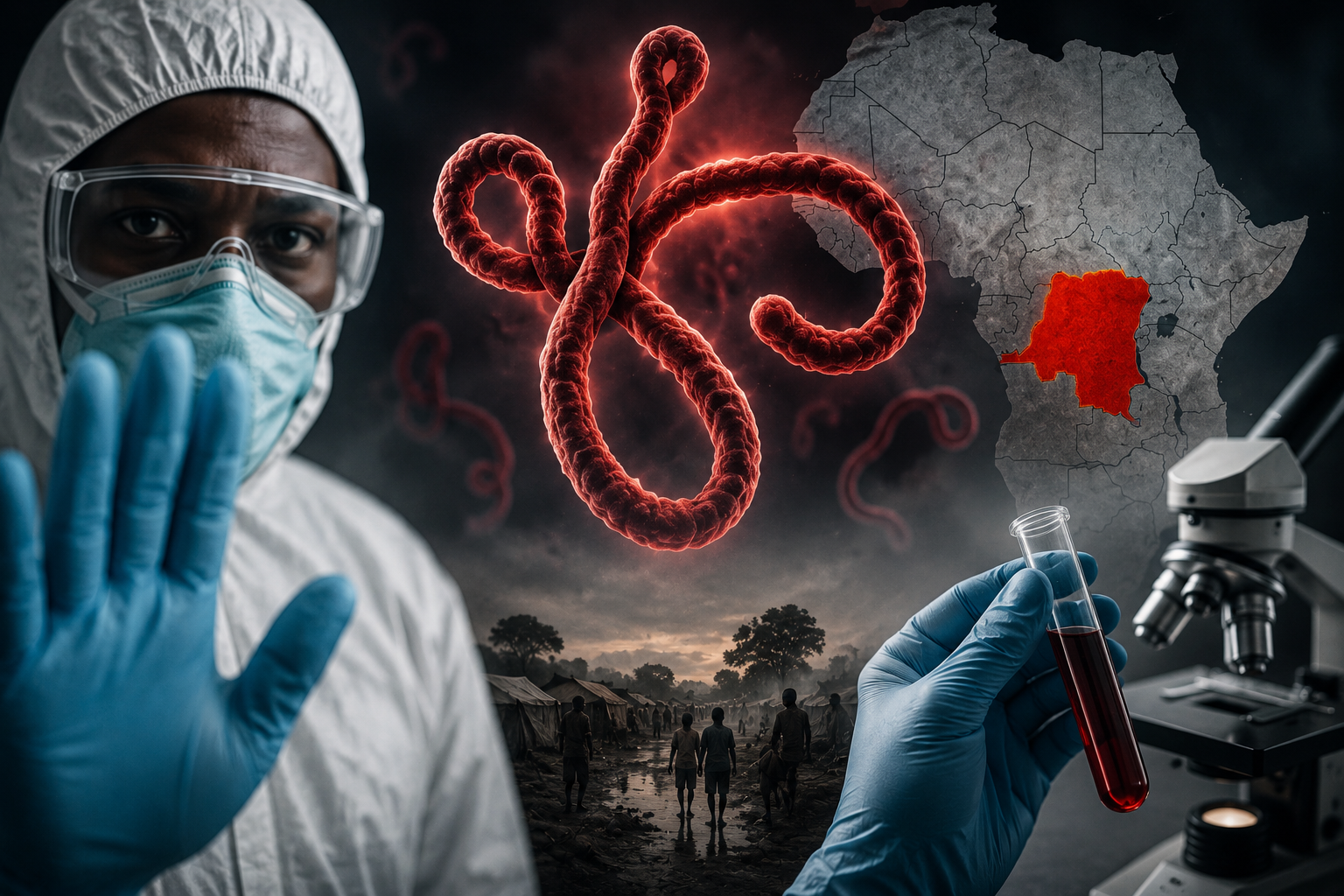
The Deadly Ebola Surge has already caused serious concern among global health experts after hundreds of suspected cases and deaths were reported in DR Congo. Health officials say the outbreak is being driven by the rare Bundibugyo species of Ebola, a dangerous strain that currently has no approved vaccine.
WHO Director-General Dr Tedros Adhanom Ghebreyesus announced the updated warning during a press briefing in Geneva. He explained that the outbreak now represents a “very high” risk at the national level inside DR Congo, while the wider African regional threat remains “high.” However, WHO still considers the global risk level to be relatively low for now.
The growing Deadly Ebola Surge has placed enormous pressure on Congo’s healthcare system, which is already struggling with limited resources, conflict-related instability, and weak medical infrastructure in several regions. According to the latest figures, the outbreak has resulted in more than 750 suspected cases and approximately 177 suspected deaths.
Health authorities confirmed that at least 82 cases have officially tested positive for Ebola, including seven confirmed deaths. Experts warn the real number could be much higher because many infections in remote communities often go unreported due to limited access to healthcare facilities.
One major reason the Deadly Ebola Surge is causing such alarm is because the Bundibugyo strain of Ebola is extremely rare. Unlike the more common Zaire species of Ebola, there is currently no fully approved vaccine specifically designed to fight Bundibugyo infections.
Medical experts estimate that the Bundibugyo virus kills around one-third of infected patients. Although this death rate is lower than some other Ebola strains, the lack of effective treatment tools and vaccines makes the outbreak particularly dangerous.
Scientists around the world are now racing against time to develop a vaccine capable of stopping the Deadly Ebola Surge before it spreads further. Researchers at Oxford University in the United Kingdom are currently working on an experimental vaccine using the same technology that helped create the AstraZeneca Covid-19 vaccine.
The new vaccine could reportedly be ready for human clinical trials within two to three months if development continues successfully. Animal testing has already started in Oxford laboratories as researchers attempt to determine whether the vaccine can provide protection against the Bundibugyo strain.
Experts caution that there is still no guarantee the vaccine will work effectively. Before it can be approved, scientists must complete animal studies followed by multiple human clinical trials to ensure both safety and effectiveness.
Despite the uncertainty, health officials say the rapid vaccine development effort offers hope during the worsening Deadly Ebola Surge. If the vaccine proves successful, the Serum Institute of India is expected to handle large-scale production to help distribute doses quickly across affected regions.
At the same time, another experimental vaccine targeting the Bundibugyo strain is also under development. However, WHO officials believe that vaccine may take six to nine months before reaching the testing stage.
Dr Vasee Moorthy, WHO’s research and development adviser, recently described one of the experimental vaccines as “the most promising” candidate currently being studied. According to experts, it could become similar to the Ervebo vaccine, which is already being used successfully against the Zaire strain of Ebola.
The Deadly Ebola Surge has also triggered fears of cross-border transmission. Neighboring Uganda has already reported two confirmed cases linked to travelers arriving from DR Congo. One death has also been confirmed there, although WHO officials say the situation in Uganda currently remains stable.
Authorities in several African countries have strengthened border screening, emergency surveillance, and public health monitoring systems to reduce the risk of wider regional spread. Health workers are also carrying out awareness campaigns to educate communities about Ebola symptoms and prevention methods.
Ebola is a severe viral disease that spreads through direct contact with infected bodily fluids, contaminated surfaces, or infected animals. Fruit bats are believed to be the natural carriers of the virus, while human outbreaks sometimes begin after people handle or consume infected wildlife.
The current Deadly Ebola Surge highlights the continuing global challenge posed by emerging infectious diseases. Even though Ebola outbreaks are relatively rare, they can quickly spiral into humanitarian crises if early containment measures fail.
In many rural areas of DR Congo, medical teams face enormous obstacles while trying to trace infections and isolate patients. Poor transportation systems, armed conflict, mistrust of authorities, and misinformation often make outbreak control much more difficult.
International aid agencies have already increased support for Congo’s response efforts. WHO teams, humanitarian organizations, and regional health authorities are working together to improve testing, treatment, vaccination research, and emergency response coordination.
The Deadly Ebola Surge is also raising economic concerns. Health emergencies of this scale can damage trade, tourism, and local economies while placing additional strain on already vulnerable communities.
Global health experts warn that continued investment in disease surveillance and vaccine development remains critical. The Covid-19 pandemic demonstrated how quickly infectious diseases can spread worldwide, making early intervention and international cooperation more important than ever.
For now, WHO officials continue urging caution while emphasizing that the global risk remains low. However, they stress that rapid action is essential to prevent the outbreak from expanding into a much larger international crisis.
The Deadly Ebola Surge serves as another reminder that deadly viruses still pose a serious threat in many parts of the world. With no proven vaccine currently available for the Bundibugyo strain, scientists and healthcare workers face a race against time to contain the outbreak before more lives are lost.
As researchers push forward with vaccine trials and emergency medical responses continue across DR Congo, millions of people remain hopeful that global cooperation and scientific progress will help bring the deadly outbreak under control.