
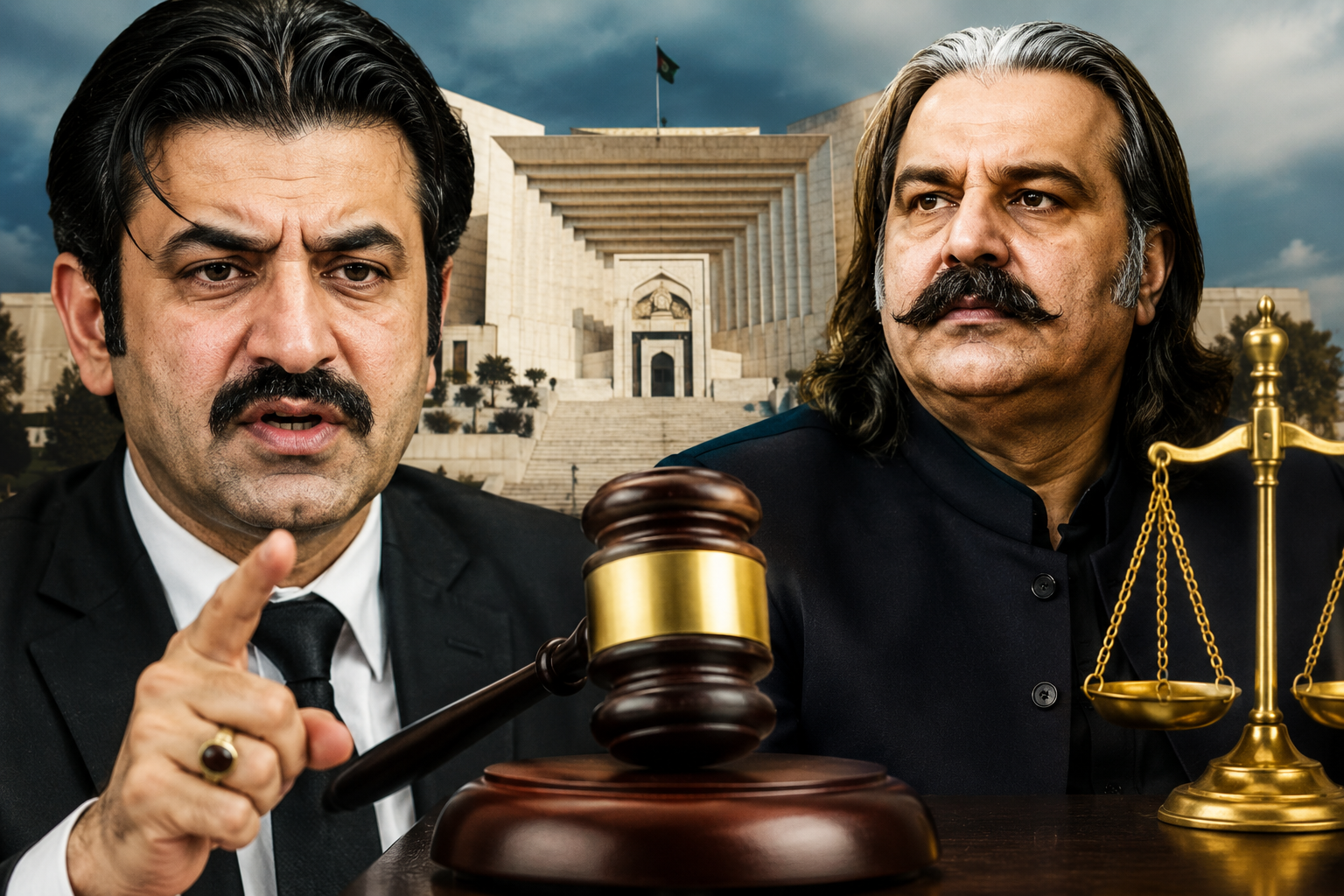
Sher Afzal Marwat Moves FCC Against Gandapur’s Resignation: 5 Explosive Claims
Sher Afzal Marwat Moves FCC Against Gandapur’s Resignation Amid PTI Power Struggle
Pakistan’s political landscape has once again entered a tense phase after Sher Afzal Marwat Moves FCC Against the resignation of former Khyber Pakhtunkhwa Chief Minister Ali Amin Gandapur. The petition has sparked major political debate, legal discussions, and fresh controversy surrounding the influence of jailed PTI founder Imran Khan over party affairs and provincial governance.
The constitutional petition was filed before the Federal Constitutional Court (FCC) under Article 175(E) of the Constitution. In the petition, Sher Afzal Khan Marwat challenged the legality of Gandapur’s resignation, arguing that it was not submitted voluntarily and was instead made under political pressure and unconstitutional directives.
As Sher Afzal Marwat Moves FCC Against the resignation process, the case has quickly become one of the most discussed political developments in Pakistan.
Petition Challenges Gandapur’s Resignation
According to details presented before the court, Ali Amin Gandapur submitted resignation letters on October 8 and October 11, 2025. The petition claims that these resignations were made due to instructions allegedly issued by jailed PTI founder Imran Khan.
Marwat’s legal team argued that because Imran Khan is currently convicted and constitutionally disqualified under Articles 62 and 63 of Pakistan’s Constitution, he has no legal authority to influence state institutions or issue political directives affecting elected governments.
The case gained immediate attention after Sher Afzal Marwat Moves FCC Against what he described as unconstitutional interference in provincial governance.
The petition further argued that any actions resulting from Gandapur’s resignation, including the appointment and continuation of Sohail Afridi as chief minister, should be declared null and void.
Constitutional Questions Raised
The legal petition raises several important constitutional issues. One of the central questions is whether a disqualified political leader can continue influencing elected representatives and government structures from behind bars.
As Sher Afzal Marwat Moves FCC Against Gandapur’s resignation, constitutional experts are debating the wider implications of the case for Pakistan’s democratic system and the independence of provincial governments.
The petition states that constitutional offices cannot be manipulated through external political pressure, especially by individuals who are legally disqualified from holding public office.
Marwat argued that allowing such influence would undermine democratic principles, public trust, and the authority of constitutional institutions.
The petition specifically references Articles 2A, 4, 5, 17, 25, and 130 of the Constitution, claiming that the alleged interference violated both constitutional governance and the public mandate given by voters in Khyber Pakhtunkhwa.
Demand to Restore Gandapur
One of the major requests made in the petition is the restoration of Ali Amin Gandapur as Chief Minister of Khyber Pakhtunkhwa.
After Sher Afzal Marwat Moves FCC Against the resignation, the petitioner asked the court to declare Gandapur’s resignation legally ineffective because it allegedly lacked free consent and constitutional legitimacy.
The petition also requested the court to cancel all notifications related to the transfer of power in the province, including the official appointment of Sohail Afridi as chief minister.
According to the petition, a resignation submitted under coercion or unconstitutional influence cannot be accepted as valid under democratic principles.
Legal observers believe this argument could become one of the most critical aspects of the case as the FCC examines whether Gandapur acted independently while resigning from office.
Political Crisis Deepens Inside PTI
The case has also highlighted growing divisions inside Pakistan Tehreek-e-Insaf (PTI). Political analysts say the filing reflects increasing tensions between party leaders over decision-making authority after Imran Khan’s imprisonment.
As Sher Afzal Marwat Moves FCC Against the resignation issue, many political commentators believe the petition represents more than just a constitutional dispute. It also signals internal disagreement within PTI regarding leadership control and political strategy.
Sher Afzal Marwat, once considered one of PTI’s most vocal supporters, has recently taken positions that differ from the party’s central leadership. His latest legal move has further intensified speculation about fractures inside the party.
Supporters of the petition argue that provincial governments should not be controlled through unofficial directives, while critics claim the case is politically motivated and designed to weaken PTI’s influence in Khyber Pakhtunkhwa.
Governor’s Role Under Question
Another major issue raised in the petition concerns the role of the provincial governor in accepting Gandapur’s resignation.
The petition argues that the governor had a constitutional responsibility to verify whether the resignation was voluntary before approving it. Since the resignation allegedly lacked constitutional legitimacy, the governor should have rejected it.
After Sher Afzal Marwat Moves FCC Against the resignation, legal experts began discussing whether constitutional office holders are obligated to investigate political pressure before accepting resignations from elected leaders.
This issue could potentially set a significant legal precedent for future political resignations in Pakistan.
Public Interest and Democratic Governance
The petition emphasizes that the matter is not only political but also concerns public rights and constitutional governance.
Marwat stated that, as an elected representative from Khyber Pakhtunkhwa, he has a duty to protect democratic institutions and ensure that provincial governance remains free from unconstitutional interference.
As Sher Afzal Marwat Moves FCC Against the political developments, the petition claims that the public’s democratic mandate is at risk whenever elected governments are altered through unofficial political pressure.
The filing also warns that allowing external influence over provincial executives could damage public confidence in Pakistan’s constitutional framework.
Reactions Across Pakistan
The case has triggered strong reactions across political circles, legal communities, and social media platforms.
Supporters of PTI argue that Imran Khan remains the ideological leader of the party despite his legal disqualification, while critics insist that constitutional limitations must apply equally to all individuals regardless of political popularity.
Since Sher Afzal Marwat Moves FCC Against the resignation, hashtags related to the case have started trending online, with users debating the legal and political implications of the petition.
Some analysts believe the FCC’s eventual ruling could significantly impact future power struggles inside political parties and redefine the legal boundaries of political influence in Pakistan.
Legal Experts Discuss Constitutional Impact
Constitutional lawyers say the petition may force the FCC to address several sensitive legal questions regarding democratic governance, constitutional authority, and political accountability.
One of the key questions before the court is whether directives allegedly issued by a convicted and disqualified political figure can carry any constitutional value.
As Sher Afzal Marwat Moves FCC Against Gandapur’s resignation, the court may also determine how much autonomy elected chief ministers truly possess within political party structures.
Legal experts believe the outcome could shape future interpretations of Articles 62 and 63 and clarify whether disqualified individuals can continue exercising indirect political control.
Conclusion
The political storm surrounding the resignation of Ali Amin Gandapur has become one of Pakistan’s most significant constitutional controversies in recent months. As Sher Afzal Marwat Moves FCC Against the resignation process, the case is expected to generate major legal and political consequences across the country.
The FCC’s eventual decision may not only determine Gandapur’s political future but also establish important constitutional boundaries regarding political influence, party control, and democratic governance in Pakistan.
For now, the controversy continues to deepen tensions inside PTI while drawing nationwide attention to questions about constitutional authority and the future of provincial politics.