Ayatollah Mojtaba Vows Brutal Revenge After Trump’s 3 Missile Threats
The dangerous standoff between Washington and Tehran has escalated to a knife-edge. In a fiery exchange of warnings that has sent shockwaves through the global community, Iranian Supreme Leader Ayatollah Seyyed Mojtaba Khamenei has drawn a clear line in the sand. Responding directly to an ominous warning from US President Donald Trump regarding massive preemptive strikes, the newly elevated Iranian leader made his position clear to the world. As regional mediators scramble to prevent a catastrophic escalation, the message from Tehran remains unyielding: Ayatollah Mojtaba Vows Brutal Revenge for the assassination of his father and predecessor, Ali Khamenei.
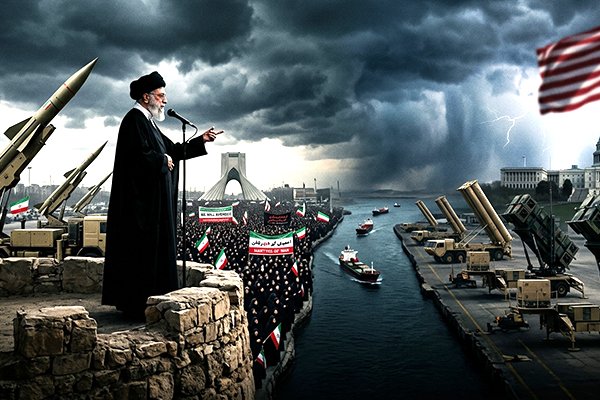
This latest diplomatic crisis erupted after US President Donald Trump used his Truth Social platform to issue an explicit ultimatum to the Islamic Republic. Claiming that the United States military has “1,000 Missiles Locked and Loaded” and aimed directly at Iranian targets, Trump warned of total devastation if Tehran follows through on its intelligence-reported plots. According to Washington insiders, the sudden American escalation was triggered by sensitive intelligence shared by Israel, which allegedly uncovered an active Iranian plot targeting Trump.
The American president did not mince words, stating that orders have already been signed to completely decimate all areas of Iran over a one-year renewable period if the regime takes action. Yet, instead of forcing a retreat, the threat has only hardened Tehran’s resolve. In a rare written statement, Ayatollah Mojtaba Vows Brutal Revenge against what he labeled “criminal and disgraced killers,” assuring his followers that this mission will be accomplished by free people around the world, regardless of the personal cost.
The Strategic Standoff in the Strait of Hormuz
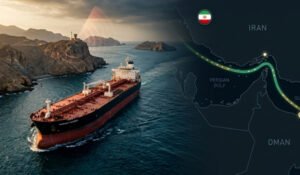
While the rhetoric between the two heads of state threatens total war, a parallel diplomatic drama is unfolding in Muscat. Iranian Foreign Minister Abbas Araghchi arrived in Oman for emergency discussions aimed at managing the fallout of the collapsed ceasefire. The primary focus of these talks is the critical maritime chokepoint of the Strait of Hormuz, through which a significant portion of the world’s oil transits.
   [ Tehran / Washington ] ─── High-Stakes Rhetoric & Missile Threats
              │
              ▼
   [ Muscat, Oman Talks ] ─── Mediation by Qatar & Oman on Strait of Hormuz              │
              ▼
   [ Regional Diplomatic Axis ] ─── Saudi Arabia, Pakistan & US Backchannels
The United States is currently demanding a public, ironclad pledge from Iran guaranteeing free and secure transit through international waters. Despite Trump declaring an end to the active ceasefire, he noted that the US and Iran had initially agreed to keep backchannels open. However, state-aligned media in Iran, including the Fars news agency, quickly downplayed the likelihood of an immediate breakthrough. Sources within Tehran insist that no direct negotiations will take place until the United States retreats from its aggressive military postures.
As a result, the situation remains highly volatile; Ayatollah Mojtaba Vows Brutal Revenge as long as American forces maintain their high-alert status in the region. To navigate this gridlock, Qatari and Omani officials are working tirelessly to draft a joint statement that might allow commercial ships to safely utilize the “median lane” of the Strait of Hormuz, minimizing the risk of a miscalculation at sea.
Regional Powers Mobilize for De-escalation
The threat of an all-out war has forced regional heavyweights into high-gear diplomacy. Saudi Arabia, navigating its own complex security landscape, has emerged as a central hub for communication. President Trump held a high-level phone call with Saudi Crown Prince Mohammed bin Salman to discuss regional stability and the maritime security of the Gulf lanes. Simultaneously, US Secretary of State Marco Rubio held consultations with Saudi Foreign Minister Prince Faisal bin Farhan bin Abdullah to coordinate a unified stance on Middle Eastern security.
The diplomatic push extends beyond the Gulf states. Pakistan has also entered the frame, reflecting the global concern over a breakdown in regional order. Pakistani Deputy Prime Minister and Foreign Minister Ishaq Dar held an urgent telephone conference with his Saudi counterpart to address the worsening friction between Washington and Tehran.
| Diplomatic Channel | Key Figures Involved | Primary Objective |
| US – Saudi Axis | President Trump, Crown Prince Mohammed bin Salman, Sec. Marco Rubio | Securing maritime lanes & maintaining regional stability |
| Oman Mediation | FM Abbas Araghchi, Omani & Qatari Officials | Negotiating the “median lane” opening in the Strait of Hormuz |
| Pak-Saudi Track | FM Ishaq Dar, Prince Faisal bin Farhan | Managing fallout from the Islamabad MoU & de-escalating tensions |
The Foreign Office in Islamabad noted that both nations expressed deep concern over the breakdown of peace, particularly following the recent signing of the Islamabad Memorandum of Understanding. Both diplomats agreed that a renewed war serves no one’s interest and directly undermines years of hard-fought regional stabilization. Yet, cooling down the rhetoric will prove incredibly difficult now that Ayatollah Mojtaba Vows Brutal Revenge as a core tenet of his early leadership.
Inside Tehran’s Vengeance Doctrine
To understand why a diplomatic exit ramp is so difficult to find, one must look at the intense domestic pressure building within Iran. Ayatollah Seyyed Mojtaba Khamenei has not made a single public appearance since his father was killed in a joint US-Israeli airstrike in Tehran. This prolonged absence has only amplified the weight of his written declarations. During the week-long state funeral ceremonies for the late supreme leader, massive crowds of mourners openly demanded an uncompromising response from the military establishment.
“We pledge to avenge the blood of the martyred leader and all the martyrs of these two wars from the criminal and disgraced killers.”
— Official Statement from the Iranian Supreme Leader
By framing the conflict as a “divine mission,” the new supreme leader has tied his political legitimacy to an unyielding defense of the state. When Ayatollah Mojtaba Vows Brutal Revenge, it signals to the Islamic Revolutionary Guard Corps (IRGC) and regional proxy networks that compliance with American demands is entirely off the table. The reference to “these two wars” underscores Iran’s perspective that it is locked in a generational struggle against Western hegemony, making any sudden concessions in Oman highly unlikely without significant American policy reversals.
Washington’s Multi-Pronged Negotiation Strategy
On the American side, the Trump administration is pairing its aggressive public posture with a highly sophisticated team of negotiators. Reports from CBS News and the BBC indicate that a high-powered delegation has been assembled to handle the crisis. This team is expected to be led by:
-
Vice President J.D. Vance
-
Secretary of State Marco Rubio
-
Special Envoy Steve Witkoff
-
Jared Kushner (bringing extensive backchannel experience in the Middle East)
The presence of such high-profile figures indicates that Washington is prepared for intense, complex bargaining if Iran shows a willingness to de-escalate. However, the administration’s dual strategy of threatening complete military destruction while sending top-tier negotiators creates a highly unpredictable environment.
With US missiles locked onto Iranian targets and the IRGC on high alert, the margin for error is virtually zero. Mediators from Qatar and Pakistan face an uphill battle. They must somehow convince Washington to soften its preemptive stance while finding a way to satisfy a domestic audience in Tehran that expects action now that Ayatollah Mojtaba Vows Brutal Revenge.
The Threat to Global Energy Markets
Beyond the immediate political fallout, the primary global concern is the security of the global economy. The Strait of Hormuz is widely considered the most vital transit point for global oil supplies. Any disruption to the shipping lanes, even a temporary closure of the median lane, would trigger an immediate spike in global energy prices, impacting markets from Asia to Europe.
[Strait of Hormuz Disruption] ──► [Global Oil Supply Drop] ──► [Surge in Energy Prices] ──► [Global Economic Strain]
This economic leverage is a card that Tehran has played before, and it remains their most potent asymmetric deterrent against the 1,000 missiles Trump has threatened to unleash. Diplomatic sources report that the current Qatari-mediated talks are trying to decouple maritime trade from the political assassination dispute. But with the Iranian leadership viewing maritime control as an extension of their defense strategy, separating the two issues is proving nearly impossible.
Conclusion: A Region on the Brink
The coming days will determine whether the Middle East plunges into an unprecedented regional war or if diplomacy can stitch together a fragile new status quo. The involvement of powerhouse mediators like Qatar, Saudi Arabia, and Pakistan proves that the international community understands the gravity of the situation.
However, statements from both capitals show a profound lack of trust. Trump’s “locked and loaded” doctrine leaves very little room for diplomatic face-saving, while the fiery rhetoric out of Tehran leaves no doubt that Ayatollah Mojtaba Vows Brutal Revenge. Until one side blinks or mediators successfully establish a verified channel for de-escalation, the world can only watch and wait as two heavily armed adversaries face off across the Gulf.