JKLF Chief Mohammad Yasin Malik Implicated in 35-Year-Old Murder: 5 Shocking Facts
JKLF Chief Mohammad Yasin Malik Named in 36-Year-Old Srinagar Nurse Murder Case
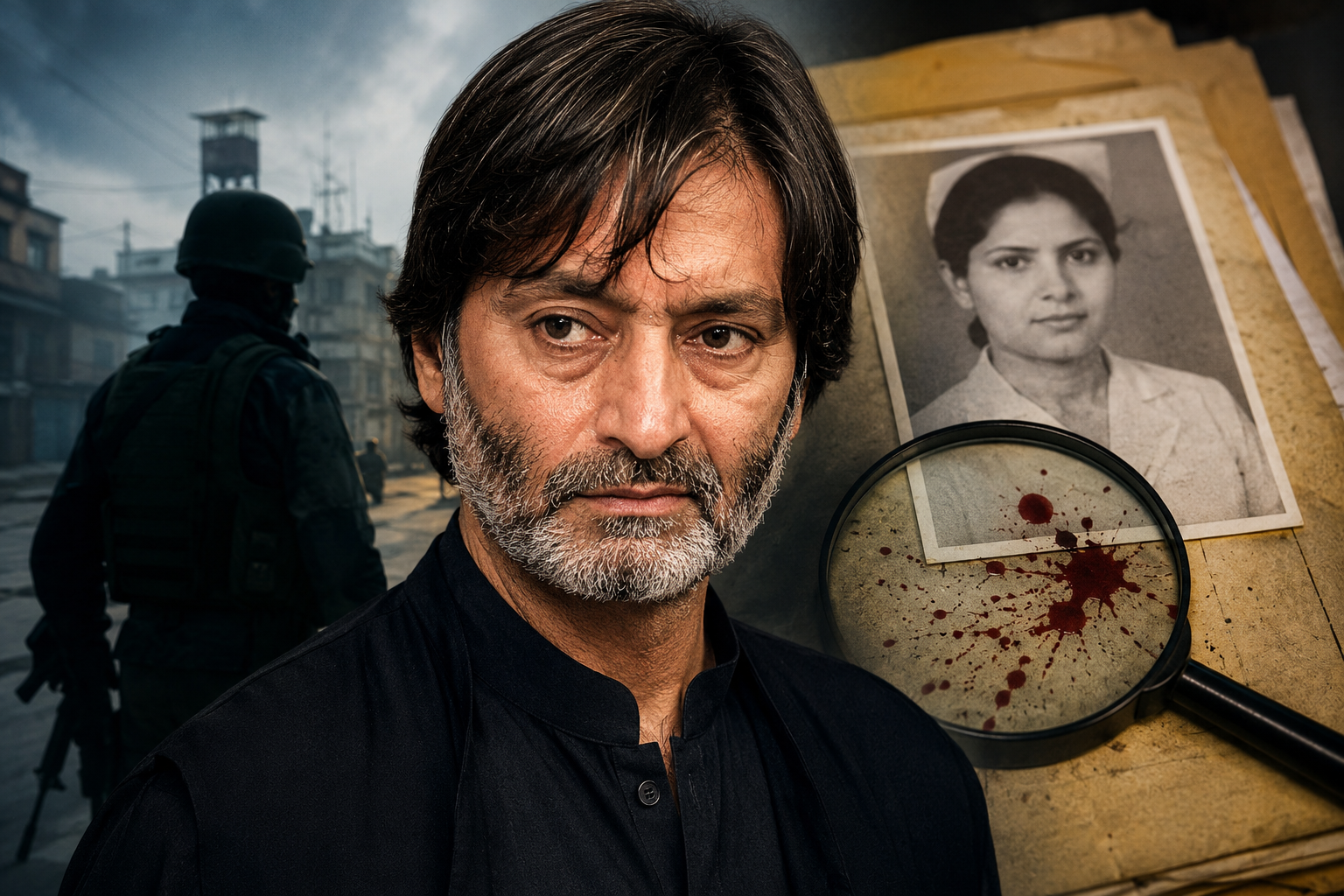
The JKLF Chief Mohammad Yasin Malik has once again become the center of attention after Indian investigators filed a fresh charge sheet linking him to the 36-year-old murder of nurse Sarla Bhat in Srinagar. The latest legal development has revived a case that remained unresolved for more than three decades and has generated significant debate across India and Kashmir.
The State Investigation Agency (SIA) has included Malik among several accused individuals in a detailed charge sheet, claiming that fresh evidence gathered during a renewed investigation supports the allegations. The case has attracted widespread attention because of its historical significance and its potential political implications.
Who Is JKLF Chief Mohammad Yasin Malik?
JKLF Chief Mohammad Yasin Malik serves as the chairman of the Jammu Kashmir Liberation Front (JKLF), a political organization that has remained at the center of the Kashmir issue for decades. Malik has been in India’s Tihar Jail since 2019 after being convicted in a separate terrorism financing case.
Over the years, his arrest and imprisonment have drawn both criticism and support from different political groups, human rights organizations, and governments. While Indian authorities maintain that legal proceedings are based on evidence, Malik and his supporters have consistently described the cases against him as politically motivated.
The latest allegations add another chapter to the long legal history surrounding JKLF Chief Mohammad Yasin Malik.
A Cold Case Reopened After 36 Years
The murder of Sarla Bhat occurred in 1990 during one of the most turbulent periods in Kashmir’s history. Bhat, a nurse working in Srinagar, was abducted and later killed, shocking the local community.
Despite multiple investigations over the years, the case remained unsolved and eventually became one of several cold cases from the early 1990s.
In recent years, Kashmiri Pandit organizations repeatedly urged authorities to reopen several unresolved murder investigations involving members of their community. Responding to these demands, the administration ordered a review of multiple historic cases.
The Sarla Bhat investigation was officially transferred to the State Investigation Agency in March 2024 for a fresh probe. That renewed investigation has now resulted in charges against JKLF Chief Mohammad Yasin Malik and several others.
What the Investigation Claims
According to the State Investigation Agency, investigators collected various forms of evidence before filing the charge sheet.
Officials stated that the investigation relied on:
- Oral witness statements
- Documentary records
- Forensic evidence
- Ballistic analysis
- Medical reports
- Electronic evidence
The agency says all available material was carefully examined before completing the investigation.
The final charge sheet reportedly spans 737 pages, making it one of the most comprehensive documents prepared in connection with the decades-old murder investigation involving JKLF Chief Mohammad Yasin Malik.
Others Named in the Charge Sheet
The investigation does not focus solely on JKLF Chief Mohammad Yasin Malik.
Authorities have also named several additional individuals, including:
- Khursheed Ahmad Chalkoo
- Abdul Hamid Sheikh
- Ghulam Mohammad Taploo
- Mohammad Yousuf Sofi
According to Indian media reports, three of the accused individuals named in the charge sheet have already passed away.
The inclusion of deceased individuals highlights how long the investigation has taken and reflects the historical nature of the case.
Why Was the Case Reopened?
The reopening of the Sarla Bhat murder case followed demands from Kashmiri Pandit organizations seeking justice for victims of violence during the early years of the Kashmir conflict.
For many years, several similar cases remained inactive because investigators faced major challenges, including the passage of time, unavailable witnesses, missing evidence, and changing circumstances.
Reports indicate that former Lieutenant Governor Manoj Sinha instructed authorities to prepare a list of unresolved killings from the 1990s after meeting representatives of Kashmiri Pandit groups.
The Sarla Bhat case was eventually selected for renewed investigation, leading to the latest allegations involving JKLF Chief Mohammad Yasin Malik.
Legal Challenges of Investigating Historic Crimes
Investigating crimes that occurred more than three decades ago presents significant legal and practical difficulties.
Memories fade over time, witnesses may no longer be available, and physical evidence can deteriorate or disappear completely. Courts generally examine such cases carefully to determine whether evidence remains reliable despite the long delay.
Because of these challenges, historic criminal investigations often receive intense public and legal scrutiny.
The allegations against JKLF Chief Mohammad Yasin Malik will ultimately be examined through India’s judicial process, where prosecutors must present evidence supporting their claims while the defense has the opportunity to challenge those allegations.
Malik Remains in Tihar Jail
Even before this latest development, JKLF Chief Mohammad Yasin Malik was already serving a prison sentence in Tihar Jail following his conviction in a separate terrorism financing case.
He has remained behind bars since 2019.
His legal team has consistently rejected accusations against him, arguing that previous and current cases are politically motivated. Indian authorities have denied those claims, maintaining that investigations are conducted according to the law.
The newly filed charge sheet does not change his current imprisonment but could lead to additional legal proceedings depending on how the courts handle the case.
Political Reactions Continue
The renewed investigation has generated mixed political reactions.
Supporters of reopening historic murder cases argue that victims’ families deserve justice regardless of how much time has passed. They believe unresolved crimes should continue to be investigated whenever new evidence becomes available.
Critics, however, question whether reliable evidence can still be established after more than three decades and argue that such investigations should meet the highest legal standards to ensure fairness.
Because JKLF Chief Mohammad Yasin Malik remains one of the most recognizable political figures associated with Kashmir, every legal development involving him receives significant regional and international attention.
What Happens Next?
Following the submission of the 737-page charge sheet, the case will move through the Indian judicial system.
The court will review the evidence presented by investigators before determining the next legal steps. Prosecutors must establish the allegations using admissible evidence, while the defense will have the opportunity to contest every claim.
As with any criminal proceeding, the filing of a charge sheet represents allegations made by investigators and does not itself establish guilt. Any determination regarding criminal responsibility will depend on court proceedings and judicial findings.
Conclusion
The decision to implicate JKLF Chief Mohammad Yasin Malik in the 36-year-old Sarla Bhat murder case has revived a historic investigation that remained unresolved for decades. Indian investigators argue that fresh evidence justified reopening the case, while Malik has previously rejected legal accusations against him in other proceedings.
The 737-page charge sheet marks an important milestone in the investigation, but the legal process is only beginning. Courts will now examine the evidence, hear arguments from both sides, and determine how the case proceeds.
As the judicial process unfolds, the JKLF Chief Mohammad Yasin Malik case is likely to remain under close observation both within India and internationally due to its legal, historical, and political significance.