
Powerful Warning Critical Threats to Modern Civilisation in 2026
Powerful Warning Critical Threats to Australia’s Undersea Internet Lifelines
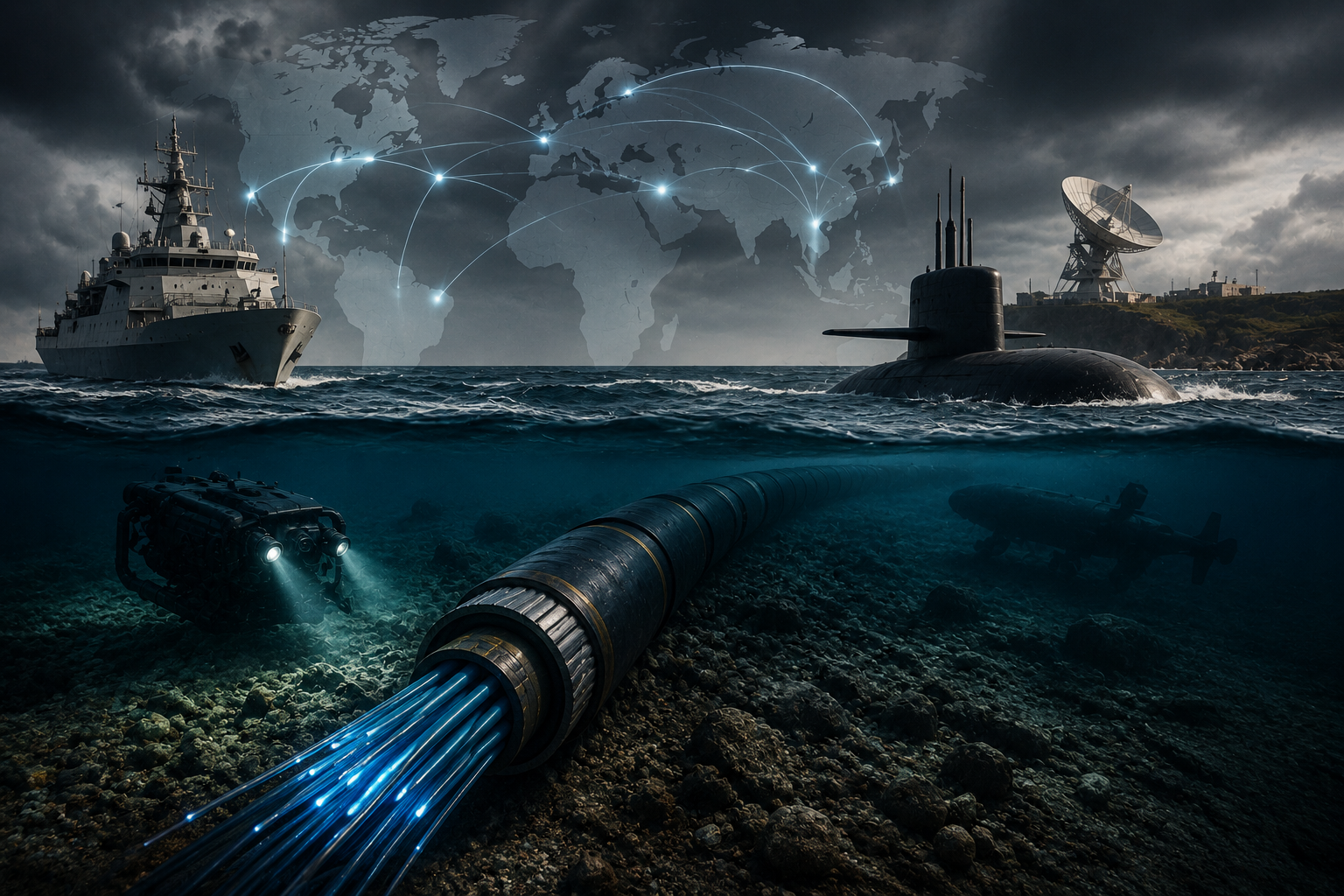
Australia and its allies are sounding the alarm over a growing danger that could impact everything from internet access and cloud services to national security and global communications. Undersea cables, often referred to as the invisible backbone of the modern digital world, are facing increasing risks from sabotage, geopolitical tensions, and environmental hazards.
The latest concerns emerged after Australia, the United States, and the United Kingdom issued a joint warning through the AUKUS defence partnership. Officials believe these critical networks are becoming more vulnerable at a time when global tensions continue to rise.
As discussions intensify, experts describe the situation as a Powerful Warning Critical Threats scenario that could affect millions of people and businesses across Australia and beyond.
Why Undersea Cables Matter More Than Ever
Many people are unaware that almost all international internet traffic travels through underwater fibre-optic cables laid across the ocean floor. These cables carry enormous amounts of data every second, supporting online banking, video calls, cloud computing, artificial intelligence systems, government communications, and military operations.
Australia is particularly dependent on this infrastructure. Government officials estimate that approximately 99 percent of Australia’s internet traffic passes through only a small number of submarine cables connected to landing points near Sydney and Perth.
This concentration has created what experts describe as a Powerful Warning Critical Threats issue because damage to just a few key locations could significantly disrupt communication networks.
Growing Concerns Over Foreign Sabotage
While undersea cables have always faced risks from natural disasters and accidental damage, governments are now increasingly concerned about deliberate attacks.
Australian Defence Minister Richard Marles recently warned that the seabed is becoming a new battlefield. Intelligence agencies and defence experts believe that foreign actors may target critical infrastructure to gain strategic advantages during periods of international tension.
The concerns primarily focus on activities linked to Russia and China, both of which have been accused of involvement in incidents affecting undersea infrastructure in recent years.
As geopolitical competition grows, officials see a Powerful Warning Critical Threats challenge emerging beneath the world’s oceans.
Recent Incidents Raise Alarm Bells
Over the past 18 months, several incidents involving damaged undersea infrastructure have attracted global attention. Some of the most notable events occurred in the Baltic Sea and around the Taiwan Strait.
Although investigations continue in many cases, Western governments have suggested that some incidents may have involved intentional interference rather than accidental damage.
These developments have reinforced fears that undersea communication systems are increasingly becoming strategic targets.
For security planners, these events represent a Powerful Warning Critical Threats reality that can no longer be ignored.
Australia’s Unique Vulnerability
Australia’s geographical location creates both advantages and challenges. As an island nation, it relies heavily on international data connections to maintain economic activity, government services, and global communications.
Josh Cole, an infrastructure expert with international law firm Baker Botts, believes Australia’s dependence on a limited number of landing sites increases the country’s exposure to potential disruptions.
A major interruption could impact internet providers, cloud-based platforms, artificial intelligence systems, financial services, and telecommunications networks.
The concentration of traffic through a small number of routes creates what many experts describe as a Powerful Warning Critical Threats situation for national resilience.
Critical Facilities Could Be Affected
The consequences of a major cable disruption extend far beyond everyday internet use. Important military and technology facilities also rely on stable international connectivity.
Among the locations frequently highlighted by experts are the HMAS Stirling Naval Base in Western Australia and major technology investments such as Google’s planned artificial intelligence data centre on Christmas Island.
These facilities depend on reliable access to global networks for communication, operations, and data processing.
Because of their importance, they represent another example of the Powerful Warning Critical Threats facing modern infrastructure systems.
Existing Protections and Their Limitations
Australia already has one of the world’s strongest regulatory frameworks for protecting undersea cables. Special cable protection zones extend approximately 40 nautical miles offshore, helping reduce the risk of accidental damage from fishing, shipping, and other activities.
These measures provide significant protection within Australian waters. However, challenges become more complex once cables enter international waters, where legal enforcement is more limited.
Despite these safeguards, experts continue to view the situation as a Powerful Warning Critical Threats issue because many vulnerabilities remain outside national jurisdiction.
AUKUS Responds to the Growing Risk
Recognising the importance of protecting critical infrastructure, the AUKUS alliance has announced new measures aimed at strengthening undersea security.
Australia, the United States, and the United Kingdom plan to accelerate the development of advanced underwater vehicle technology. These systems will help monitor and protect critical infrastructure located on the ocean floor.
Officials hope that improved surveillance capabilities will deter hostile actions and provide early warning of potential threats.
The initiative reflects a growing understanding that Powerful Warning Critical Threats to undersea networks require coordinated international responses.
The Private Sector Still Plays a Key Role
Although military technology may help detect threats, private companies remain responsible for installing, maintaining, and repairing most undersea cables.
Telecommunications providers, technology companies, and infrastructure operators continue to invest billions of dollars in expanding global connectivity.
However, repairing damaged cables can be a complex and time-consuming process. Depending on the location and severity of damage, restoration efforts may take days or even weeks.
This reality reinforces the Powerful Warning Critical Threats facing businesses that depend heavily on uninterrupted global communications.
China’s Expanding Influence
Another issue attracting attention is China’s growing role in building and maintaining global telecommunications infrastructure.
Chinese companies have become major players in undersea cable projects across Asia, Africa, the Middle East, and other regions.
While these investments have improved connectivity in many countries, some Western governments worry about potential security implications associated with critical communications infrastructure.
As strategic competition continues to evolve, policymakers increasingly view this trend through the lens of Powerful Warning Critical Threats affecting future digital security.
What the Future Holds
The world is becoming more dependent on digital connectivity with every passing year. Emerging technologies such as artificial intelligence, cloud computing, remote work platforms, and smart infrastructure all require stable international data networks.
Protecting undersea cables is therefore no longer simply a technical issue. It has become a matter of national security, economic stability, and global resilience.
Experts agree that governments, private companies, and international organisations must work together to strengthen protections and improve response capabilities.
Conclusion
The growing concern surrounding undersea cables highlights how dependent modern society has become on infrastructure that remains largely invisible to the public. These networks support everything from online communications and financial transactions to military operations and advanced technology services.
As governments respond to increasing geopolitical tensions and evolving security challenges, the debate surrounding undersea infrastructure will continue to gain importance. The latest warnings from AUKUS leaders serve as a Powerful Warning Critical Threats reminder that protecting the digital arteries of modern civilisation is essential for ensuring stability, security, and prosperity in the years ahead.