
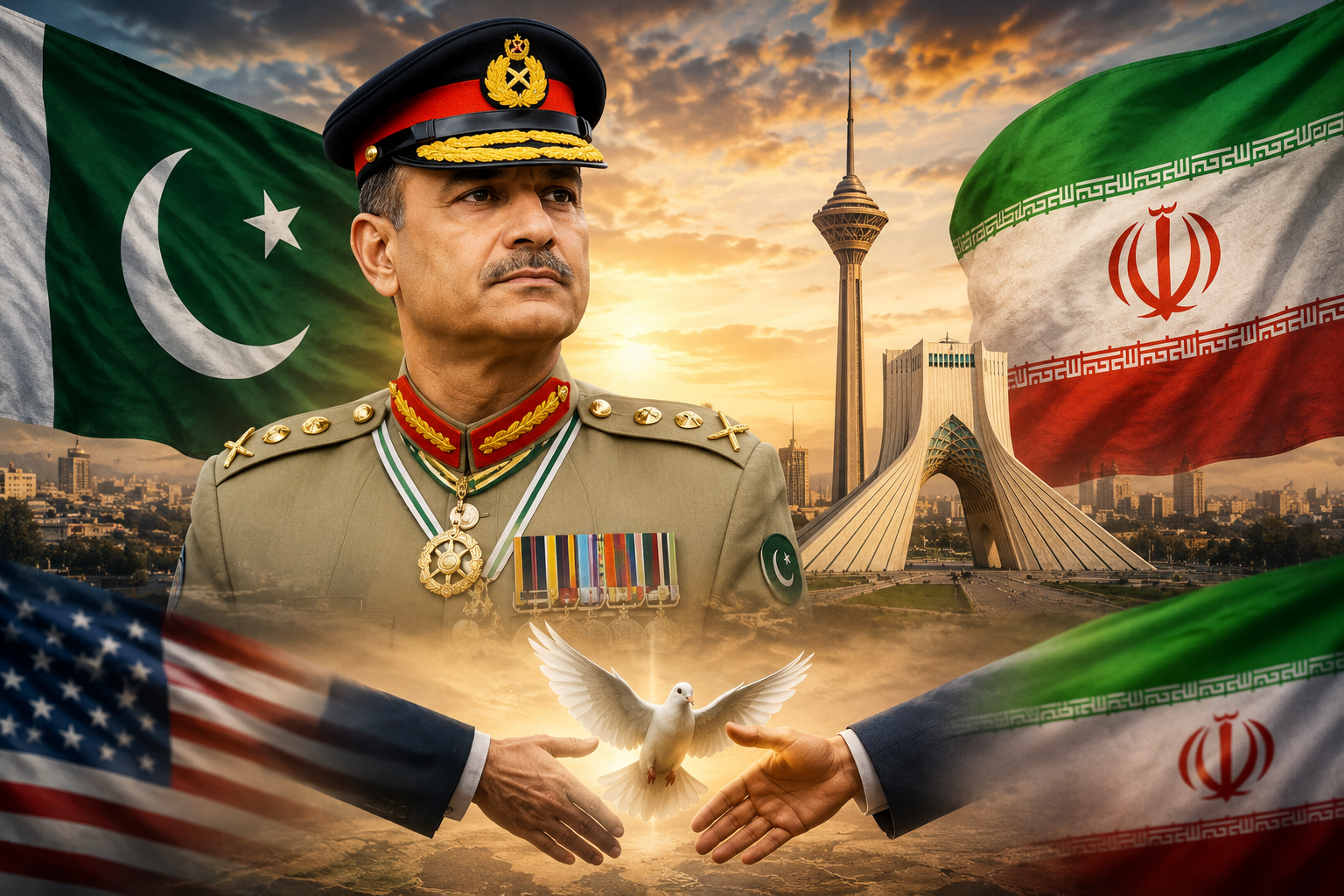
Historic Iran Mission CDF Asim Munir Leads High-Stakes Mediation
Historic Iran Mission CDF Asim: Pakistan Steps Up to Prevent Wider US-Iran War
Pakistan has once again moved into the center of global diplomacy as Chief of Defence Forces (CDF) and Chief of Army Staff (COAS) Field Marshal Asim Munir arrived in Tehran on Friday evening for high-level discussions aimed at reducing tensions between Iran and the United States. The visit marks another important chapter in Pakistan’s growing diplomatic role in the region, with many analysts calling it a defining moment for regional peace efforts.
The Historic Iran Mission CDF Asim has gained worldwide attention after confirmation from both Pakistani and international officials that Islamabad is actively mediating between Washington and Tehran. At a time when fears of a wider Middle East conflict continue to rise, Pakistan’s leadership appears determined to prevent further escalation.
According to the Inter-Services Public Relations (ISPR), Field Marshal Asim Munir was warmly welcomed upon arrival in Tehran by Iran’s Interior Minister Eskandar Momeni. Pakistan’s Interior Minister Mohsin Naqvi was also present during the reception, highlighting the importance of the diplomatic engagement.
The Historic Iran Mission CDF Asim comes during a highly sensitive period in global politics. Relations between the US and Iran remain tense due to disputes over Iran’s nuclear programme, economic sanctions, regional influence, and military activities in the Middle East. With direct negotiations stalled, Pakistan has emerged as a trusted intermediary capable of maintaining communication between both sides.
Sources familiar with the diplomatic process revealed that Field Marshal Asim Munir is expected to discuss several major issues during his Tehran visit, including US-Iran peace talks, regional stability, and the future of negotiations aimed at ending hostilities. Meetings with senior Iranian leadership are also expected to take place during the visit.
The significance of the Historic Iran Mission CDF Asim increased further after US Secretary of State Marco Rubio publicly acknowledged Pakistan’s role in the mediation process. Speaking to reporters in Sweden, Rubio stated that the United States remains in constant communication with Pakistan’s military leadership.
Rubio praised Islamabad for playing what he described as an “admirable role” in efforts to secure a peace agreement between Tehran and Washington. He specifically highlighted Pakistan as the primary country facilitating diplomatic contacts between the two rivals.
This international recognition has strengthened Pakistan’s position as a major diplomatic player in the region. For years, Islamabad has attempted to balance relationships with both Iran and the United States while avoiding direct involvement in regional conflicts. The Historic Iran Mission CDF Asim now reflects Pakistan’s broader strategy of promoting dialogue instead of confrontation.
Meanwhile, Pakistan’s diplomatic activity has intensified in recent weeks. Interior Minister Mohsin Naqvi has already visited Tehran multiple times, meeting Iranian President Masoud Pezeshkian, Foreign Minister Abbas Araghchi, and other senior officials. These meetings focused on reviving stalled negotiations and exploring practical solutions to avoid military escalation.
The Historic Iran Mission CDF Asim follows earlier Pakistan-brokered discussions that took place in Islamabad during April. Those talks were considered historic because they represented rare direct engagement between American and Iranian representatives after months of rising tensions.
Although the first round of negotiations ended without a final agreement, both sides avoided a diplomatic breakdown. Analysts believe Pakistan’s mediation helped keep communication channels open during an extremely dangerous period.
Former US President Donald Trump later postponed a planned second round of negotiations in Islamabad involving senior American envoys Steve Witkoff and Jared Kushner. However, reports suggest that Pakistan continued behind-the-scenes diplomacy despite the delay.
One of the biggest challenges facing negotiators remains Iran’s nuclear programme. Tehran continues demanding sanctions relief and the release of frozen Iranian assets held abroad. At the same time, the United States and its allies want stronger guarantees regarding Iran’s nuclear activities and missile programme.
The Historic Iran Mission CDF Asim is also closely linked to concerns surrounding the Strait of Hormuz, one of the world’s most critical oil shipping routes. Any instability in the region could significantly impact global energy markets and increase economic uncertainty worldwide.
Following military tensions earlier this year involving Iran, Israel, and the United States, fears grew that the conflict could spread beyond the Middle East. Iran warned that any new attacks could trigger broader confrontation, while Washington threatened additional military action if negotiations failed.
Despite these tensions, diplomatic efforts remain active. Pakistan’s Foreign Office has repeatedly confirmed that Islamabad continues to facilitate communication between Tehran and Washington. Officials say Pakistan’s goal is to encourage peaceful dialogue while preventing further violence.
The Historic Iran Mission CDF Asim is particularly important because it demonstrates Pakistan’s willingness to play a constructive role in resolving international crises. Unlike many regional powers that openly support one side, Pakistan has attempted to maintain balanced relations with all parties involved.
Political observers believe Field Marshal Asim Munir’s military and diplomatic influence has become increasingly important in shaping Pakistan’s foreign policy. His involvement in sensitive regional negotiations indicates how seriously Islamabad views the threat of wider conflict.
At the same time, China is also expected to become part of ongoing discussions regarding the US-Iran situation. Prime Minister Shehbaz Sharif is currently scheduled to visit China from May 23 to May 26, where regional security and the ongoing crisis are expected to feature prominently on the agenda.
Iranian officials have also confirmed that Tehran recently received a new proposal from the United States. Iranian Foreign Ministry spokesman Esmaeil Baqaei stated that the proposal is currently under review. However, Iran continues insisting on several conditions before any agreement can move forward.
These demands include the removal of economic sanctions, the release of frozen financial assets, and an end to restrictions affecting Iranian trade and shipping operations. Negotiators also continue debating security concerns related to armed groups allied with Tehran across the Middle East.
The Historic Iran Mission CDF Asim therefore represents more than just a diplomatic visit. It symbolizes Pakistan’s attempt to reduce global tensions while protecting regional stability. If successful, Islamabad could strengthen its international standing as a credible peace broker capable of handling complex geopolitical disputes.
Experts believe the coming days will be crucial for determining whether diplomacy can succeed before tensions rise again. Both Iran and the United States face increasing pressure from allies, political groups, and military institutions demanding tougher positions.
Still, Pakistan appears committed to keeping negotiations alive. The Historic Iran Mission CDF Asim shows that Islamabad is willing to invest significant diplomatic capital in preventing another devastating regional conflict.
As the world watches developments closely, Pakistan’s mediation efforts may ultimately determine whether the region moves toward peace or renewed confrontation. For now, Field Marshal Asim Munir’s Tehran visit stands as one of the most important diplomatic missions undertaken by Pakistan in recent years.



Pingback: Deadly Ebola Surge 7 Critical Warnings Issued in DR Congo
Pingback: US Iran Deal in Sight as CDF Wraps Up 3 Crucial Tehran Talks