Dire Warning Community Pleads To Save NSW River From Worst Water in 2026
Dire Warning: Community Pleads To Save NSW River From Worst Water
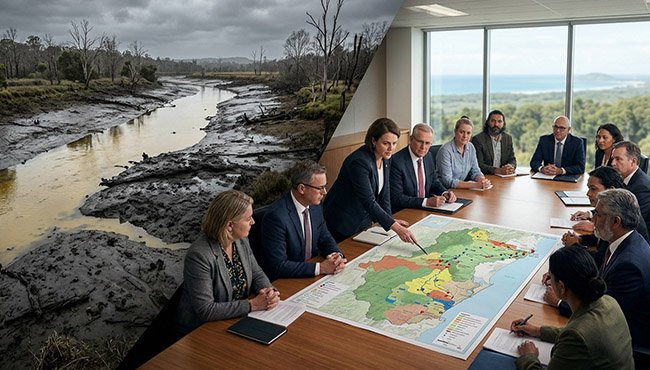
NORTHERN RIVERS, NSW — Dire Warning Community Pleads To Save NSW River From Worst Water in 2026 in New South Wales, where water quality has reached crisis levels. Once home to thriving commercial prawn and oyster operations, the river system is now choked with toxic black mud and de-oxygenated runoff, rendering large stretches functionally dead.
In response to growing public pressure, the NSW government has announced the appointment of a dedicated Richmond River Coordinator to lead day-to-day recovery efforts. The appointment comes alongside a $500,000 funding allocation to rehabilitate the Tuckean Swamp, a major source of acid sulfate runoff and mass fish kills in the lower catchment.
A System in Crisis: Toxic Sludge and Lost Industries
The Richmond River catchment in Northern NSW has suffered from decades of severe environmental degradation. Historical land clearing, agricultural drainage networks, and flood control structures have altered the natural hydrology of the basin.
When heavy rainfall strikes the region, drained coastal wetlands release highly acidic water laden with heavy metals into the main river channel. This phenomenon, known as “blackwater” runoff, strips oxygen from the water column, causing recurring mass fish kills and decimating estuarine habitats.
Local commercial seafood sectors have felt the impact directly:
-
Oyster Farming Collapse: Once a major economic driver for coastal towns like Ballina and Wardell, local oyster leases have faced repeated closures due to persistent bacterial and acid pollution.
-
Prawn Fishery Decline: Nursery habitats in the river’s lower reaches have been severely degraded by toxic sediment, dramatically reducing commercial catches.
-
Recreational Loss: Water quality tests frequently reveal elevated bacterial counts and unsafe pH levels, preventing residents and tourists from swimming.
The Government Plan: Coordinator and Tuckean Swamp Funding
Announcing the measure, NSW Water Minister Rose Jackson confirmed that the state government will fund a two-year trial position to streamline restoration efforts across regional councils, state departments, and local landcare groups. The new Richmond River Coordinator will develop a unified Catchment Improvement Plan to align priorities and secure future funding.
A central focus of the initiative is a $500,000 grant dedicated to the Tuckean Swamp Blue Carbon Demonstration Site. Covering over 6,000 hectares, Tuckean Swamp is widely recognized as one of the worst acid sulfate hot spots in Australia. The funding will explore restoring tidal flows through modified floodgates to neutralize acidic drainage and rebuild saltmarsh habitats.
Environmental advocates note that a Dire Warning Community Pleads for immediate remediation at Tuckean Swamp, as acidity levels recorded in artificial drains have occasionally plummeted to pH 2.4—comparable to vinegar or lemon juice.
Skepticism and Calls for Legislative Powers
While local residents welcome the funding, community leaders and political representatives remain cautious. Many argue that appointing a coordinator without statutory enforcement powers risks creating an advisory role with limited influence over private land management and cross-departmental policy.
Greens MP and former environmental lawyer Sue Higginson stated that the proposal falls short of a fully independent, statutory Catchment Commission with legislative backing. Without statutory powers, the coordinator may struggle to enforce environmental standards across diverse agricultural and urban stakeholders.
Similarly, local campaign advocates emphasize that while a Dire Warning Community Pleads for clean water, long-term success requires active cooperation from private landholders. Engaging farmers, cane growers, and rural property owners across the expansive catchment will be crucial to reducing nutrient run-off and restoring natural floodplain hydrology.
Integrated Catchment Management as a Statewide Model
The NSW government views the Richmond River initiative as a test case for Integrated Catchment Management (ICM) across the state. If the two-year trial successfully coordinates agencies, improves monitoring network data, and delivers measurable water quality gains, similar models could be deployed across other degraded coastal catchments in New South Wales.
Minister Rose Jackson highlighted that bringing fragmented efforts into a single operational framework will generate key evidence for future waterway governance.
Key Takeaways
-
New Leadership: A Dire Warning Community Pleads for river recovery, prompting NSW to appoint a trial Richmond River Coordinator.
-
Targeted Wetland Grant: $500,000 has been allocated to restore tidal connectivity at Tuckean Swamp.
-
Severe Degradation: Acid sulfate soil drainage and low-oxygen blackwater events continue to cause fish kills and collapse local fisheries.
-
Statewide Trial: The two-year project serves as a pilot for Integrated Catchment Management models across New South Wales.
Frequently Asked Questions
Why is the Richmond River considered one of the worst in NSW?
Decades of floodplain drainage have exposed acid sulfate soils, causing highly acidic water and de-oxygenated blackwater to flow into the river during rain events, killing marine life and destroying local fisheries.
What will the new Richmond River Coordinator do?
The coordinator will oversee day-to-day restoration activities, coordinate state agencies and local councils, and draft a unified Catchment Improvement Plan.
How will the $500,000 funding for Tuckean Swamp be spent?
The grant will fund baseline studies and engineering works to reintroduce controlled tidal flows, neutralizing acid runoff and restoring wetland ecosystems. Dire Warning Community Pleads To Save NSW River From Worst Water in 2026
Why are some environmental groups skeptical of the plan?
Critics note that a Dire Warning Community Pleads for a statutory commissioner with independent enforcement powers, whereas a coordinator role may lack the legal authority to enforce compliance across private properties. Dire Warning Community Pleads To Save NSW River From Worst Water in 2026
Community Action and Long-Term Outlook
Local stakeholders agree that tackling the river’s degradation requires moving away from fragmented, short-term fixes. As community groups, environmental scientists, and government delegates begin setting up the framework, residents remain vigilant in demanding real accountability and sustained investment.
A Dire Warning Community Pleads for decisive action on catchment health, serving as a reminder that clean waterways are an essential public resource vital to environmental survival and regional economic stability. Dire Warning Community Pleads To Save NSW River From Worst Water in 2026