
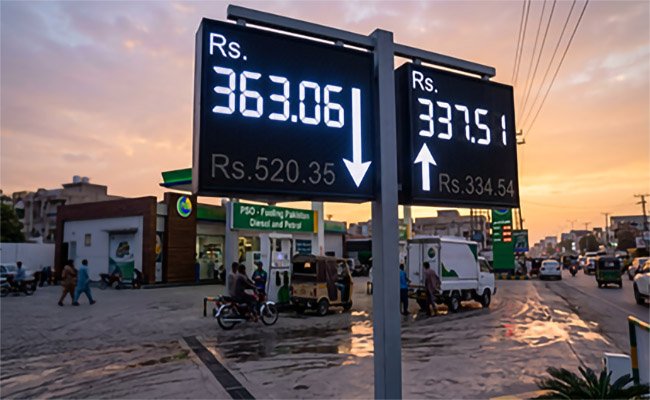
Diesel Crashing by Rs32.63 Hits Huge Low as Petrol Rises Rs2.97
The domestic energy market in Pakistan experienced a historic shift on Wednesday as the federal government announced a massive revision in petroleum prices. In a move that brings substantial relief to the commercial and transport sectors, the price of High-Speed Diesel (HSD) has been slashed dramatically. At the same time, commuters relying on motorbikes and private cars will face a minor increase in their daily expenditures.
Following intensive, high-level discussions between government officials and local oil refineries, the state officially cut HSD prices by Rs32.63 per litre. Conversely, motor gasoline—commonly known as petrol—registered an increase of Rs2.97 per litre. The new rates came into force starting Thursday, August 20, reshaping the financial outlook for businesses and household consumers alike.
The New Fuel Price Breakdown
Following the latest official notification issued by the Petroleum Division, the revised pricing structure for retail fuel stands as follows:
-
High-Speed Diesel (HSD): Retailing at Rs363.06 per litre (down from its previous rate).
-
Motor Gasoline (Petrol): Retailing at Rs337.51 per litre (up from its previous rate).
Despite the dramatic downward shift in HSD, taxation on fuel products remains significant. The federal government continues to levy Rs114 per litre in taxes and duties on petrol, alongside a Rs100 per litre duty on High-Speed Diesel.
For millions of citizens, seeing Diesel Crashing by Rs32.63 Hits as a major turning point after months of escalating operational costs. HSD is the financial backbone of the national supply chain—powering goods transport trucks, agricultural machinery, public buses, and heavy industrial generators. The significant price cut is expected to curb inflationary pressures on essential daily items, food transport, and logistics.
Historical Context: From Record Highs to Market Recovery
To fully appreciate the magnitude of this week’s price drop, one must look back at the extreme volatility that plagued the local energy sector earlier this year.
Fuel prices began an unprecedented upward trend following the outbreak of the US-Iran war on February 28. The conflict severely disrupted oil supply lines throughout the Middle East, sending crude futures skyrocketing on the global market.
-
The Peak: On April 3, local fuel prices hit an all-time record peak. High-Speed Diesel soared to Rs520.35 per litre (having climbed from just Rs281 in late February). During the same period, petrol reached a dizzying Rs458.41 per litre (up from Rs266 in early March).
Since those dark days in early April, the market has slowly stabilized. Seeing Diesel Crashing by Rs32.63 Hits the market today offers a welcome contrast to those peak figures, giving industrial sectors a much-needed margin to recover lost profits.
Policy Shift: Transition to Daily Fuel Price Revisions
Alongside the price announcement, Petroleum Minister Ali Pervaiz Malik highlighted a major structural reform in how domestic fuel prices are governed. Moving forward, fuel prices will be fixed on a daily basis rather than weekly or fortnightly.
This decision was finalized during a high-level meeting involving Prime Minister Shehbaz Sharif and the Federal Cabinet. Under the new directive, the responsibility of determining fuel tariffs has been officially handed over to the Oil and Gas Regulatory Authority (OGRA). OGRA will now adjust retail rates every 24 hours based on real-time international market trends and currency valuation.
Why Daily Pricing?
Since early March, the government relied on weekly price revisions alongside aggressive energy conservation measures to cushion the economy against Middle East supply shocks. The federal government even rolled out targeted fuel subsidies in April to protect lower-income groups.
However, given the lingering tensions between Washington and Tehran, global crude markets experience rapid daily fluctuations. The shift to daily pricing ensures that local pump rates reflect international reality immediately, protecting both consumers and refineries from sudden market shifts. Diesel Crashing by Rs32.63 Hits Huge Low as Petrol Rises Rs2.97
How the Price Changes Impact Society
The contrasting directions of petrol and diesel prices mean that different segments of the economy will feel different impacts:
1. Middle and Lower-Class Commuters
Petrol is predominantly consumed by two-wheelers (motorcycles), rickshaws, and small family vehicles. Because petrol experienced a Rs2.97 per litre increase, lower-middle-class households will see a slight bump in their weekly commuting budgets. While Rs2.97 is a modest increment compared to the previous price spikes, every rupee counts for daily wage earners and small business owners.
2. Transport and Logistics
On the flip side, news of Diesel Crashing by Rs32.63 Hits heavy transport operators like a breath of fresh air. Long-haul freight liners, interstate passenger buses, and agricultural haulers rely exclusively on diesel. A Rs32.63 drop per litre significantly slashes operational overhead, which should naturally lead to lower freight charges and cheaper passenger fares over time.
3. Power Generation & Industry
Industrial sectors facing electricity load-shedding rely on heavy-duty diesel generators to keep factories running. Reduced HSD costs directly translate to lower production overheads, helping local industries remain competitive in regional trade. Diesel Crashing by Rs32.63 Hits Huge Low as Petrol Rises Rs2.97
Interestingly, petrol and HSD account for the lion’s share of national fuel consumption, with combined sales reaching 700,000 to 800,000 tonnes monthly. By comparison, kerosene oil sees a modest monthly demand of around 10,000 tonnes. Diesel Crashing by Rs32.63 Hits Huge Low as Petrol Rises Rs2.97
Analyzing the Market Dynamics
How did the government achieve such a massive reduction in HSD? The answer lies in successful renegotiations with domestic oil refineries. By working out revised premium structures, import margins, and refining costs, the Petroleum Division managed to unlock cost savings that were passed directly to consumers.
With Diesel Crashing by Rs32.63 Hits headlines across major financial portals, analysts believe this could mark the beginning of a broader economic cooling period. When transport costs drop, wholesale food prices usually follow—bringing indirect relief even to those who do not own a vehicle. Diesel Crashing by Rs32.63 Hits Huge Low as Petrol Rises Rs2.97
Summary & Outlook
As the market adapts to the news of Diesel Crashing by Rs32.63 Hits consumer sentiment positively, all eyes are now on OGRA’s new daily pricing mechanism. While petrol users must absorb a minor price hike of Rs2.97, the substantial relief in diesel pricing promises to ease supply-chain pressures across the entire economy.Diesel Crashing by Rs32.63 Hits Huge Low as Petrol Rises Rs2.97
With global geopolitical dynamics continuing to evolve, daily price transparency will be vital in keeping fuel markets stable, fair, and aligned with global reality. Diesel Crashing by Rs32.63 Hits Huge Low as Petrol Rises Rs2.97