Asad Qaiser Claims 3 Shocking Barriers to Skardu Flight
Asad Qaiser Claims 5 Explosive Restrictions Blocked His Gilgit-Baltistan Campaign Visit
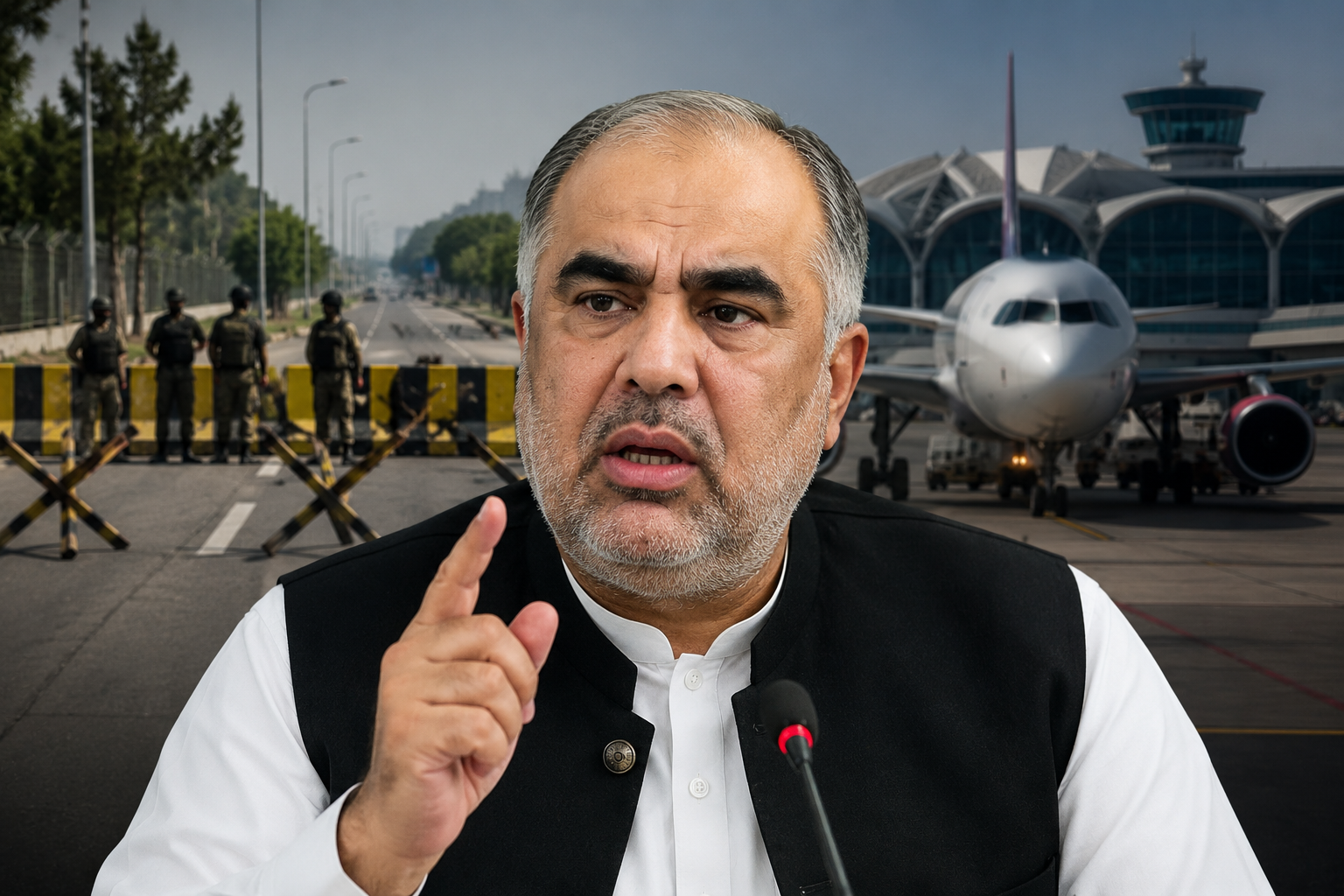
Pakistan Tehreek-e-Insaf (PTI) leader Asad Qaiser has sparked fresh political debate after alleging that restrictions on his movement prevented him from reaching Islamabad International Airport in time for a scheduled flight to Skardu. The incident comes at a crucial time as political parties intensify campaigning ahead of the upcoming Gilgit-Baltistan elections scheduled for June 7.
The controversy has raised questions about political freedom, election transparency, and the overall democratic process in the region. Asad Qaiser claims that the restrictions were specifically aimed at stopping him from participating in PTI’s election campaign activities in Gilgit-Baltistan.
Asad Qaiser Misses Flight to Skardu
Speaking at a press conference in Islamabad, Asad Qaiser explained that he encountered multiple road blockades while travelling to the airport. According to him, these restrictions caused significant delays and ultimately resulted in him missing his flight to Skardu.
Initially, Qaiser believed the road closures were part of routine security arrangements. However, he later concluded that the restrictions were linked directly to his planned political activities in Gilgit-Baltistan.
Asad Qaiser claims that the obstacles were not accidental but were intentionally placed to prevent him from reaching his destination and participating in the election campaign.
The allegations have quickly become a major talking point in Pakistan’s political landscape as parties prepare for a highly competitive election in the mountainous region.
Questions Over Election Fairness
One of the central issues raised during the press conference was the fairness of the upcoming elections. Asad Qaiser claims that while leaders from other political parties have been allowed to campaign freely across Gilgit-Baltistan, PTI leaders are facing restrictions.
He specifically pointed to the movements of prominent politicians from rival parties. According to Qaiser, leaders from both the Pakistan Peoples Party (PPP) and the Pakistan Muslim League-Nawaz (PML-N) have been actively campaigning in the region without facing similar obstacles.
This contrast, he argued, creates an uneven political environment and raises concerns about whether all parties are being given equal opportunities to engage with voters.
Asad Qaiser claims that if political leaders are prevented from reaching campaign events, the credibility of the election process could be seriously damaged.
Growing Political Tensions Ahead of GB Elections
The Gilgit-Baltistan elections have become increasingly important as major political parties seek to strengthen their influence in the strategically significant region.
Political analysts believe that the election results could have broader implications for national politics. As a result, every campaign activity is being closely watched by political observers, journalists, and voters.
During the press conference, Asad Qaiser claims that actions such as road closures and travel restrictions contribute to public skepticism regarding electoral transparency.
He warned that any perception of unfair treatment could undermine confidence in the democratic process and create unnecessary controversy around the election results.
The PTI leader stressed that free and fair elections require equal access for all candidates and political representatives.
Criticism of the Ruling Coalition
In addition to discussing the travel restrictions, Qaiser criticized the current ruling coalition. He argued that the PML-N and PPP are operating with similar political objectives and policies.
Asad Qaiser claims that both parties are effectively working together while presenting themselves as separate political forces. According to him, this has reduced meaningful political competition and limited opportunities for genuine democratic debate.
His remarks reflect the growing rivalry between PTI and the governing coalition, which has intensified in recent months.
Political tensions remain high as opposition parties continue to challenge government policies and decisions across various issues.
Vision for Gilgit-Baltistan Development
Despite focusing heavily on the alleged restrictions, Qaiser also used the occasion to outline PTI’s vision for Gilgit-Baltistan.
He stated that a future PTI government would prioritize tourism development and infrastructure improvements throughout the region. Gilgit-Baltistan is widely recognized for its breathtaking mountains, scenic valleys, and adventure tourism potential.
Asad Qaiser claims that the region possesses enormous untapped economic opportunities that could benefit local communities and contribute significantly to Pakistan’s economy.
He emphasized that improved infrastructure, better transportation networks, and increased tourism investment could transform Gilgit-Baltistan into a major destination for both domestic and international visitors.
Mustafa Nawaz Khokhar Supports Concerns
Former senator Mustafa Nawaz Khokhar also addressed the press conference and supported concerns regarding the travel disruptions.
Khokhar alleged that hundreds of passengers were affected by the road closures and that many individuals missed scheduled flights as a result.
According to him, every political candidate should have the right to campaign freely without interference.
His comments reinforced the concerns raised by PTI leaders regarding equal political opportunities during the election period.
Asad Qaiser claims that his experience highlights a broader issue affecting democratic participation and political competition in Pakistan.
Calls for Political Dialogue
Another significant topic discussed during the event was the need for political dialogue and national reconciliation.
Khokhar argued that Pakistan’s political challenges cannot be resolved through confrontation alone. Instead, he called for meaningful discussions between political stakeholders to build consensus on key national issues.
He proposed a new national charter that would involve all major political parties and create a framework for democratic cooperation.
Similarly, Asad Qaiser claims that political dialogue remains essential for reducing tensions and strengthening democratic institutions.
Observers note that calls for national reconciliation have become increasingly common as political divisions continue to deepen across the country.
Concerns Over Delayed Negotiations
The press conference also touched on previous efforts aimed at facilitating political negotiations.
Khokhar noted that the Tehreek Tahaffuz-e-Ayeen Pakistan alliance had previously accepted an offer for dialogue. However, he expressed disappointment that little progress had been made in the months since those discussions were proposed.
Asad Qaiser claims that delays in political engagement only worsen existing divisions and make it more difficult to achieve consensus on important national matters.
Both leaders stressed the importance of moving beyond political deadlock and focusing on solutions that benefit the country as a whole.
Impact on Public Perception
Political controversies often influence public confidence in democratic institutions. The allegations surrounding Qaiser’s missed flight have already generated widespread discussion on social media and news platforms.
Many observers are now closely monitoring developments in Gilgit-Baltistan to see whether additional concerns emerge during the campaign period.
Asad Qaiser claims that transparency and equal treatment are essential for maintaining public trust in the electoral process.
Whether authorities respond to these allegations or provide clarification regarding the road closures remains to be seen.
Conclusion
The controversy surrounding Asad Qaiser’s missed flight to Skardu has added a new dimension to the political environment ahead of the Gilgit-Baltistan elections. Asad Qaiser claims that movement restrictions prevented him from reaching the airport and participating in campaign activities, while also raising broader concerns about election fairness and political freedom.
As election day approaches, these allegations are likely to remain part of the national conversation. Political parties, election observers, and voters will continue watching closely to ensure the democratic process remains transparent and credible.
With campaign activities intensifying across Gilgit-Baltistan, the coming days could prove critical in shaping both the election outcome and public perception of the electoral process.