
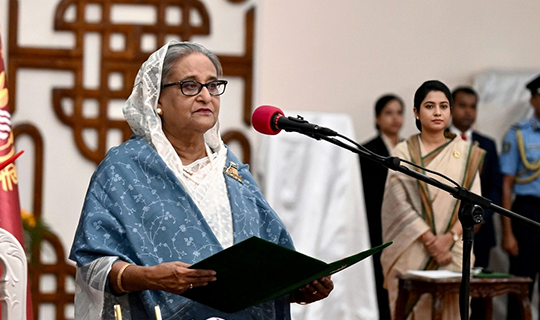
Sheikh Hasina faces Bangladesh prosecutor 1 grim execution threat looms
Sheikh Hasina Faces Bangladesh : The High-Stakes Return, Legal Battles, and Uncertain Future
The political landscape of South Asia is witnessing one of its most dramatic chapters as former Prime Minister Sheikh Hasina confronts the ultimate legal and political reckoning. Following a historic mass uprising that brought her 15-year rule to a sudden, turbulent end in August 2024, the path ahead has narrowed drastically for the 79-year-old former leader. With a death sentence hanging over her head and prosecutors standing firm, Sheikh Hasina faces Bangladesh authorities and a judicial system that has closed its doors to standard legal appeals.
Chief prosecutor Md Aminul Islam recently delivered a stark statement to the media, making it clear that the ousted leader has run out of legal avenues. As debates intensify across local communities and international capitals alike, Sheikh Hasina faces Bangladesh courts with no statutory window left to challenge her verdict. This comprehensive overview explores the background, the legal verdicts, the extradition deadlock with India, and the volatile political climate currently gripping the nation.
The Path to Conviction and the Death Sentence
To understand why Sheikh Hasina faces Bangladesh with such severe legal penalties, one must look back at the turbulent events of 2024. What began as a student-led protest movement snowballed into a massive national uprising against her administration. According to United Nations reports, the subsequent state crackdown resulted in up to 1,400 deaths, drawing widespread international condemnation.
As public anger mounted and crowds stormed her official residence in Dhaka, Hasina fled the country by helicopter, seeking refuge in neighboring India, where she has remained in self-imposed exile. Choosing not to return for her trial—which she dismissed as a “jurisprudential joke”—she was assigned a state-appointed lawyer while international witnesses testified about the horrors of the crackdown.
In November 2025, a tribunal in Dhaka delivered its verdict: Sheikh Hasina was found guilty in absentia on three counts of crimes against humanity, including command responsibility, incitement, and failing to prevent atrocities. Because of these rulings, Sheikh Hasina faces Bangladesh tribunals that have already handed down a death sentence.
The Legal Deadlock: Expired Appeals and Extradition
The legal battle has entered a critical bottleneck. Prosecutor Md Aminul Islam noted that the statutory appeal period has officially expired, meaning no further legal challenges can be formally filed within the domestic court system. Consequently, Sheikh Hasina faces Bangladesh prosecutors who maintain that the capital punishment verdict must be executed if she steps foot inside the country.
Meanwhile, Dhaka has formally requested her extradition from India under existing bilateral treaties. New Delhi has stated that the request remains under legal review, creating a delicate diplomatic balancing act that has occasionally strained bilateral ties. Adding to the administrative friction, Hasina’s legal team recently sought to renew her passport. However, authorities have indicated that passport renewal can be legally withheld for individuals convicted of serious crimes, meaning Sheikh Hasina faces Bangladesh officials who are actively closing every loophole for escape or unrestricted travel.
Defiance from Exile and the Pledge to Return
Despite living in secretive conditions in India—where she is rarely seen and only occasionally addresses supporters via frail telephone calls—Hasina has remained defiant. She has repeatedly stated her intention to return home, telling international journalists that she is fully aware of the grave personal risks involved.
“Fear cannot decide my duty to the people,” she has maintained. This rhetoric has kept her political base galvanized, even as Sheikh Hasina faces Bangladesh security forces that are primed to arrest her upon arrival. Her supporters view her potential homecoming as a rallying cry against what they term a politically motivated judicial process, while her fierce critics see it as an inevitable confrontation with justice.
Impact on Prime Minister Tarique Rahman’s Government
The announcement of her planned return presents a complex administrative and security challenge for the current government under Prime Minister Tarique Rahman. Public sentiment inside the country is sharply divided: a large portion of the population demands that the death sentence be carried out, while others worry that her return could trigger violent clashes between rival political factions.
Recent incidents underscore these underlying tensions. Police recently arrested twelve individuals in connection with a series of petrol bomb attacks targeting public property, including an empty bus and police vehicles. Authorities identified the suspects as members of the Awami League, the political party formerly led by Hasina, which has since been banned. As security agencies clamp down on domestic unrest, Sheikh Hasina faces Bangladesh political waters that are far more hostile than when she departed.
Economic Legacy Versus Human Rights Abuses
History will likely view Sheikh Hasina’s 15-year tenure through a deeply polarized lens. As the daughter of the revolutionary leader who steered Bangladesh to independence in 1971, she initially presided over an era of remarkable economic transformation. Under her leadership, the nation of 170 million shifted from a primarily agricultural economy into a booming global manufacturing and garment hub characterized by impressive GDP growth.
However, this economic progress came at a steep democratic cost. Human rights organizations and domestic critics long accused her administration of suppressing dissent, jailing political opponents, passing restrictive anti-press regulations, and committing systemic abuses against opposition activists. These long-simmering grievances ultimately culminated in the 2024 uprising. Today, even as economists acknowledge her past developmental achievements, Sheikh Hasina faces Bangladesh courts primarily over the violent suppression of those very citizens.
Conclusion: What Lies Ahead?
As December approaches, all eyes remain fixed on New Delhi and Dhaka. Whether India will facilitate her return through official extradition channels or if she will attempt an unassisted journey remains to be seen. What is certain, however, is that Sheikh Hasina faces Bangladesh authorities armed with a final, unappealable conviction.
The unfolding saga is more than just a legal battle—it is a defining test for Bangladesh’s democratic institutions, rule of law, and internal stability as the nation navigates one of the most turbulent transitions in its modern history.