
Historic Relief Petrol Price Cuts Bring 2 Major Benefits To Citizens
Historic Relief Petrol Price: Fuel Rates Dropped as Global Oil Slides
The government on Tuesday announced a fresh reduction in domestic fuel costs, bringing a welcome Historic Relief Petrol Price update for consumers across the country. Under the new revision, the price of petrol has been reduced by Rs5.45 per litre, while high-speed diesel (HSD) has been slashed by Rs3.68 per litre.
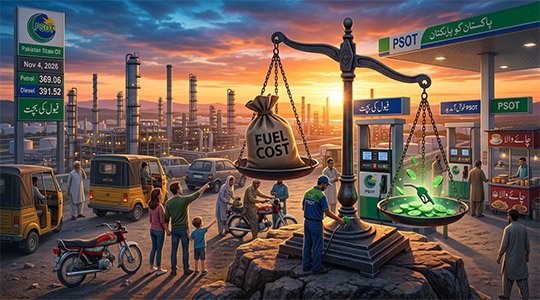
Following the official notification by the Oil and Gas Regulatory Authority (Ogra), the new rates take effect on Wednesday, Nov 4. Petrol will now retail at Rs369.06 per litre, while HSD will cost Rs391.52 per litre. This latest rate cut provides much-needed easing at the pumps, driven primarily by shifting international market dynamics and strategic internal arrangements.
What Driven the Historic Relief Petrol Price Reduction?
The primary catalyst for this price adjustment stems from global energy markets, where international crude prices slipped roughly 2 per cent to three-week lows. Brent futures dropped $1.63 (2%) to $103.14 a barrel, while US West Texas Intermediate (WTI) crude fell 67 cents (1%) to $95.79. Investors continue to weigh active negotiations aimed at resolving conflicts in Ukraine and Iran against concerns of potential supply disruptions.
Beyond international trends, domestic arrangements have directly enabled this Historic Relief Petrol Price decrease. Under a 30-day agreement, domestic oil refineries are contributing to the petroleum levy by absorbing a cumulative impact of Rs15 billion. This initiative alone allows for a Rs14.71 reduction in consumer-end petrol pricing.
+--------------------------+--------------------+--------------------+--------------------+
| Fuel Type                | Old Price (approx) | New Price (Rs/L)   | Price Reduction    |
+--------------------------+--------------------+--------------------+--------------------+
| Petrol                   | Rs374.51           | Rs369.06           | Rs5.45             |
| High-Speed Diesel (HSD)  | Rs395.20           | Rs391.52           | Rs3.68             |
+--------------------------+--------------------+--------------------+--------------------+
Even with these cuts, substantial government levies remain in place. The state continues to collect Rs114 per litre in duties on petrol and Rs100 per litre on diesel.
Understanding the Economic Impact on Everyday Citizens
A reduction in the Historic Relief Petrol Price directly touches everyday households, particularly middle and lower-middle-class families. Petrol is primarily consumed by private commuter transport, small vehicles, auto-rickshaws, and two-wheelers. Lower prices at the pump directly reduce daily commuting expenses for millions of workers.
Similarly, high-speed diesel plays a pivotal role in the national economy. HSD fuels heavy transport fleets, agricultural machinery, power plants, and industrial generators. When diesel rates drop, overall logistics and transport costs decline, which helps cushion the broader public from inflationary pressures on essential goods. Together, petrol and HSD serve as the primary fuel revenue drivers, with monthly sales reaching between 700,000 and 800,000 tonnes, compared to just 10,000 tonnes for kerosene.
Historical Context: From Peak Crisis to Gradual Recovery
To fully appreciate the current Historic Relief Petrol Price trend, it helps to look back at the dramatic volatility experienced earlier this year:
-
Spring Price Peaks: On April 3, HSD reached an all-time peak of Rs520.35 per litre, having escalated rapidly from Rs281 following geopolitical conflict outbreaks in late February.
-
Record High Petrol Rates: Petrol hit a historic high of Rs458.41 per litre on April 3, surging up from Rs266 recorded in early March.
-
Shift to Daily Pricing: To manage intense global price swings, the government empowered Ogra on July 17 to adjust local fuel prices on a daily basis based directly on international market movements.
                  HISTORICAL FUEL PRICE TRAJECTORY (2026)

  Rs 550 |-------------------------------------------------------------
         |                     [April 3 Peak]
  Rs 450 |                     HSD: Rs 520.35
         |                     Petrol: Rs 458.41
  Rs 350 |------------------------------------------[Nov 4 Current]----
         |                                          HSD: Rs 391.52
  Rs 250 |_[March Base]_                            Petrol: Rs 369.06
         |  HSD: Rs 281
         |  Petrol: Rs 266
         +-------------------------------------------------------------
            Feb/Mar 2026          April 2026            Nov 2026
Because of these extreme cost surges, the government enacted strict energy conservation policies. Commercial markets were instructed to close early by 9pm, and fuel allocations for official government vehicles were slashed by 50 per cent for a three-month period. Targeted relief schemes were also introduced for owners of motorcycles, auto-rickshaws, and small vehicles up to 800cc.
Negotiations and Future Outlook for Consumers
Following the latest Historic Relief Petrol Price announcement, government officials suggest that further financial easing may be on the horizon. Petroleum Minister Ali Pervaiz Malik highlighted ongoing efforts to extend similar relief mechanisms to liquefied petroleum gas (LPG) users, hinting that “even better news will come before us”.
Simultaneously, talks between government officials and political leadership—including Jamaat-i-Islami representatives—remain active to establish long-term relief structures for low-income citizens. As daily pricing mechanisms continue to reflect international movements smoothly, consumers can monitor every Historic Relief Petrol Price update to stay informed on fuel trends.
Broader Government Measures and Relief Initiatives
To soften the blow of fluctuating energy markets, several structural policies remain active:
-
Targeted Subsidies: Dedicated relief programs continue providing targeted fuel support for low-engine-capacity vehicles.
-
Refinery Contributions: Ongoing collaborations with domestic refineries help manage the petroleum levy impact to maintain a lower Historic Relief Petrol Price for retail buyers.
-
Daily Regulatory Oversight: Continuous pricing oversight by Ogra ensures international price drops translate quickly to domestic pumps.
Whether prices continue their downward trend depends on international crude benchmarks and ongoing domestic talks. For now, this Historic Relief Petrol Price update offers genuine respite for commuters and commercial transport operators nationwide.