
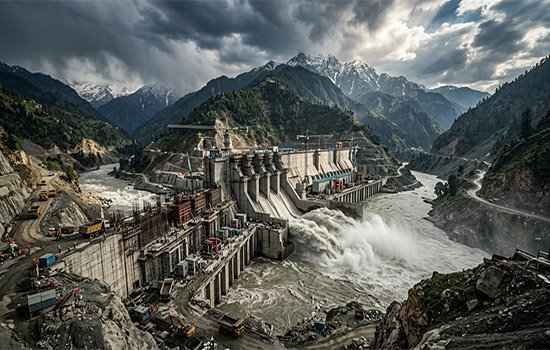
Hague Court Directs India to 1 Great Water Treaty and Halt Dam Work
Hague Court Directs India to Uphold Indus Waters Treaty in Landmark Ruling
In a major international legal development, the Permanent Court of Arbitration (PCA) has issued a binding award regarding the decades-old Indus Waters Treaty (IWT). Addressing the ongoing water distribution dispute between South Asian neighbors, the Hague Court Directs India to fully honor its treaty obligations and refrain from taking unilateral measures that disrupt water allocation protocols.
This ruling comes after months of escalating diplomatic and operational friction over hydroelectric construction along shared river systems.
Overview of the Permanent Court of Arbitration Ruling
The unanimous decision rendered by the five-member arbitral tribunal in The Hague rejected claims that bilateral agreements could be suspended unilaterally. In its published findings, the court reaffirmed that the 1960 accord remains entirely operative under international law.
                  ┌──► Unilateral Abeyance Declared Invalid
                  │    - IWT remains 100% operational
                  │    - No provision for single-party suspension
PCA ARBITRAL ─────┤
RULING SUMMARY    │    - Interim Restrictions Imposed
                  │    - Ratle Dam wall concreting halted
                  └──► Binding Compliance Requirements
                       - Hydro designs must meet western river rules
Under the legal framework, the Hague Court Directs India to adhere strictly to established design specifications and operational constraints for all hydro-electric infrastructure built on western river basins.
Legal Status of the Indus Waters Treaty
The dispute reached international arbitration following New Delhi’s announcement last year seeking to place the treaty in abeyance. Pakistani authorities challenged the move, asserting that neither the original text of the IWT nor the 1969 Vienna Convention on the Law of Treaties permits a single state to halt bilateral water-sharing commitments.
+-----------------------------------+-----------------------------------+
| Treaty Provisions                 | Allocation & Responsibilities     |
+-----------------------------------+-----------------------------------+
| Western Rivers (Indus, Jhelum,    | Allocated primarily to Pakistan   |
| Chenab)                           | for unrestricted usage            |
+-----------------------------------+-----------------------------------+
| Eastern Rivers (Ravi, Beas,       | Allocated exclusively to India    |
| Sutlej)                           | for unrestricted usage            |
+-----------------------------------+-----------------------------------+
| Dispute Resolution Mechanisms     | Neutral Expert & Court of         |
|                                   | Arbitration (PCA)                 |
+-----------------------------------+-----------------------------------+
The arbitral panel explicitly concluded that none of the public grounds presented justified suspending operational compliance. Consequently, the Hague Court Directs India to maintain data-sharing protocols and respect downstream flow rights.
Specific Orders on Hydro-Electric Projects
The court’s order focused heavily on two key run-of-river projects: the Kishenganga Hydro-Electric Plant (KHEP) and the Ratle Hydro-Electric Plant (RHEP).
                       [ PCA INTERIM MEASURES ]
                                   │
         ┌─────────────────────────┴─────────────────────────┐
         ▼                                                   ▼
[ Ratle Hydro Project (RHEP) ]                   [ Kishenganga Project (KHEP) ]
- Dam wall concreting halted                     - Under parallel review
- Power intake structure capped                  - Awaiting final technical
- Mandatory schedule reporting                   - Expert verdict in July 2027
To prevent irreversible changes during ongoing legal proceedings, the Hague Court Directs India to freeze specific structural phases of the Ratle plant on the Chenab River.
-
Concreting Restrictions: Construction of the main RHEP dam wall and power intake structure must not exceed specified elevation levels.
-
Timeline Binding: The suspension remains active until 90 days after a World Bank-appointed neutral expert delivers a final technical assessment, expected in July 2027.
-
Mandatory Reporting: Project managers must submit regular construction schedule reports to ensure compliance with the court’s physical height limitations.
Through these interim restrictions, the Hague Court Directs India to pause structural developments that could permanently alter water discharge patterns into downstream areas.
Bilateral Responses and International Reactions
The ruling has drawn distinct responses from officials in Islamabad and New Delhi, reflecting long-standing procedural disagreement over arbitral jurisdiction.
+------------------------+----------------------------------------------------+
| Country                | Official Position & Primary Reaction               |
+------------------------+----------------------------------------------------+
| Pakistan               | Welcomes PCA findings; urges full treaty compliance|
+------------------------+----------------------------------------------------+
| India                  | Rejects PCA jurisdiction; considers award invalid  |
+------------------------+----------------------------------------------------+
| International Bodies   | Urge diplomatic engagement via IWT framework       |
+------------------------+----------------------------------------------------+
-
Islamabad’s Position: The Pakistani Ministry of Foreign Information welcomed the tribunal’s findings, describing the award as confirmation that treaty obligations cannot be cast aside. Officials noted that the Hague Court Directs India to return to standard institutional mechanisms under the Permanent Indus Commission.
-
New Delhi’s Stance: India’s Ministry of External Affairs rejected the arbitration outcome, maintaining that the tribunal lacks jurisdiction over its sovereign water management decisions. Indian representatives did not participate in oral or written arguments during the specific application proceedings.
Despite non-participation, tribunal members assessed available public records and diplomatic communications before issuing their final award. Because the arbitral process holds formal legal standing, the Hague Court Directs India to re-engage with established dispute settlement channels.
Long-Term Implications for Regional Water Security
As environmental demands and population growth put pressure on South Asian water resources, adhering to structured international agreements remains crucial for regional stability.
                        ┌──► Transboundary Resource Rules
                        │    - Protects downstream flows
                        │    - Prevents sudden structural shifts
REGIONAL WATER SECURITY ┼──► Institutional Continuity
                        │    - Restores Permanent Indus Commission
                        │    - Enforces legal dispute procedures
                        └──► Neutral Expert Coordination
                             - Technical review ongoing till 2027
By issuing this definitive ruling, the Hague Court Directs India to maintain the integrity of shared river management systems. The court emphasized that the treaty can only be modified or ended through mutual consent by both nations, reinforcing the principle that long-standing bilateral treaties remain legally binding regardless of political friction.
Moving forward, international legal observers will watch closely to see how the tribunal’s directives influence the World Bank neutral expert process leading into 2027. As regional developments unfold, the requirement that the Hague Court Directs India to suspend key dam construction marks a critical precedent for transboundary water management.
Key Takeaways
-
Unanimous Award: The Court of Arbitration ruled that the Indus Waters Treaty cannot be suspended unilaterally.
-
Construction Pause: Specific height levels on the Ratle Hydro-Electric Plant wall must remain frozen until 90 days after the 2027 neutral expert decision.
-
Legal Framework: The Hague Court Directs India to follow established Western River design parameters for all present and future projects.



Pingback: Heroic Tourist Taps Card to Pay 1 Bill Before Escaping Bali