
Table of Contents
TogglePakistan China Relations 11 Powerful Truths Behind Xi’s Praise
Pakistan China Relations: 11 Powerful Truths Behind Xi and Shehbaz Meeting
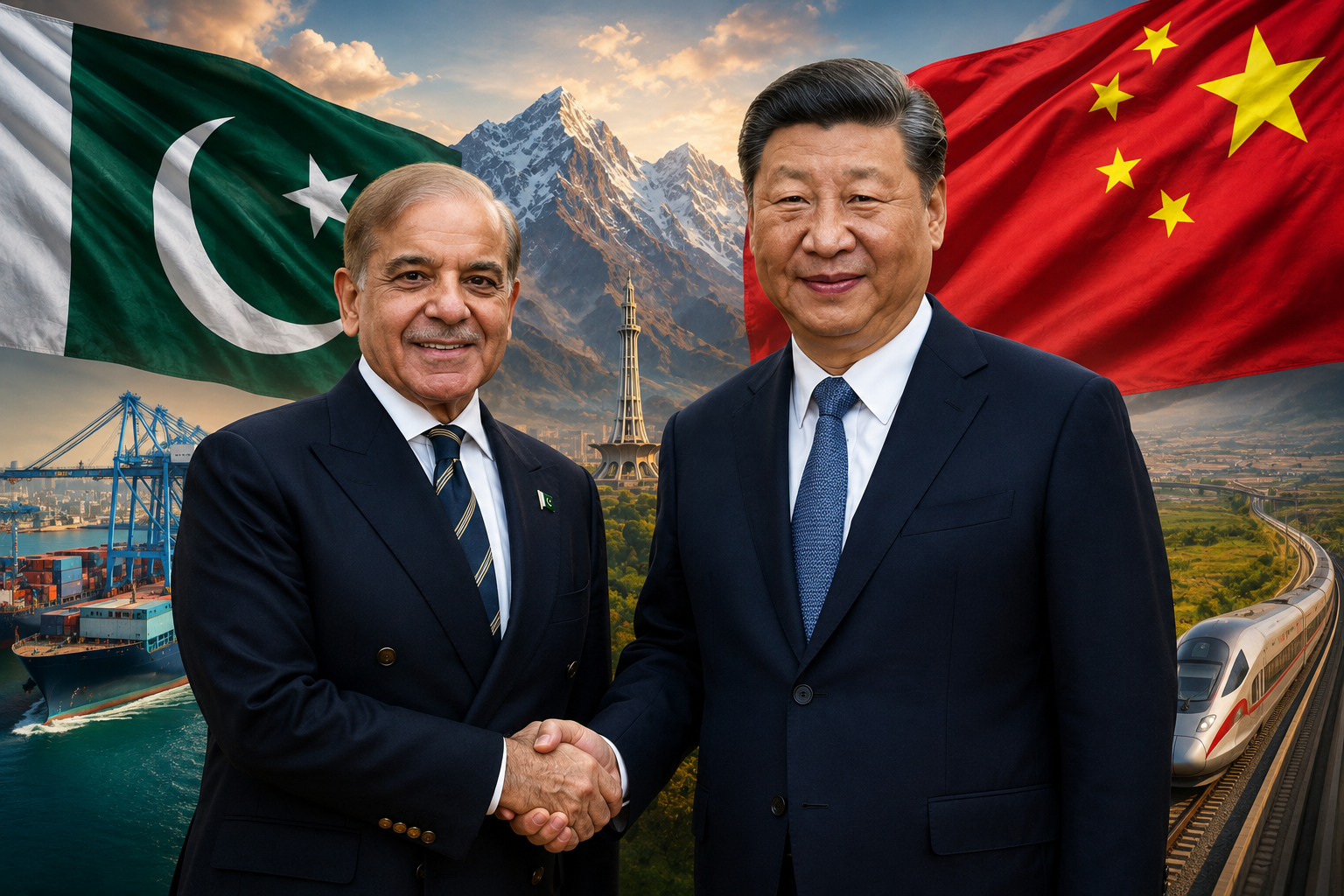
The latest high-level meeting between Xi Jinping and Shehbaz Sharif has once again highlighted the growing strength of Pakistan China Relations. During the official visit to Beijing, both leaders praised decades of friendship, economic cooperation, and regional peace efforts while promising to deepen their “all-weather strategic partnership” in the years ahead.
The meeting comes at an important time for Asia and the Middle East, as regional tensions, economic uncertainty, and global political divisions continue to reshape international diplomacy. Against this backdrop, Pakistan China Relations have emerged as one of the most closely watched alliances in the region.
Xi Jinping Calls Friendship “Unbreakable”
Chinese President Xi Jinping warmly welcomed Prime Minister Shehbaz Sharif at the Great Hall of the People in Beijing. Addressing bilateral talks, Xi described the friendship between China and Pakistan as an “unbreakable tradition” built over decades of trust, support, and shared cooperation.
According to Xi, Pakistan China Relations have remained strong despite changing international conditions and geopolitical challenges. He stressed that Beijing has always prioritised ties with Islamabad as part of its neighbourhood diplomacy.
The Chinese president also said both countries would continue working together to build a stronger community with a shared future. He promised deeper cooperation in trade, regional stability, infrastructure, and diplomatic engagement.
Xi’s remarks reflected China’s long-term commitment to Pakistan and reinforced how important Pakistan China Relations remain for both nations.
Shehbaz Sharif Praises China’s Leadership
Prime Minister Shehbaz Sharif responded by calling China and Pakistan “iron brothers” whose relationship is unmatched anywhere in the world.
The premier praised Xi Jinping’s leadership and described him as a great friend of Pakistan and a supporter of global peace. He highlighted how Pakistan China Relations have grown steadily over the past 75 years through political trust and mutual respect.
Shehbaz said the foundation of this partnership was laid by the founding leaders of both countries and promised that future generations would continue strengthening those ties.
The Pakistani prime minister also announced year-long celebrations marking 75 years of diplomatic relations between Islamabad and Beijing, further demonstrating the importance of Pakistan China Relations on both political and symbolic levels.
Focus on CPEC and Economic Growth
Economic cooperation remained one of the main themes during the meeting. Prime Minister Shehbaz Sharif praised China’s Belt and Road Initiative and especially the China-Pakistan Economic Corridor (CPEC), describing it as a transformational project for Pakistan’s future.
Over the years, Pakistan China Relations have expanded beyond diplomacy into energy, infrastructure, transportation, and industrial development. Roads, ports, power projects, and trade agreements under CPEC have become central pillars of economic cooperation.
The Pakistani premier said China’s development model continues to inspire Pakistan as Islamabad works toward economic reforms and long-term growth.
Xi Jinping also highlighted practical cooperation between the two countries, saying joint projects had contributed significantly to the development of both nations.
Analysts believe stronger Pakistan China Relations could help Pakistan attract more investment, improve infrastructure, and stabilise economic growth in the coming years.
Xi Praises Pakistan’s Iran Peace Efforts
One of the most important moments of the meeting came when Xi Jinping praised Pakistan’s diplomatic role in easing tensions between Iran and the United States.
Following months of instability in the Middle East, Pakistan reportedly helped mediate discussions between Washington and Tehran. Chinese officials acknowledged Islamabad’s efforts to reduce tensions and encourage dialogue.
Xi specifically appreciated Pakistan’s “constructive role” in promoting peace, especially after military tensions escalated earlier this year.
The recognition highlighted how Pakistan China Relations are now extending into wider regional diplomacy and conflict resolution efforts.
Field Marshal Asim Munir Attends Key Meeting
Chief of Army Staff Asim Munir also attended the important discussions in Beijing after returning from Iran.
According to Prime Minister Shehbaz Sharif, Field Marshal Asim Munir played a major role in diplomatic communication between Iranian and American leadership during recent tensions.
The Pakistani delegation emphasised that Islamabad has been actively trying to prevent further escalation in the region through dialogue and mediation.
The participation of Pakistan’s military leadership further demonstrated how Pakistan China Relations involve not only economic and political cooperation but also strategic coordination on regional security matters.
Middle East Crisis Discussed in Beijing
During separate talks with Chinese Premier Li Qiang, Prime Minister Shehbaz Sharif discussed the growing crisis in the Middle East and its impact on the global economy.
The Pakistani leader warned that ongoing instability has affected not only the Gulf region but international trade and financial systems as well.
He stressed that Pakistan and China must continue working together to promote peace and stability across the region.
These discussions once again showed that Pakistan China Relations are becoming increasingly important in broader international diplomacy.
Both countries appear committed to supporting multilateral cooperation and peaceful negotiations during periods of global uncertainty.
Pakistani Students Strengthen Future Ties
Xi Jinping also praised Pakistani students studying in China, describing them as future builders of friendship between the two nations.
He said younger generations are carrying forward the legacy of Pakistan China Relations through educational exchanges, cultural cooperation, and people-to-people connections.
Thousands of Pakistani students currently study in Chinese universities in fields such as medicine, engineering, technology, and business.
Educational partnerships have become another major pillar of Pakistan China Relations and continue expanding every year.
Strategic Partnership Continues to Grow
Experts believe the latest Beijing meeting confirms that both countries remain deeply committed to strengthening their strategic alliance.
From defence cooperation to trade agreements and diplomatic coordination, Pakistan China Relations now influence several major sectors across Asia.
China continues supporting Pakistan on infrastructure and development projects, while Islamabad remains one of Beijing’s closest strategic partners in South Asia.
The growing relationship also reflects shifting global alliances as countries increasingly seek regional partnerships to manage economic and political challenges.
Why This Meeting Matters Globally
The meeting between Xi Jinping and Shehbaz Sharif was not simply a ceremonial diplomatic event. It carried important regional and international implications.
At a time when global tensions remain high, Pakistan China Relations are being presented as a model of long-term strategic cooperation built on trust and consistency.
China views Pakistan as a key partner for regional connectivity, while Pakistan sees China as a crucial economic and diplomatic ally.
With major projects like CPEC continuing and regional peace efforts expanding, the partnership is expected to play an even larger role in Asian geopolitics in the future.
Final Thoughts
The Beijing meetings between Chinese and Pakistani leadership reinforced a message both countries have repeated for decades: their partnership remains strong, stable, and deeply connected.
From economic development to regional diplomacy and strategic cooperation, Pakistan China Relations continue evolving into one of Asia’s most significant alliances.
As regional conflicts and global uncertainty continue, both Islamabad and Beijing appear determined to strengthen cooperation and build a shared future based on mutual trust and long-term partnership.

Pingback: Pakistan Marks Eid ul Adha 7 Powerful Prayers for Middle