Pakistan Marks Eid ul Adha 7 Powerful Prayers for Middle East Peace
Pakistan Marks Eid ul Adha With Prayers for Peace Amid Middle East Crisis
Millions of Muslims across the country came together in faith and unity as Pakistan Marks Eid ul Adha with religious devotion, special prayers, and renewed calls for peace in the Middle East. From major cities to small villages, the atmosphere reflected the spirit of sacrifice, compassion, and solidarity that defines one of Islam’s most important religious festivals.
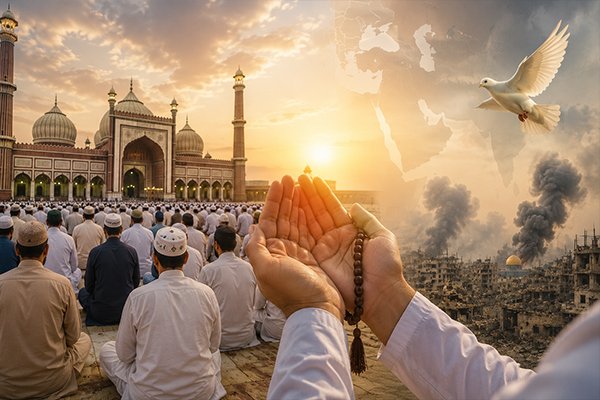
Large Eid congregations were held at mosques and Eidgahs nationwide, where worshippers offered special prayers for Pakistan’s prosperity, economic stability, and peace across the Muslim world. Many people also prayed for an end to the worsening conflict involving Iran, Israel, and the United States, as tensions continue to rise across the region.
This year, as Pakistan Marks Eid ul Adha, the celebrations carried a deeper emotional and spiritual meaning due to global uncertainty and humanitarian crises affecting Muslims worldwide.
Eid Prayers Held Across Pakistan
The day began early in the morning as people dressed in traditional clothes and headed toward mosques and open prayer grounds for Eid prayers. Religious scholars delivered sermons focusing on sacrifice, patience, faith, and helping those in need.
As Pakistan Marks Eid ul Adha, families embraced one another after prayers and exchanged greetings filled with hope and positivity. The streets, markets, and neighborhoods reflected the joyful atmosphere of Eid despite growing international tensions.
Following the prayers, families performed the traditional animal sacrifice, distributing meat among relatives, neighbors, and underprivileged communities. Many charitable organizations also arranged meat distribution drives to support low-income families.
The spirit of generosity remained central as communities gathered together for meals and social visits throughout the day.
Special Prayers for Peace and Stability
One of the major themes this year was prayer for peace in the Middle East. Religious leaders urged worshippers to remember Muslims suffering from war, displacement, and economic hardship.
As Pakistan Marks Eid ul Adha, mosques across the country echoed with prayers for stability in Palestine, Iran, Lebanon, and other conflict-affected regions. Scholars stressed the importance of unity within the Muslim Ummah during difficult times.
Special prayers were also offered for Pakistan’s internal peace, economic recovery, and national security. Many people expressed hope that the country would overcome ongoing financial challenges and continue progressing toward stability and development.
The emotional connection between faith and current world events was clearly visible during Eid gatherings this year.
PM Shehbaz Sharif’s Eid Message
Prime Minister Shehbaz Sharif extended Eid greetings to the nation and the wider Muslim community, emphasizing the values of sacrifice, compassion, and selflessness.
In his message, he said Eid ul Adha reflects the timeless example of Hazrat Ibrahim (AS) and Hazrat Ismail (AS), teaching Muslims the importance of faith and obedience to Allah.
As Pakistan Marks Eid ul Adha, the prime minister urged citizens to support underprivileged communities and share the happiness of Eid with people facing hardships.
He also expressed solidarity with Muslims living under oppression in Palestine and Indian Illegally Occupied Jammu and Kashmir. The prime minister prayed for peace, prosperity, and harmony both within Pakistan and across the Muslim world.
His message focused strongly on national unity and serving humanity during challenging times.
President Zardari Highlights Compassion and Service
President Asif Ali Zardari also addressed the nation with a message centered on patience, sincerity, and helping others.
He reminded citizens that true success lies not in wealth or power but in piety, empathy, and service to humanity. Quoting the teachings of Prophet Muhammad (PBUH), he stressed the importance of caring for neighbors and vulnerable members of society.
As Pakistan Marks Eid ul Adha, President Zardari called on citizens to remember widows, orphans, laborers, disabled individuals, and families struggling financially.
He emphasized that sacrifice remains incomplete if society ignores those who are suffering or deprived of basic necessities.
The president also urged political unity, tolerance, dialogue, and respect for the rule of law to strengthen the country during uncertain times.
Armed Forces Extend Eid Greetings
Pakistan’s armed forces also shared Eid greetings with the nation. According to the Inter-Services Public Relations (ISPR), Field Marshal Asim Munir, alongside the Air Chief and Naval Chief, prayed for lasting peace, prosperity, and national unity.
The military leadership reaffirmed its commitment to protecting Pakistan’s sovereignty and territorial integrity.
The ISPR statement described Eid ul Adha as a symbol of unity, faith, and sacrifice, values deeply connected to the spirit of the Pakistani nation.
Across social media, many citizens appreciated the military’s message and shared prayers for soldiers serving in difficult conditions.
Eid Celebrations Continue Despite Global Concerns
Although the global political situation remains tense, people across Pakistan continued celebrating Eid with traditional enthusiasm.
Children enjoyed family gatherings and festive meals, while markets remained crowded with shoppers buying sweets, clothes, and gifts. Restaurants and public parks also saw increased activity as families spent time together during the holiday.
At the same time, discussions about the Middle East crisis remained common in homes, mosques, and media coverage.
As Pakistan Marks Eid ul Adha, many citizens expressed concern about rising violence involving Iran, Israel, and the United States. There is growing fear that continued escalation could destabilize the wider region and impact global economies.
Despite these concerns, the festival provided people with an opportunity to focus on faith, gratitude, and togetherness.
Importance of Eid ul Adha in Islam
Eid ul Adha commemorates the willingness of Hazrat Ibrahim (AS) to sacrifice his son in obedience to Allah’s command. The festival teaches Muslims about faith, patience, sacrifice, and caring for others.
As Pakistan Marks Eid ul Adha, scholars reminded people that the true spirit of the occasion goes beyond rituals and celebrations. They encouraged citizens to adopt compassion, honesty, and generosity in everyday life.
Religious leaders also stressed that helping the poor and supporting vulnerable communities remains one of the core teachings of Islam.
This message resonated strongly this year as inflation and economic pressure continue affecting many families across Pakistan.
Final Thoughts
This year’s Eid carried both celebration and reflection for millions of Pakistanis. As Pakistan Marks Eid ul Adha, the nation united in prayer for peace, stability, and compassion during a time of global uncertainty.
From mosques filled with worshippers to homes sharing meals with neighbors and the needy, the spirit of sacrifice remained visible throughout the country.
National leaders, religious scholars, and ordinary citizens all emphasized the importance of unity, kindness, and helping others. At the same time, prayers for peace in the Middle East highlighted the deep concern many Pakistanis feel for Muslims facing war and humanitarian crises.
While challenges continue both locally and internationally, Eid ul Adha once again reminded people of the power of faith, sacrifice, and humanity.