
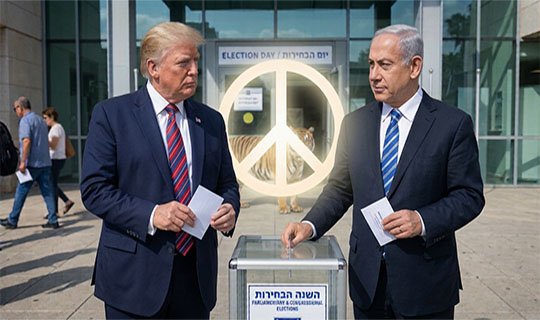
US And Israel vote 2 critical polls reshape world’s fragile peace
Global Stakes High as US And Israel Vote in Pivotal Elections
In a rare alignment of political calendars across two continents separated by thousands of miles, millions of citizens are preparing to cast their ballots in elections that could dramatically reshape international diplomacy, Middle Eastern conflicts, and the global economy.
When voters participating in the **US And Israel vote** head to the polling booths within days of each other, they will be shaping not just their domestic legislative bodies, but also the trajectory of regional stability and international trade.
—
## A Shared Democratic Junction Across Six Thousand Miles
A unique quirk of scheduling means voters in Israel will elect a new parliament on Tuesday, while voters in the United States will decide control of Congress just one week later. Former US Speaker of the House Tip O’Neill famously observed that “all politics is local,” yet the dual elections demonstrate how local choices carry massive global ramifications.
“`
Dual Election Snapshot:
• Israel: Parliamentary elections to determine national leadership and coalition power.
• United States: Midterm congressional elections shaping domestic policy and foreign aid.
• Cross-border Impact: Over 500,000 dual citizens eligible to vote in both contests.
“`
The physical connection between these two democratic processes is surprisingly direct. As the **US And Israel vote** unfolds, dual citizens represent a meaningful block of electors. Representatives from advocacy groups like [Republicans Overseas Israel](https://www.republicansoverseas.com) estimate that nearly half a million Israelis hold American passports. In tightly contested US races—such as key Senate battles in states like Michigan—thousands of absentee ballots mailed from overseas could determine the final outcome.
—
## Strategic Implications of the US-Israeli War on Iran
While the voter overlap is significant, the policy connection between the two nations runs far deeper—particularly regarding military strategy against Iran. Following months of escalation and a major aerial offensive launched earlier this year, military targets were destroyed, yet the regime in Tehran managed to strike back across the Persian Gulf and assert control over the strategic Strait of Hormuz.
“`
Key Election Drivers:
1. Economic Uncertainty -> Spikes in energy prices impacting voter sentiment.
2. Regional Security -> Escalating tensions along critical maritime supply routes.
3. Political Survival -> Leaders balancing military strategy with electoral appeal.
“`
As candidates prepare for the moment the **US And Israel vote**, decision-making on the ground has already been deeply influenced by election timing. Prime Minister Benjamin Netanyahu has heavily emphasized security credentials throughout his campaign, raising fresh claims regarding Iran’s nuclear capabilities and arguing for decisive leadership following the severe security setbacks of the October 7 attacks.
—
## Campaign Dynamics and Strategic Timing
The relationship between the leadership of both countries adds another layer of complexity. Former President Donald Trump endorsed Netanyahu’s candidacy, suggesting a joint focus on finishing military objectives. However, geopolitical analysts noted that behind-the-scenes pressure was applied to avoid major military escalation immediately prior to election day to prevent sharp spikes in global oil prices.
As the period when the **US And Israel vote** approaches, observers expect potential shifts in strategy depending on the final tally:
* **Post-Election Scenarios:** Speculation suggests a caretaker government in Israel could attempt to form a broad national unity coalition around shared defense priorities.
* **Political Continuity:** Opposing political figures, including former military leaders like Gadi Eisenkot, continue to emphasize that defense policy must remain independent of campaign tactics.
* **Foreign Policy Priorities:** American leadership will evaluate future involvement based on congressional support and domestic economic conditions.
For deeper analysis on international law and governance, readers can consult resources on [Supreme Court Legal Precedents](https://www.supremecourt.gov) and international diplomatic frameworks through the [United Nations Security Council](https://www.un.org/securitycouncil).
—
## Long-Term Global and Regional Consequences
The aftermath of these two key elections will resonate far beyond Washington and Jerusalem. When citizens in the **US And Israel vote**, their decision will determine whether current military strategies are accelerated or re-evaluated.
“`
Anticipated Outcomes Post-Election:
• Shift toward long-term legacy policies unconstrained by immediate campaign cycles.
• Potential realignments in regional defense alliances and energy security.
• Changes in how defense funding and foreign assistance are allocated.
“`
If voters in Israel choose a new legislative direction, the dynamic between American and Israeli leadership could undergo a structural shift. Conversely, the outcome of the US midterm elections will influence how actively Washington engages in overseas conflict management versus domestic economic priorities.
Ultimately, as the **US And Israel vote** concludes, both nations will navigate a new political landscape that inevitably shapes global security, energy markets, and international diplomacy for years to come.