
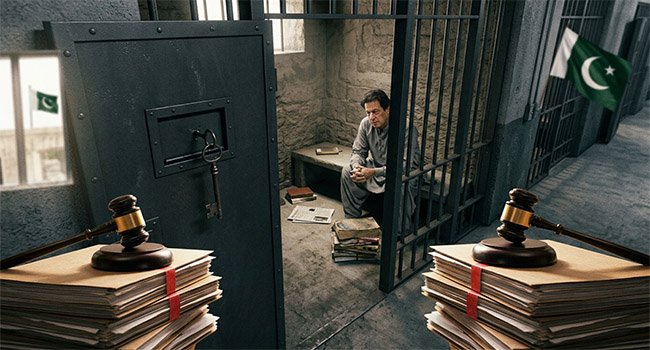
IHC Wisely Bars Harsh Isolation for Imran & Bushra in 1 Big Order
IHC Wisely Bars Harsh Isolation for Imran Khan and Bushra Bibi in Adiala Jail
In a landmark judicial ruling that marks a significant turning point in high-profile prison rights litigation, the Islamabad High Court (IHC) delivered a firm directive regarding the detention conditions of former Prime Minister Imran Khan and his spouse, Bushra Bibi. Presiding over the case, Justice Khadim Hussain Soomro issued a comprehensive verdict confirming that the court has formally intervened to guarantee basic statutory rights to political prisoners. Through this definitive decision, the IHC Wisely Bars Harsh Isolation that was allegedly being imposed on the incarcerated leaders within Central Jail Rawalpindi, commonly known as Adiala Jail.
The court explicitly maintained that prison administration must strictly adhere to the established jail manual and humanitarian standards. By ruling that the IHC Wisely Bars Harsh Isolation, the bench emphasized that no prisoner, regardless of the severity of political controversies or security protocols, should be subjected to indefinite punitive confinement or restricted amenities without explicit authorization under judicial sentences.
Legal Foundations and Petition Maintainability
The legal battle stems from petitions originally filed by Imran Khan’s sister, Aleema Khan, and Bushra Bibi’s daughter, Mubashra Khawar Maneka. The petitioners approached the High Court to challenge what they characterized as prolonged, punitive solitary confinement and mental distress inflicted on their relatives. State prosecutors and the office of the Advocate General had vigorously opposed the petitions on maintainability grounds, arguing that family members lacked direct legal standing and asserting that special security arrangements did not constitute solitary confinement.
However, Justice Khadim Hussain Soomro dismissed the state’s technical objections. The bench referenced foundational jurisprudence set by historic precedents, including the landmark Begum Nusrat Bhutto and Begum Shamim Afridi cases, to establish that close family members hold full legal standing to petition higher courts when constitutional rights and personal liberties are at stake. By recognizing the maintainability of these pleas, the IHC Wisely Bars Harsh Isolation while firmly validating the right of citizens to seek judicial oversight against administrative overreach within penal institutions.
┌────────────────────────────────────────────────────────────────────────┐
│                   KEY JUDICIAL DIRECTIVES AT A GLANCE                   │
├───────────────────┬────────────────────────────────────────────────────┤
│ Issue Area        │ Court Orders & Administrative Requirements         │
├───────────────────┼────────────────────────────────────────────────────┤
│ Confinement       │ Complete prohibition of solitary confinement       │
│ Family Access     │ Restoration of in-person visitation rights         │
│ Telecommunications│ Facilitated phone access between Khan & his sons   │
│ Medical & Reading │ Provision of daily newspapers, books & healthcare  │
│ Compliance Target │ 15-day deadline for Adiala Jail implementation    │
└───────────────────┴────────────────────────────────────────────────────┘
Detailed Directives Issued to Adiala Jail Authorities
To ensure that its ruling is translated into immediate administrative action, the Islamabad High Court issued precise operational instructions directly to the Superintendent of Adiala Jail. Primary among these directives was the unambiguous instruction to ensure that neither Imran Khan nor Bushra Bibi is kept in continuous single-cell isolation. The judgment reiterates that where the IHC Wisely Bars Harsh Isolation, prison officials are legally bound to provide prisoners with adequate movement within prison blocks during daylight hours.
Furthermore, the High Court focused heavily on restoring vital personal and legal support systems for the incarcerated couple. The bench directed jail management to:
-
Facilitate regular in-person meetings between Imran Khan and Bushra Bibi in accordance with established prison rules.
-
Grant family members and defense counsel routine visitation rights.
-
Make immediate, formal technical arrangements for phone conversations between Imran Khan and his sons residing abroad.
-
Provide daily reading materials, including national newspapers and books, alongside standard medical care.
While setting these parameters, the court also instituted a protective safeguard, noting that telephone privileges could be revoked if recordings of personal calls were leaked or utilized for partisan political campaigns. Through this balanced framework, the IHC Wisely Bars Harsh Isolation while maintaining strict boundaries between fundamental inmate rights and political activities.
Government Positions Versus Defense Claims
Throughout the court proceedings leading up to the final verdict, state officials and prison administrators maintained that neither the PTI founder nor his spouse was undergoing solitary confinement. Adiala Jail Superintendent Sajid Baig had submitted to the court that Imran Khan was residing across a secured compound comprising seven interconnected cells, allowing him freedom of movement during specified hours. Government representatives argued that high-level security precautions required separate housing arrangements due to sensitive security profiles rather than punitive measures.
   [ State Narrative ] ──► Security measures & expanded cell access
           │
           ▼
   [ Defense Claims ]  ──► ( Inadequate visits, isolation & restricted amenities )
           │
           ▼
   [ Court Ruling ]    ──► ( IHC Wisely Bars Harsh Isolation & Orders Compliance )
Conversely, lead defense lawyer Barrister Salman Safdar presented arguments detailing severe restrictions on visitation, delays in lawyer consultations, and extended periods of isolation that caused undue psychological distress. Defense counsel highlighted that trial courts in the respective cases had never awarded solitary confinement as part of any sentence. Recognizing that security protocols must never deteriorate into systemic isolation, the IHC Wisely Bars Harsh Isolation to ensure that state custody remains strictly compliant with statutory prison codes.
Broader Implications and Implementation Deadline
The ruling comes amidst intense international and domestic scrutiny regarding the treatment of political detainees in Pakistan. Following a recent international media interview involving Imran Khan’s family, the Ministry of Information had issued detailed public statements denying allegations of severe deprivation, insisting that amenities such as custom meals, reading material, and routine medical checkups were fully extended. The political leadership of PTI rejected these claims as misleading, maintaining that court intervention was necessary to guarantee basic rights.
By taking decisive action, the IHC Wisely Bars Harsh Isolation and reinforces the broader principle that human dignity and constitutional protections apply universally within the corrections system. The court has given the Superintendent of Adiala Jail a strict 15-day timeline to submit a comprehensive implementation report confirming full compliance with all judicial commands.
As the deadline approaches, legal observers note that this judgment sets a vital precedent for prison governance. The clear insistence that the IHC Wisely Bars Harsh Isolation reassures the public that the superior judiciary remains an active guardian of constitutional safeguards and statutory rights.


Pingback: Strong Move PM Shehbaz Forms 1 Trade Facilitation Board To