PPP Takes Lead in GB Race with 10 Crucial Seats in Unofficial Count
PPP Takes Lead in GB Race with Strong Performance in Gilgit-Baltistan Elections
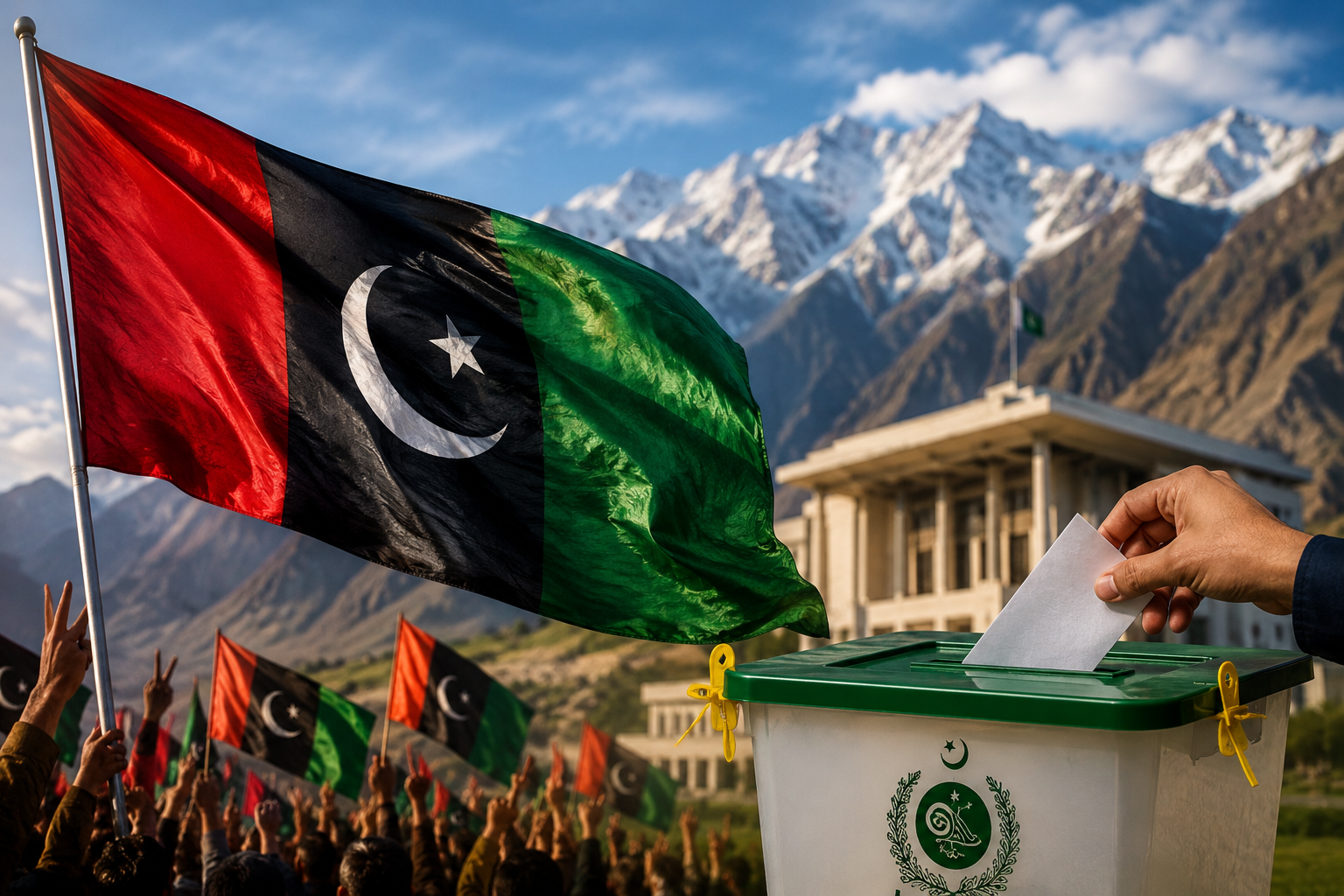
The Gilgit-Baltistan Legislative Assembly elections have produced a significant political development, with unofficial and preliminary results showing that the Pakistan Peoples Party (PPP) has emerged as the leading force across the region. As vote counting concluded, PPP Takes Lead in GB Race became the dominant political headline, reflecting the party’s strong performance in multiple constituencies.
According to unofficial results from all 24 directly contested seats, the PPP secured victory in 10 constituencies, placing it ahead of all rival parties. The Pakistan Muslim League-Nawaz (PML-N) followed with six seats, while independent candidates, including those backed by Pakistan Tehreek-e-Insaf (PTI), won seven seats. Majlis Wahdat-i-Muslimeen (MWM) managed to secure one seat.
The outcome marks a major moment in Gilgit-Baltistan politics, where competition among national and regional parties has remained intense for years. With these results, PPP Takes Lead in GB Race and positions itself as the most influential political force in the assembly.
Election Results Show PPP’s Growing Influence
The unofficial tally demonstrates the PPP’s ability to attract support across multiple districts. The party recorded victories in key constituencies, including Gilgit, Nagar, Skardu, Roundu, Kharmang, Shigar, Darel, and Ghizer.
Political analysts believe that the fact that PPP Takes Lead in GB Race reflects the party’s organizational strength and campaign strategy. Throughout the election campaign, PPP leaders emphasized development, governance reforms, and increased representation for the people of Gilgit-Baltistan.
Winning 10 of the 24 directly contested seats provides the party with a strong foundation as it looks toward forming a government with support from reserved seats and potential allies.
Peaceful Polling Process Across the Region
Polling concluded peacefully on Sunday evening under strict security arrangements. Thousands of voters across the region participated in the democratic process despite logistical challenges and difficult terrain.
The elections were held after a delay of nearly four months, largely attributed to harsh winter weather conditions that made voting arrangements difficult in several districts.
A total of 396 candidates contested the elections, including 266 independent candidates. The large number of independents highlighted the highly competitive nature of the election.
As unofficial results emerged, it became clear that PPP Takes Lead in GB Race, giving supporters a reason to celebrate while opponents began reviewing the outcome closely.
Assembly Composition and Political Significance
The Gilgit-Baltistan Assembly consists of 33 seats. Of these, 24 seats are filled through direct elections, while six seats are reserved for women and three seats are reserved for technocrats and professionals.
Political parties can nominate candidates for reserved seats based on proportional representation. Since PPP Takes Lead in GB Race, the party is expected to gain an advantage when the allocation of reserved seats is finalized.
This could significantly strengthen its position in the assembly and improve its chances of leading the next regional government.
Voter Participation and Election Statistics
The election attracted participation from nearly one million registered voters. Official figures showed that Gilgit-Baltistan had 963,034 registered voters, including 566,097 male voters and 396,937 female voters.
Only eight women contested the elections, with five running as independent candidates. Many observers have called for greater female participation in future elections to ensure broader representation in regional politics.
As counting progressed, reports consistently showed that PPP Takes Lead in GB Race, with victories spread across several strategically important constituencies.
PPP Raises Concerns About Election Transparency
While celebrating its strong performance, the PPP also raised concerns regarding the election process. Party leaders alleged delays in the issuance of Form-45 documents, which contain polling station vote counts prepared by presiding officers.
PPP Secretary General Nayyar Hussain Bukhari stated that the party had contacted election authorities regarding the issue. According to party representatives, delays in providing election forms created concerns about transparency and accountability.
PPP spokesperson Shazia Marri also criticized what she described as irregularities in voter lists and polling station arrangements. Despite these concerns, the preliminary outcome still showed that PPP Takes Lead in GB Race, making it the largest political force in the election.
Allegations Regarding Polling Stations
The PPP further alleged that a polling station in the Bunji area of Astore was relocated overnight from a roadside location to a hilltop site. Party officials argued that the move may have discouraged voters from participating.
According to PPP representatives, the affected polling station served an area where the party traditionally enjoys strong support. Residents reportedly protested the decision and temporarily blocked the Gilgit-Skardu Road.
Despite these complaints, the election results continued to indicate that PPP Takes Lead in GB Race, reinforcing the party’s growing influence in the region.
PTI and Independent Candidates Challenge Results
PTI-backed candidates also claimed they were performing strongly in several constituencies before raising concerns about vote counting procedures.
Party representatives alleged that suspiciously high voter turnout figures appeared in some areas after evening hours. PTI leaders argued that these figures warranted further investigation.
The party additionally claimed that polling agents faced difficulties obtaining election documents, which they described as a violation of election rules.
Even with these allegations, unofficial figures continued to show that PPP Takes Lead in GB Race, while PTI-backed independents managed to secure victories in two constituencies.
What the Results Mean for Gilgit-Baltistan
The election outcome could have a significant impact on governance and development initiatives across Gilgit-Baltistan. If the results are confirmed, the PPP will be in a strong position to influence policy decisions, infrastructure projects, tourism development, and regional administration.
Political observers believe that the fact that PPP Takes Lead in GB Race may reshape alliances and political strategies in the region over the coming months.
The final composition of the assembly will depend on the allocation of reserved seats and any coalition arrangements that emerge after official results are announced.
Looking Ahead
While the Election Commission continues the process of finalizing results, the current numbers suggest a major victory for the PPP. The party’s success across multiple districts demonstrates its ability to mobilize support and compete effectively against established rivals.
As political discussions continue, one thing remains clear: PPP Takes Lead in GB Race and has emerged as the biggest winner of the Gilgit-Baltistan elections based on unofficial and preliminary results.
Whether this advantage translates into a stable government will depend on coalition-building efforts and the final distribution of reserved seats. For now, however, the election has delivered a clear message that the PPP remains a powerful force in Gilgit-Baltistan politics.