Tragic Blast At Least 31 Killed, 169 Injured in Islamabad Imambargah!
Tragic Blast At Least 31 Killed: Devastation at Islamabad’s Imambargah Khadijah-tul-Kubra
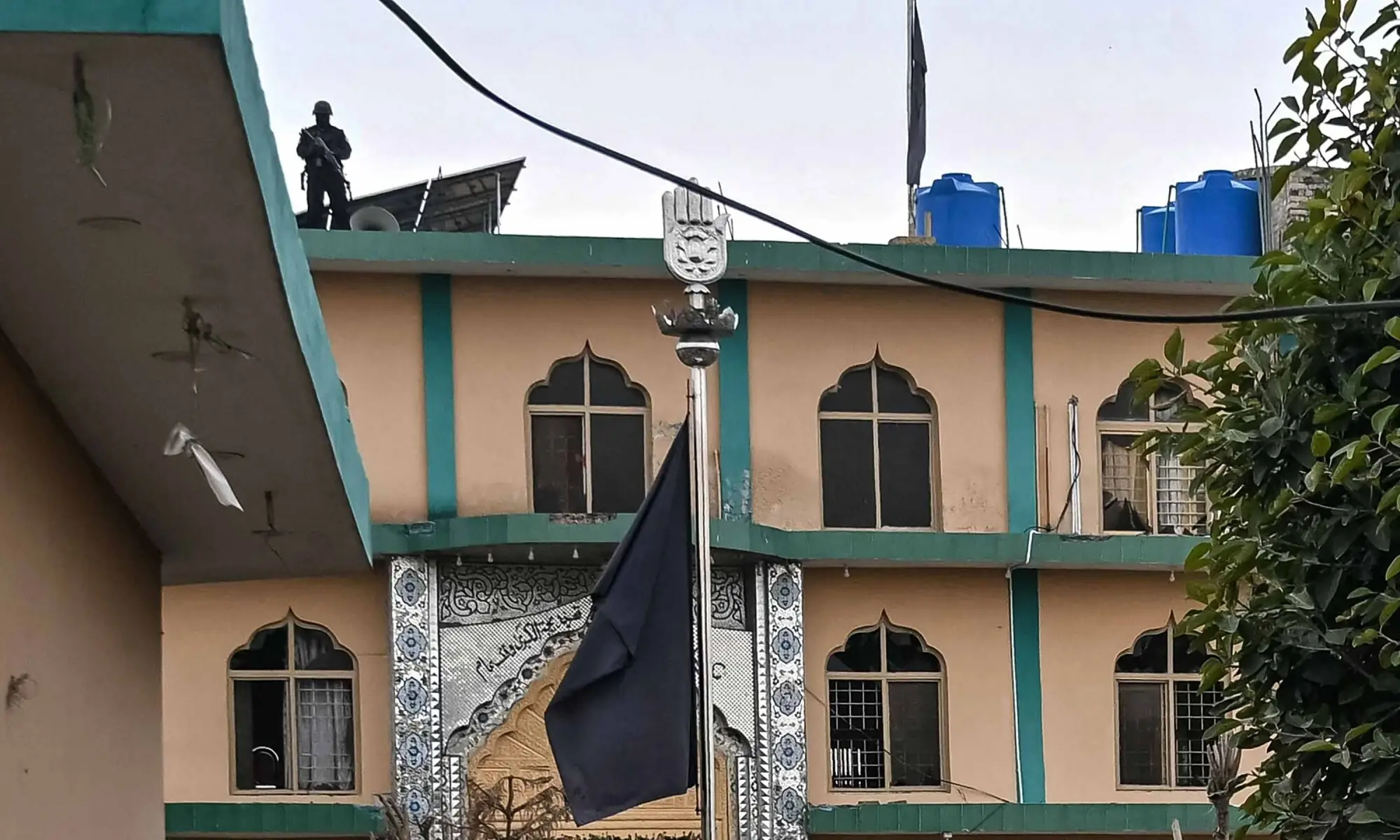
The peace of a quiet Friday in Pakistan’s federal capital was shattered by a horrific act of violence that has left the nation in a state of mourning and shock. In what is being described as one of the deadliest targeted attacks in recent memory, a suicide bomber struck the Imambargah Khadijah-tul-Kubra in the Tarlai area.
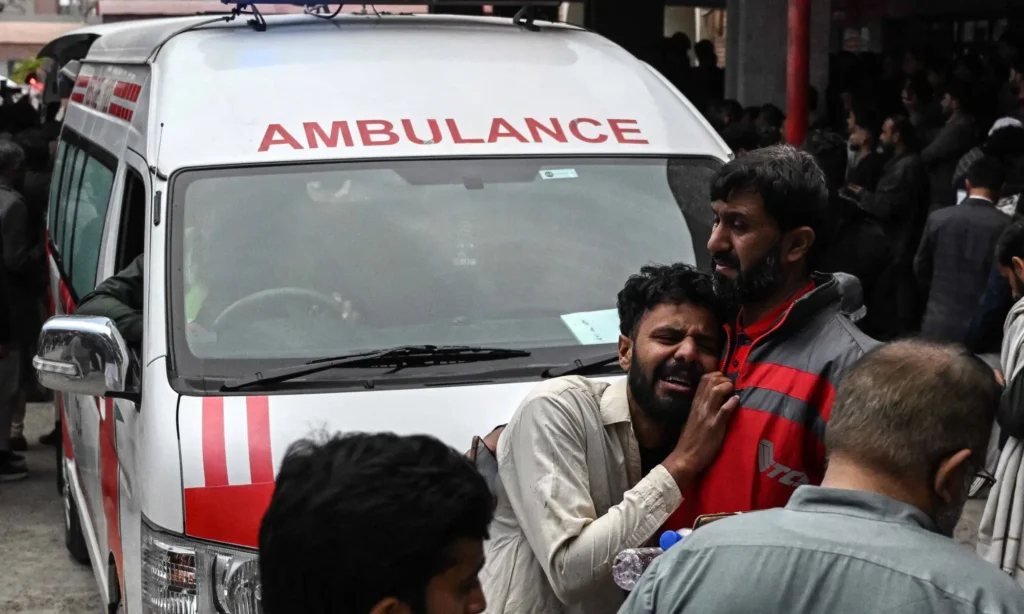
Initial reports from the scene were chaotic, but as the dust settled, authorities were forced to deliver a heartbreaking update: in this Tragic Blast At Least 31 Killed and dozens more are fighting for their lives in nearby hospitals.
In a post on the social media platform X (formerly Twitter), Asif stated that the perpetrator was not a random actor but someone whose movements had been tracked across borders. “It has been proved that the terrorist involved in the attack travelled to and from Afghanistan,” he claimed. He went further to allege a “collusion between India and Afghanistan,” suggesting that Pakistan’s neighbors were using proxies to wage a shadow war.
According to the Defence Minister, the security guards at the site had actually “challenged” the attacker. In the ensuing struggle, the terrorist opened fire on the guards before rushing into the prayer hall and detonating his vest in the rear row. Asif emphasized that this Tragic Blast At Least 31 Killed was a “cruelty” to which the state would respond with “full force.”
Timing and Sabotage
The timing of the explosion has not gone unnoticed by political analysts. Minister Khawaja Asif pointed out that the attack occurred just as Pakistan was making significant diplomatic strides, signing landmark trade and cooperation agreements with Central Asian nations like Kazakhstan and Uzbekistan.
“The timing, I believe, is an effort to sabotage us and our progress,” Asif said during a televised interview. He argued that because certain regional actors cannot engage in a direct military clash with Pakistan, they resort to using radicalized individuals to disrupt internal peace. He revealed that the suicide bomber was a Pakistani national who had been radicalized through “extreme religious indoctrination” during his time in Afghanistan before returning to Pakistan last year.
Forensic Evidence and Internal Security
Adding to the official narrative, Minister of State for Interior Tallal Chaudhry shared more details during a media talk in Islamabad. He clarified that while the attacker was a local, his frequent travels to Afghanistan were confirmed through forensic tests and travel history analysis. Despite the heavy security presence in the capital, this Tragic Blast At Least 31 Killed highlights the difficulty of policing “soft targets” like religious centers.
Chaudhry noted that the pattern of terrorism in Pakistan is shifting. Attacks are being carried out either on sectarian grounds or under the pretext of provincial and linguistic differences. He specifically mentioned the banned Balochistan Liberation Army (BLA) and other groups, claiming they are “paid in dollars” to target schools, mosques, and banks.
The Human Toll and the National Action Plan
While the political debate rages on, the families of the victims are left to pick up the pieces. With this Tragic Blast At Least 31 Killed, the total number of families devastated by sectarian violence in the region has reached a new high for the year.
Interior Minister Mohsin Naqvi visited the site personally to oversee the collection of evidence. He reiterated that Pakistan has shared evidence with the international community regarding the foreign sponsorship of these attacks. However, for the survivors of the Tragic Blast At Least 31 Killed, the promise of future security does little to dull the pain of the present.
“If this wall weakens, the world suffers,” he warned. Yet, many citizens are asking how a suicide bomber could navigate the various checkpoints of the federal capital to carry out a Tragic Blast At Least 31 Killed.
Conclusion: A Nation in Mourning
As the funerals begin in the Tarlai area, the atmosphere in Islamabad is one of somber reflection.
The international community, including the UK and the EU, has condemned the attack, but the internal pressure on the Pakistani government to provide actual results in the war on terror is mounting. Until the roots of indoctrination and the channels of foreign funding are truly severed, the fear remains that this Tragic Blast At Least 31 Killed will not be the last of its kind.