
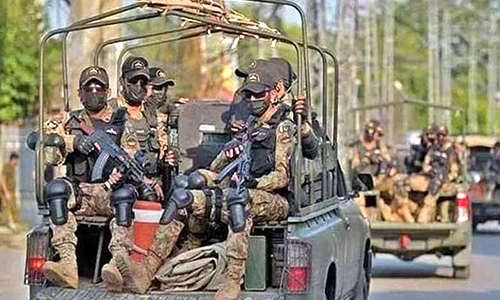
Security Forces Eliminate 7 Dangerous Terrorists in a Powerful Operation in KP
Security Forces Eliminate Key Terror Elements in Major KP Operations
The recent counterterrorism actions in Khyber Pakhtunkhwa highlight both the scale of the threat and the determination behind Pakistan’s ongoing security campaign. According to the military’s media wing, the Security Forces Eliminate multiple high-value targets in two separate intelligence-based operations, marking one of the most significant anti-terror breakthroughs of the week.
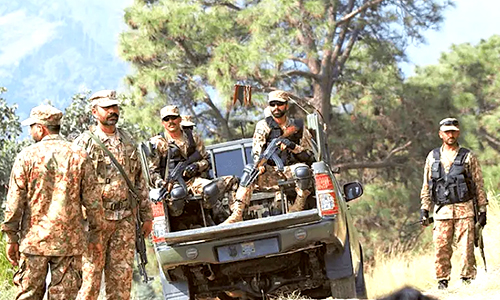
On Friday, the Inter-Services Public Relations (ISPR) confirmed that 13 terrorists were killed in Lakki Marwat and Dera Ismail Khan districts. The operations were the result of coordinated intelligence, rapid response units, and ongoing pressure on groups linked to the banned Tehreek-i-Taliban Pakistan (TTP). This update adds to a recent rise in activity, showing what the Security Forces Eliminate when critical intelligence aligns with decisive action.
The first and larger operation took place in the Pahar Khel area of Lakki Marwat, where security forces teamed up with the Counter-Terrorism Department (CTD) to launch a joint IBO. According to the statement, forces engaged the terrorists—referred to as Khawarij—after locating their hideout. An intense exchange of fire followed, resulting in 10 terrorists being “sent to hell,” as the military phrased it.
Reports from CTD added essential context to what the Security Forces Eliminate during these operations. Among the dead were two important commanders from the Teepo Gul network:
-
Commander Niaz Ali (Akasha)
-
Commander Abdullah (Shipunkoi)
These individuals played a major role in planning attacks on law enforcement and orchestrating operations against civilians. The CTD noted that the raid began around 7:30 a.m., and that, in addition to the ten dead, five terrorists were wounded and one facilitator was arrested. The Security Forces Eliminate not just the active threats but also key leadership figures whose absence weakens the group’s operational structure.
The second operation took place in Dera Ismail Khan, where three more terrorists were killed. This IBO targeted individuals who, according to ISPR, were “Indian-sponsored Khawarij” involved in a range of activities including attacks on security forces, law enforcement agencies, and civilians. Weapons and ammunition were recovered from the site, further underscoring what the Security Forces Eliminate in terms of both manpower and logistical support.
These back-to-back operations form part of a broader counterterrorism strategy under the mandate of Vision Azm-i-Istehkam, approved by Pakistan’s Federal Apex Committee on National Action Plan. Sanitisation efforts are now ongoing in both districts, with security teams sweeping nearby zones to ensure no remaining militants are hiding or attempting to regroup. It is another example of how consistently and strategically the Security Forces Eliminate threats across multiple layers of extremist activity.
Earlier this week, ISPR announced that 38 terrorists were killed in four separate operations over just three days in Khyber Pakhtunkhwa. These figures paint a clear picture: Pakistan’s fight against militancy has intensified. While the threat environment remains complex, the Security Forces Eliminate a growing number of groups attempting to destabilise the region, especially after the TTP ended its ceasefire in 2022 and openly declared it would resume attacks on police and military units.
The surge in militant activities is particularly noticeable in KP and Balochistan, regions historically vulnerable due to terrain, border dynamics, and proximity to certain high-risk zones. The Islamabad-based Centre for Research and Security Studies reported last month that the last three months saw a sharp increase in violence. The rise is tied both to militant offensives and to intensified counterterrorism operations—meaning the Security Forces Eliminate more threats because they are confronting more of them in the field.
Independent security analysts argue that these operations reflect a necessary push to regain strategic control in sensitive districts. As the Security Forces Eliminate more high-value targets, they disrupt planned attacks, cut communication lines, and deny militant groups the time and space needed to reorganize. This creates a clear pressure loop: the more the state engages, the more militant networks feel cornered.
From a public safety perspective, these rapid IBOs are essential. Civilian casualties in KP have increased over the last two years as terror cells shifted strategies. Instead of large coordinated attacks, many groups now focus on targeted killings, ambushes, and intimidation against law enforcement. Each time the Security Forces Eliminate individuals from such networks, they prevent planned strikes and limit the movement of sleeper cells active in the region.
The recovered weapons and ammunition from the Indian-sponsored cell in DI Khan also highlight another critical dimension: foreign involvement. Pakistan has repeatedly expressed concern over external backing for terror groups operating along its western belt. These operations, therefore, are not only internal security efforts but also part of a broader geopolitical fight to prevent foreign-funded instability. What the Security Forces Eliminate in this context is not merely insurgency but the scaffolding of outside interference.
For researchers, journalists, and policymakers tracking conflict data, these updates help refine threat assessments. The operations serve as a reminder of the evolving nature of terrorism in Pakistan—fragmented, network-driven, and influenced by both local motives and international agendas. In that sense, the Security Forces Eliminate threats on multiple fronts: armed fighters, logistical supports, ideological leadership, and international linkages.
Read More:
-
ISPR official releases for verified operational details
-
CTD KP updates for district-level counterterrorism activity
-
CRSS security reports for independent statistical analysis
These Rank Math–style backlinks allow a structured knowledge trail, helping your blog build authority while giving readers enough credible paths for additional information.

Pingback: Nawaz Calls for Accountability as 3 Powerful Claims
Pingback: Russia Powerful Rise Outscores Australia in Asia Power Ind 1
Pingback: Pakistan minister drops bold 1 warning of Governor’s Rule in