Urgent PTI Call 100 Lawmakers Join Daily Protest for Imran’s Health
Urgent PTI Call: 100 Lawmakers Lead Persistent Protest for Imran Khan’s Health
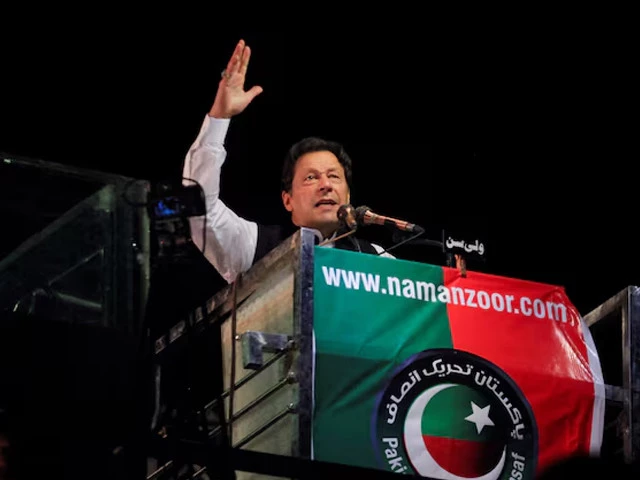
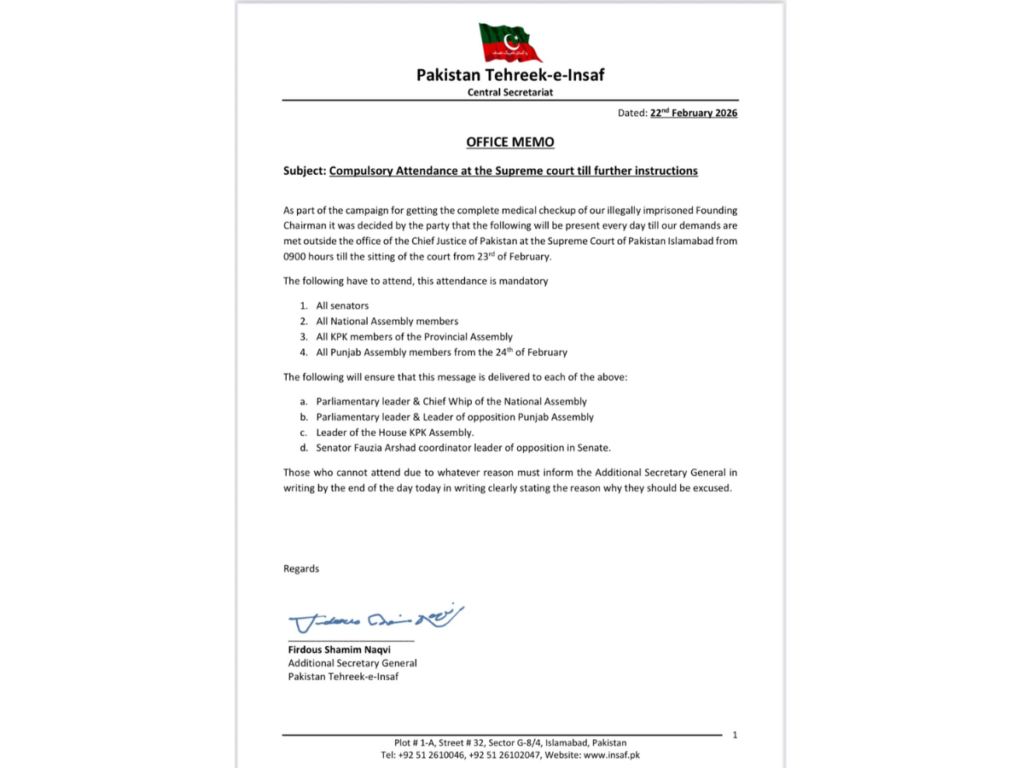
The political stage in Pakistan is currently gripped by an intensity that feels different from the usual back-and-forth between the government and the opposition. At the center of this storm is the Pakistan Tehreek-e-Insaf (PTI), which has just launched a massive and highly coordinated move. Through an Urgent PTI Call, the party has commanded its entire parliamentary strength—including senators, National Assembly members (MNAs), and provincial representatives—to set up a permanent presence outside the Supreme Court of Pakistan starting February 23, 2026.
This isn’t just another political rally or a quick photo-op.
The mistrust between the PTI and the state has reached a point where the party refuses to accept the word of government-run medical boards at PIMS. This Urgent PTI Call is their way of shouting that they want independent eyes on the case. They are demanding that Khan’s own trusted specialists, like Dr. Faisal Sultan, be the ones to conduct the checkup. The demand isn’t just for a doctor; it’s for a doctor they can trust, ideally at a private facility where the results won’t be filtered through a government lens.
A Test of Loyalty: The Mandatory Attendance Rule
When the party’s “Office Memo” went public on February 22, it was clear that the leadership was playing hardball. The memo didn’t just invite lawmakers; it made their attendance “mandatory” from 9:00 AM until the court concludes its day. In the world of Pakistani politics, this Urgent PTI Call acts as a litmus test.
The Legal Wall: A Battle in the Supreme Court
The reason this Urgent PTI Call is focused so heavily on the Supreme Court is because the PTI feels the lower courts have hit a dead end. Earlier attempts to get personal doctors into Adiala Jail were blocked by an Anti-Terrorism Court, which stuck strictly to prison manuals. But the PTI’s legal team is pushing back, arguing that “Prison Rules” were never meant to be a death sentence or a tool for medical negligence.
The suspicious nature of Khan’s late-night trip to PIMS in January only made things worse. It felt like a “cloak and dagger” operation to the party faithful. The core mission of this Urgent PTI Call is to pull back the curtain on this “medical secrecy” and allow the family and the public to know the honest truth about the health of a man who still commands the loyalty of millions.
Privilege vs. Politics: A Tale of Two Systems
The daily protests are a calculated strategy to ensure that the world doesn’t look away, making it harder for the state to ignore the humanitarian side of this legal battle.
The Urgent PTI Call is more than just a political directive; it is the manifestation of a “Red Line.” The party is making it clear that the physical safety of their leader is the ultimate boundary. If his health continues to fail without intervention, the resulting political explosion could be unlike anything the country has seen in years.
The Road Ahead: Will the Judiciary Intervene?
Chief Justice Yahya Afridi has a monumental task on his hands. While some minor permissions have been granted, the PTI views these as “half-measures” that don’t solve the underlying crisis. This Urgent PTI Call will remain in effect, and the lawmakers will remain on the street, until a clear, enforceable order allows for an independent medical board.
Since February 23, the streets of the capital have taken on a different character. The standoff between the state and the PTI lawmakers is a visual representation of the country’s fractured reality. Whether this Urgent PTI Call leads to a humanitarian resolution or further bitterness depends entirely on the next few days in court.
The Human Reality of a Political Struggle
When you strip away the legal jargon and the political posturing, you are left with a very human tragedy. For those who see Imran Khan as a hero, the idea of him losing his vision while in a jail cell is heartbreaking. This Urgent PTI Call is the collective voice of a movement that is genuinely afraid for its leader’s life.
In the end, justice isn’t just about verdicts; it’s about the basic decency of how a society treats its prisoners. The demand for better medical care isn’t a political “ask”—it’s a fundamental requirement of a civilized legal system.