

Terror Attack in Australia Nation on High Alert After Shocking Incident
Terror Attack in Australia Bondi Tragedy Exposes a Growing Security Concern
The Bondi Beach shooting has shaken Australia in a way that feels deeply personal. It was not just another headline or distant incident. It happened in a place known for sunshine, families, tourists, and ordinary life. The fact that such violence could erupt there has left many Australians asking an uncomfortable question: are we truly prepared to stop the next Terror Attack in Australia?
Security experts believe the answer is troubling.
It has pushed counter-terrorism back into public debate, not as a theoretical risk, but as a real and present danger.
“Australia Has Been Under-Resourced for Years”
Tony Loughran, a former British elite soldier and now a Sydney-based security consultant, did not mince his words. Speaking to media, he warned that Australia has been under-resourced in counter-terrorism for a long time.
According to Loughran, the issue is not a lack of commitment from police or intelligence officers. The issue is capacity. Simply put, there are not enough people, not enough time, and not enough tools to track every potential threat.
In the context of the Bondi shooting, this warning has taken on new urgency. One Terror Attack in Australia is enough to expose years of quiet neglect.
Police Are Stretched Thin
One of the most serious concerns raised by Loughran is the pressure on police forces. Counter-terrorism is not a one-off task. It requires constant monitoring, surveillance, intelligence analysis, and follow-up.
Police officers are already dealing with everyday crime, public safety, cyber threats, and emergency response. Adding high-level counter-terrorism responsibilities without increasing manpower creates dangerous gaps.
When resources are limited, decisions must be made about priorities. Experts fear that this reality increases the risk of another Terror Attack in Australia slipping through unnoticed.
Who Are the Accused?
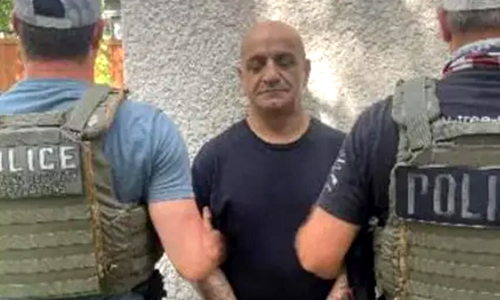
The attack has been linked to a father and son, Sajid Akram, 50, and Naveed Akram, 24. Authorities are now carefully examining their backgrounds, movements, and possible connections.
Reports indicate that the pair had travelled to the Philippines, a detail that has drawn attention from investigators. Police are working to understand the purpose of that trip and whether it involved contact with extremist networks.
International travel is often a key element in terrorism investigations. In cases involving a Terror Attack in Australia, such movements can offer critical clues, but only if agencies have the resources to track and interpret them in time.
The Importance of Intelligence Sharing
Loughran has repeatedly stressed one core point: intelligence sharing saves lives. In earlier years, Australian police worked closely with intelligence agencies and private security partners. That cooperation helped prevent multiple plots.
According to him, information must move quickly and freely between agencies. When data sits in separate systems or departments, warning signs can be missed.
In the wake of this Terror Attack in Australia, questions are being raised about whether intelligence-sharing systems are still as effective as they once were.
What Authorities Have Said
NSW Police Commissioner Mal Lanyon confirmed that police and ASIO were aware of the younger Akram prior to the attack. However, he stated that there was no intelligence suggesting an imminent threat.
Lanyon rejected claims that the Bondi Beach shooting was an intelligence failure. His position is that awareness does not equal prediction, and that not every known individual becomes violent.
While this explanation may be technically correct, it has done little to ease public concern. After every Terror Attack in Australia, the same debate returns: how much warning is enough, and who decides when to act?
The Human Cost Behind the Numbers
Statistics and statements can sometimes hide the real impact. Fifteen people lost their lives at Bondi Beach. Families are grieving. Survivors are traumatised. Communities feel less safe than they did before.
Every Terror Attack in Australia carries a heavy emotional price. It changes how people move, gather, and trust. That cost cannot be measured only in security budgets or political arguments. That shift significantly increases the likelihood of another Terror Attack in Australia.
Security professionals are not calling for panic. They are calling for realism.
Lessons Australia Cannot Ignore
Australia has successfully disrupted terror plots in the past. Those successes were built on strong coordination, sufficient staffing, and political will. Experts say those standards must be restored and maintained.
The Bondi Beach tragedy should not fade into memory as just another incident. It should be studied carefully, honestly, and without defensiveness. Every Terror Attack in Australia offers lessons, but only if leaders are willing to learn from them.
A Moment for Serious Decisions
The question now is whether Australia will act. Will counter-terrorism be treated as a long-term priority, or will concern fade once headlines move on?
Tony Loughran’s warning is clear. The gaps exist. The risks are real. Ignoring them invites another Terror Attack in Australia.
Preventing terrorism is not about fear. It is about responsibility.



Pingback: Victorian Government Faces Growing Pressure After 2025