Table of Contents
ToggleShock Report Saif al-Islam Gaddafi Shot Dead Amid 5 Grim Allegations
The Ghost of the Green Book: Saif al-Islam Gaddafi and Libya’s 2026 Crisis
If you thought the political landscape of the Middle East and North Africa couldn’t get any more volatile, February 2026 has just handed the world a massive reality check. For those following the fractured state of Libya from afar—whether you are part of the diaspora in London, a policy watcher in Washington, or a business observer in Sydney—the air has suddenly become very thin. The news we are processing today isn’t just a headline; it’s a seismic shift that feels like the final, violent closing of a chapter that began in 2011.
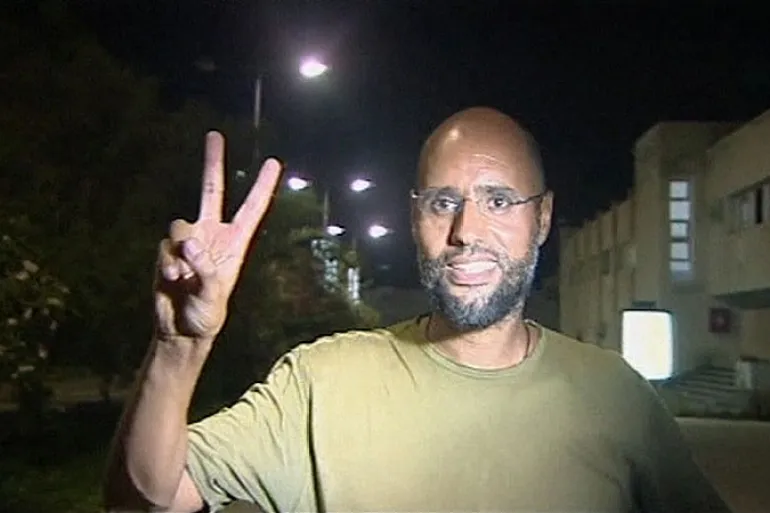
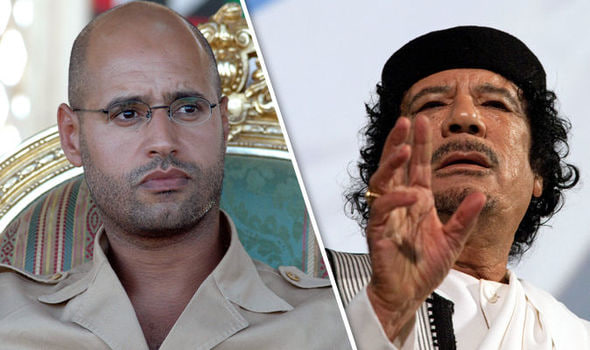
The recent Shock Report Saif al-Islam Gaddafi concerning the death of the man once groomed to inherit a desert empire has sent ripples through every major capital. For years, Saif al-Islam was the “man in the shadows,” a figure of both nostalgia for some and intense fear for others. Now, with reports confirming his assassination in the city of Zintan, the fragile hope for a unified Libyan election has been dealt a staggering blow.
The Assassination: What We Know
On Tuesday, the quiet of Zintan—a city that had served as both Saif’s prison and his sanctuary for over a decade—was shattered. According to his legal team and political advisors, a “four-man commando” unit carried out a surgical strike on his residence. The details are chilling: surveillance cameras were disabled, security was bypassed, and the 53-year-old was killed in what is being described as a “direct confrontation.”
This Shock Report Saif al-Islam Gaddafi has sparked a firestorm of conflicting narratives. While his lawyer confirmed the assassination at home, his sister later told Libyan TV that he died near the Algerian border. This fog of war is typical for Libya, a country where the truth is often the first casualty of militia rivalry. For an international audience, the primary concern isn’t just the “who” or the “how,” but what this vacuum means for the regional security of North Africa.
From Reformist Heir to International Pariah
To understand why this Shock Report Saif al-Islam Gaddafi carries such weight, we have to look back at the man himself. Born in 1972, Saif was the London School of Economics-educated face of “New Libya.” In the early 2000s, he was the primary architect of Libya’s rapprochement with the West. He was the one who negotiated the end of his father’s nuclear program and dealt with the fallout of the Lockerbie bombing.
At that time, many in Europe and America saw him as a bridge—a way to modernize a pariah state without the chaos of a full revolution. But when the Arab Spring arrived in 2011, that bridge burned. Saif al-Islam stood by his father, Muammar Gaddafi, warning of “rivers of blood” and vowing to fight until the last bullet. That transition from a sophisticated diplomat to a defiant warrior is what made him such a polarizing figure until the very end.
The Legal Maze and the 2021 Re-emergence
Following the 2011 uprising and the death of his father, Saif vanished. He was captured by Zintan militias and held for six years. During this time, the International Criminal Court (ICC) issued warrants for his arrest for crimes against humanity, while a court in Tripoli sentenced him to death in absentia.
Yet, in a twist that only Libyan politics could produce, he was released under an amnesty law in 2017. He spent the next few years living in a strange limbo—a free man who was still a ghost. When he resurfaced in 2021 to file his papers for the presidency, wearing the traditional brown robes of his father, it felt like a ghost had come to life. The Shock Report Saif al-Islam Gaddafi regarding his death effectively ends the “Gaddafi Restoration” movement that had been gaining quiet momentum among those tired of a decade of civil war.
Why the World Should Care
You might ask why a businessman in Melbourne or a student in Toronto should be concerned by this Shock Report Saif al-Islam Gaddafi. The answer lies in the global energy market and Mediterranean security. Libya sits on the largest oil reserves in Africa. Every time a major political figure is removed from the board via a bullet rather than a ballot, the stability of those oil flows is threatened.
Furthermore, the “Gaddafi Factor” was a major hurdle in UN-backed peace talks. With Saif al-Islam gone, the “Popular Front for the Liberation of Libya” has lost its figurehead. This doesn’t necessarily mean peace is closer; it could mean that the various militias now have one less common enemy to focus on, potentially leading to more infighting. The Shock Report Saif al-Islam Gaddafi is a reminder that in 2026, the transition from dictatorship to democracy is rarely a straight line.
The Human Element: A Life in Exile
Despite the political labels, there is a human story here that is deeply tragic. Saif al-Islam lived his final years in a state of perpetual high-alert. He knew that for half the country, he represented a return to stability, while for the other half, he represented the return of a nightmare. This psychological pressure is something few can imagine.
The Shock Report Saif al-Islam Gaddafi highlights the “Lawfare” that has defined the last decade. He was a man caught between the ICC in The Hague, the rival government in Tripoli, and the military factions in the east. He was a man who wanted to lead but could only move in the shadows. His death is a testament to the fact that in a divided Libya, there is no room for middle ground.
The 2026 Reality Check
As we sit in early February 2026, the Shock Report Saif al-Islam Gaddafi serves as a grim milestone. Libya is currently split between the UN-backed Government of National Unity in the west and the forces of Khalifa Haftar in the east. Elections have been postponed indefinitely, and the youth of Libya—much like the youth of Pakistan or Egypt—are feeling the weight of a system that refuses to evolve.
The Shock Report Saif al-Islam Gaddafi isn’t just about the death of a man; it’s about the death of a specific vision of Libya’s future. It proves that the 2011 revolution hasn’t finished its work. Whether his supporters take to the streets or fade into the background remains to be seen, but the tension in Tripoli is currently at a breaking point.
Closing Thoughts
Politics aside, what we are witnessing is the violent end to one of the most famous political dynasties of the 20th century. The Shock Report Saif al-Islam Gaddafi will be analyzed by historians for decades. Was he a reformist who was never given a chance, or a shadow of his father who couldn’t escape his lineage?
For the Libyan people, the hope remains for a stable and democratic future, free from the interference of armed commandos and foreign-backed militias. As this Shock Report Saif al-Islam Gaddafi continues to develop, we must ask ourselves: how many more lives will be lost before a peaceful transition becomes possible?
What do you think? Was Saif al-Islam the key to Libya’s stability, or was he a relic of the past that the country needed to move beyond? Let’s talk in the comments. For more in-depth coverage of North African politics, stay tuned to our latest reports.