Shabbar Zaidi Ex-FBR Chief Faces Massive Tax Fraud Case Worth Rs 200M
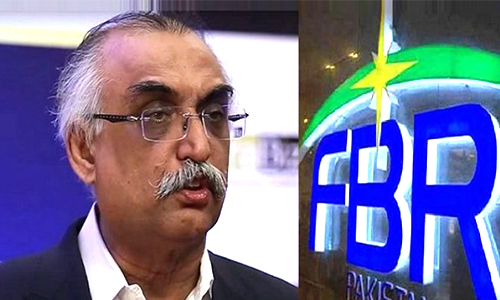
The Federal Investigation Agency has opened a serious inquiry against former FBR chairman Shabbar Zaidi, accusing him of approving illegal tax refunds that crossed Rs16 billion during his time in office. The case has quickly turned into one of the biggest corruption stories in recent months, bringing both the Federal Board of Revenue (FBR) and its former head under scrutiny.
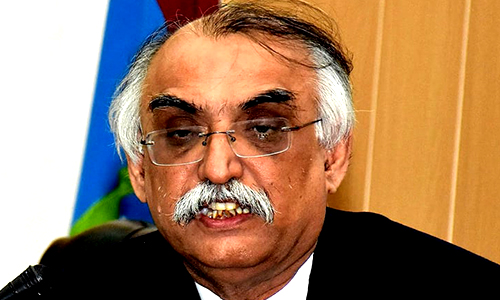
According to FIA officials, the case was registered on October 29 at the Anti-Corruption Circle in Islamabad. The complaint lists Shabbar Zaidi, several senior FBR officers, and executives from private banks as main suspects. Investigators claim that the refunds were processed between May 2019 and January 2020, when Zaidi was serving as FBR chairman under the PTI government.
How the Case Began
As per the FIA report, the refunds were issued to a handful of large companies — including three banks, two cement manufacturers, and one chemical firm. The issue became controversial because these companies were clients of Shabbar Zaidi’s private audit firm before he joined the FBR. Investigators say this connection created a clear conflict of interest, suggesting that Zaidi may have used his influence to benefit his former clients.
The report further alleges that the tax refunds were processed without legal approval, bypassing the internal checks and balances that the FBR usually follows. Officials involved in the process reportedly received instructions from higher-ups to fast-track the payments.
Conflict of Interest Under Question
Before joining the FBR, Shabbar Zaidi was a senior partner at A.F. Ferguson & Co., a major audit and consultancy firm. The FIA now claims that some of the same companies which received refunds had previously worked with his firm.
This overlap, according to investigators, violates public service ethics — a government officer cannot hold an interest in entities that could financially benefit from his decisions.
Several experts have called this a “serious lapse of judgment”, saying that such actions damage public trust in the tax system. Others, however, believe that Zaidi might have been unaware of how his past affiliations could be used against him.
Legal Grounds for the Case
The FIR states that the actions fall under the Anti-Corruption Act of 1947 and relevant sections of the Pakistan Penal Code. After internal review, the competent authority approved the registration of a formal case.
The FIA says its team has collected credible evidence showing that the refunds were processed through irregular means and that the money went to entities with prior professional connections to Shabbar Zaidi.
A senior investigator told reporters that this case is not based on “political pressure” but on documented proof. The agency believes that the illegal payments were part of a coordinated effort within the department.
Shabbar Zaidi’s Position and Public Response
So far, Shabbar Zaidi has not given a detailed public statement about the accusations. However, in earlier interviews, he described himself as someone who tried to reform Pakistan’s weak tax structure, not exploit it.
Many who worked with him at FBR remember him as a tough reformer — a man who wasn’t afraid to challenge the old ways. His supporters insist that this new case might be a politically motivated move meant to discredit his work.
Public opinion remains divided. Some see him as part of the same system he tried to fix, while others view him as a victim of the bureaucracy he once led. On social media, the debate continues: is Zaidi a reformer under fire or another official caught in corruption?
Inside His Time at FBR
Appointed on May 10, 2019, by the PTI government, Shabbar Zaidi’s arrival at the FBR was initially welcomed. He came from a corporate background, with a reputation for being direct and data-driven.
During his short tenure, he pushed for digitisation of tax systems, documentation of traders, and stricter enforcement of return filings. But resistance from within the FBR and outside pressure from business lobbies made his job difficult. By January 2020, he had stepped down, citing health and workload issues.
Despite his early exit, Zaidi’s impact was visible — tax reforms, increased awareness of documentation, and a national debate on the informal economy all followed his efforts.
What Makes This Case Important
The case against Shabbar Zaidi is not just about one man or one refund. It highlights deeper problems in how Pakistan’s tax and regulatory institutions work.
Experts say that if the allegations turn out to be true, it would show how easily even top officials can bypass internal systems. But if they prove false, it would point toward political victimisation and misuse of accountability laws.
Either way, this case has sparked new discussions about transparency, ethics, and accountability in public service. Many now believe that stricter laws are needed to prevent public officials from holding interests that overlap with their government duties.
Media Coverage and Ongoing Developments
Leading outlets such as Dawn News and Geo have reported extensively on the development. According to these reports, the FIA has expanded its probe and is collecting records from the banks and companies named in the FIR.
Legal experts say the investigation could take several months, as the Rs16 billion refunds involve multiple layers of approvals and documentation.
Meanwhile, the Ministry of Finance has refrained from commenting until the FIA completes its work. Opposition politicians have called for an independent inquiry, while some PTI leaders claim the case is part of a broader campaign against professionals linked to their government.
Conclusion
The story of Shabbar Zaidi is turning into a test case for Pakistan’s accountability process. It shows how quickly a reformer can become a suspect — and how blurry the line between reform and controversy can be.
Whether he is found guilty or cleared, the case has already left an impact. It has reminded the public that no one, no matter how influential, is beyond investigation. And it has renewed the call for cleaner, more transparent institutions that work for the country — not against it