

Security Forces Strike Dead 8 Terrorists in North Waziristan Border Clash
Security Forces Strike Dead 8 Terrorists Along Pak-Afghan Border in North Waziristan
In a decisive counter-terrorism operation, Pakistan’s security forces have once again demonstrated their unwavering commitment to defending the nation. On Wednesday, along the volatile Pak-Afghan border in North Waziristan, the Security Forces Strike Dead eight terrorists attempting to infiltrate Pakistani territory. The operation, lauded for its precision and professionalism, marks another milestone in Pakistan’s ongoing campaign against terrorism.
Swift Response to Terrorist Movement
The Inter-Services Public Relations (ISPR) confirmed that the engagement was triggered after security forces detected movement of a group of militants, identified as “khwarij,” attempting to cross the border. Acting swiftly, the troops engaged the terrorists in a highly coordinated strike. As a result, eight members of the Indian proxy group Fitna al Khwarij were neutralized, and weapons and ammunition were recovered from the site. This marked a clear demonstration of why the Security Forces Strike Dead tactics are crucial in safeguarding national security.
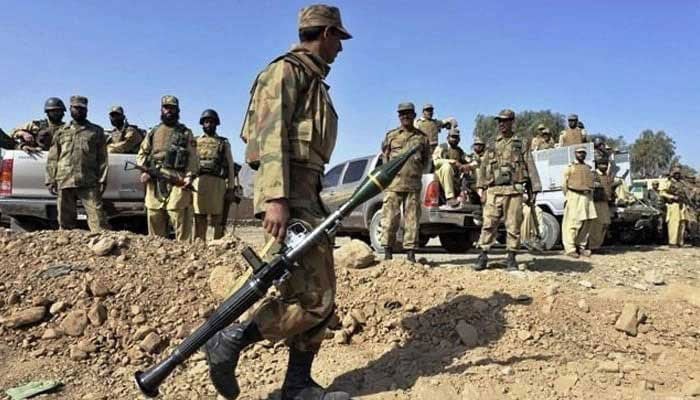
Fitna al Khwarij is associated with the banned Tehreek-i-Taliban Pakistan (TTP) and represents a significant threat due to its cross-border connections. This successful operation underlines the ability of Pakistan’s military to respond effectively to threats, even in complex border regions like North Waziristan.
Continued Counter-Terrorism Operations
The military emphasized that sanitization operations are ongoing to eliminate any remaining militants in the area. The statement from ISPR highlighted the failure of the Afghan Taliban regime to manage its side of the border effectively, calling upon Kabul to prevent its territory from being exploited for terrorist activities. This operation underscores the broader security strategy under Pakistan’s vision “Azm-e-Istehkam,” designed to eliminate foreign-sponsored terrorism across the country.
Through these efforts, Pakistan’s security forces have consistently shown that Security Forces Strike Dead operations are both precise and effective. Their ability to neutralize threats while minimizing collateral damage is a testament to their training, planning, and operational excellence.
National Recognition and Support
President Asif Ali Zardari praised the security forces for their timely and decisive actions, calling them a source of national pride. Similarly, Interior Minister Mohsin Naqvi commended the army for thwarting the infiltration attempt and countering the “nefarious designs of Indian-backed terrorists.” These acknowledgments highlight the importance of military vigilance and the recognition of its role in protecting the homeland.
The repeated success of Security Forces Strike Dead missions reassures citizens of Pakistan that the state is actively addressing security threats. Such high-profile operations also send a strong message to terrorist networks attempting to exploit vulnerabilities along the border.
Operation Ghazab lil-Haq
This recent engagement is part of the ongoing Operation Ghazab lil-Haq, which targets terrorist hideouts in Afghanistan. Launched after unprovoked firing by militants from Afghan territory on February 26, the operation aims to dismantle terrorist infrastructure and secure Pakistan’s borders.
While a temporary five-day pause was observed during Eidul Fitr celebrations, the operation resumed with full intensity. Analysts suggest that such sustained operations are critical to preventing cross-border terrorism. The success of the recent mission demonstrates that Security Forces Strike Dead operations remain a cornerstone of Pakistan’s counter-terrorism strategy.
Regional Dynamics and International Engagement
The operation comes amid broader regional diplomatic efforts. Officials from Pakistan, Afghanistan, and China recently met in Urumqi under a trilateral mechanism aimed at building confidence and reopening trade routes. While the meeting was not a formal mediation effort, it underscores the importance of international collaboration in stabilizing the border regions and combating terrorism.
Despite repeated appeals from Islamabad, the Afghan Taliban has been criticized for not dismantling terrorist sanctuaries within its territory. The recent operation reinforces that Security Forces Strike Dead missions will continue independently of diplomatic progress, ensuring that national security remains uncompromised.
Tactical Excellence and Strategic Impact
The success of the operation highlights the professional capabilities of Pakistan’s security forces. The engagement was marked by precise targeting, effective coordination, and the ability to respond rapidly to intelligence. Such operations prevent terrorists from gaining a foothold along critical border areas.
Weapons and ammunition recovered during the operation will be examined for further intelligence, helping to disrupt future terrorist plans. Every successful mission reinforces the deterrence message: cross-border terrorism will meet a swift and lethal response.
By executing operations like these, the military ensures that Security Forces Strike Dead operations remain a key tool in national defense, combining intelligence, tactical skill, and strategic foresight.
Human and National Impact
Beyond the tactical and strategic outcomes, these operations have profound national significance. They provide a sense of security to border communities who are most vulnerable to cross-border attacks. The elimination of eight terrorists not only neutralizes an immediate threat but also weakens the operational capacity of the TTP and affiliated networks.
Public support for such operations is high, reflecting the citizens’ trust in the professionalism and commitment of Pakistan’s armed forces. Statements from national leaders further emphasize the unity and resolve of the state against terrorism.
Continuous Commitment to Border Security
The military has reaffirmed that operations will continue until all objectives are met. The border region remains under close surveillance, and Security Forces Strike Dead operations will be conducted as necessary to eliminate threats and safeguard civilians.
Pakistan’s commitment to counter-terrorism also includes international advocacy. The ISPR statement criticized the Afghan Taliban for allowing militants to operate from Afghan territory, emphasizing that effective border control is essential for regional stability.
Looking Ahead
The recent operation in North Waziristan underscores the ongoing security challenges facing Pakistan. It also highlights the capability, professionalism, and resolve of its security forces. Every successful strike strengthens the country’s defenses and sends a clear warning to terrorist networks.
As the situation evolves, Pakistan will continue to rely on precise, targeted operations to maintain stability along its borders. The repeated success of Security Forces Strike Dead missions ensures that threats are neutralized before they escalate, protecting both the nation and its citizens.
Conclusion
The operation along the Pak-Afghan border in North Waziristan demonstrates the importance of vigilance, intelligence, and operational readiness. By neutralizing eight terrorists, the security forces not only defended Pakistan’s territorial integrity but also reaffirmed their commitment to national security.
In a region marked by complex challenges, operations like these are vital. The phrase Security Forces Strike Dead perfectly encapsulates the effectiveness and precision of Pakistan’s counter-terrorism efforts. These actions, coupled with national and international support, ensure that Pakistan remains resilient in the face of terrorism.