Saudi Pakistan Defense Chiefs Plan 7 Strong Steps Against Iran Threat
Saudi Pakistan Defense Chiefs Hold Urgent Talks as Iran Attacks Raise Regional Alarm
Riyadh witnessed another important moment in regional diplomacy this week as senior military leaders from Saudi Arabia and Pakistan discussed the growing security crisis in the Middle East. The meeting between Saudi Pakistan Defense Chiefs comes at a time when tensions in the region have reached one of their highest points in recent years.
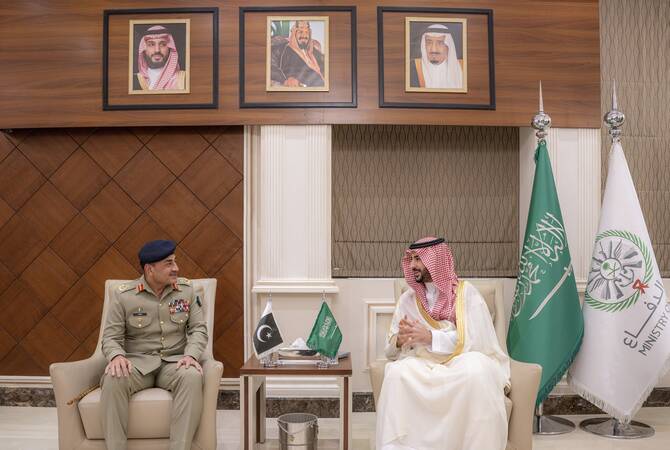
Saudi Defense Minister Prince Khalid bin Salman held discussions with Pakistan’s army chief, General Asim Munir, focusing mainly on the recent attacks attributed to Iran and the possible steps needed to prevent further escalation.
In a brief statement posted online, Prince Khalid confirmed that the Saudi Pakistan Defense Chiefs spoke about the recent incidents targeting the Kingdom and reviewed measures that could help stop similar attacks in the future.
The conversation took place under the framework of the Strategic Mutual Defense Agreement signed between Saudi Arabia and Pakistan last year, which strengthened the long-standing military relationship between the two countries.
Rising Tensions Across the Gulf
The Middle East has been under intense pressure since late February, when the United States and Israel launched a major military operation against Iran. The campaign, which reportedly targeted several high-ranking Iranian leaders and strategic facilities, dramatically changed the situation in the region.
Iran responded quickly with a wave of retaliatory strikes. Several drone and missile attacks have since been reported across the Gulf.
Because of this rapidly changing environment, the meeting between the Saudi Pakistan Defense Chiefs has drawn considerable attention from analysts and regional observers.
Iran’s retaliation hasn’t been limited to military assets. For the first time in modern history, we are seeing a coordinated wave of strikes across the GCC states. From the Shaybah oil field in the Empty Quarter to the US embassy in Riyadh, the threat is no longer theoretical—it’s hitting home.
The Power of the Strategic Mutual Defense Agreement
What makes the current coordination between Saudi Pakistan Defense Chiefs so significant is the “Strategic Mutual Defense Agreement” (SMDA) signed back in September. This wasn’t just another piece of paper; it was a pledge that an attack on one is an attack on both.
Prince Khalid bin Salman was clear in his social media address following the meeting. He emphasized that the Saudi Pakistan Defense Chiefs discussed the specific “measures needed to halt” these blatant Iranian attacks. By invoking this agreement, Pakistan is signaling that its military might—and its strategic depth—is fully behind the Kingdom’s security.
Global Diplomacy in the Face of Drone Strikes
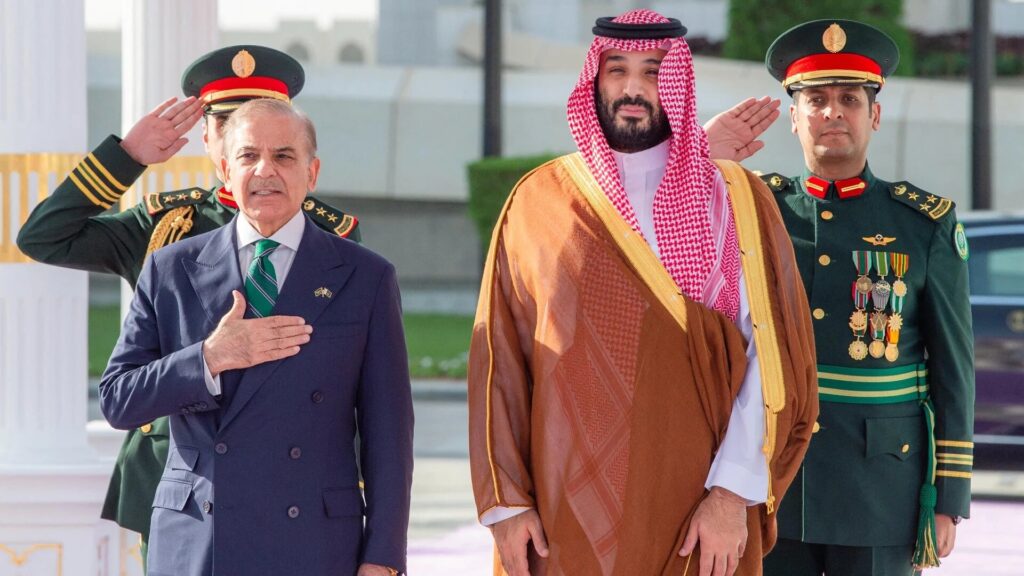
While the Saudi Pakistan Defense Chiefs focus on the ground-level defense, Saudi Crown Prince Mohammed bin Salman (MBS) has been engaged in a diplomatic marathon. On Saturday, MBS held a series of high-level calls with leaders from Turkey, the UK, and Cyprus.
The message was consistent: Saudi Arabia rejects any action that undermines regional stability. During a call with Turkish President Erdogan, the Crown Prince condemned Iranian strikes that had even reached Turkish territory—a significant expansion of the war zone. PM Keir Starmer of the UK also weighed in, calling the strikes on Saudi soil “indiscriminate and reckless.”
The Economic Fallout and the Strait of Hormuz
The conflict isn’t just a military one; it’s a direct threat to the global dinner table. As the Saudi Pakistan Defense Chiefs coordinate their response, the world is watching the Strait of Hormuz with bated breath. Iran’s restriction of energy shipping has already sent oil prices into a tailspin.
Earlier this Saturday, drones were intercepted over the Shaybah oil field. These aren’t just symbolic targets; they are the lifelines of the global economy. If the Saudi Pakistan Defense Chiefs cannot secure these assets, the ripple effect will be felt from the gas stations of Lahore to the heating bills of London.
Solidarity in Action
Pakistan’s Interior Minister Raza Naqvi also reached out to his Saudi counterpart, affirming that Pakistan stands in total solidarity. This isn’t just about high-level meetings; it’s about a shared realization that “Operation Epic Fury” has changed everything.
The Saudi Pakistan Defense Chiefs are now tasked with managing a conflict where Patriot and THAAD missile batteries are working overtime. While most projectiles have been intercepted, the casualties from falling debris and direct hits on civilian hubs across the Gulf are rising.
Why the Saudi Pakistan Defense Chiefs Matter Now
In a world where the US security umbrella feels increasingly complex, the partnership highlighted by the Saudi Pakistan Defense Chiefs offers a different kind of reassurance. It combines Saudi Arabia’s financial and energy influence with Pakistan’s battle-hardened military experience.
As the Saudi Pakistan Defense Chiefs continue to analyze the “wisdom” (or lack thereof) of the Iranian side, the goal remains clear: deterrence. They are hoping that by showing a united front, they can force a “miscalculation” check on Tehran before the conflict spirals into an even larger global catastrophe.
The discussions between the Saudi Pakistan Defense Chiefs are therefore likely to continue as both countries work together to address emerging threats and protect the security of the region