
Pakistan fires 1 powerful strike on Afghanistan as border tensions sharply rise
For the third consecutive day, the border between Pakistan and Afghanistan has transformed from a troubled frontier into an active battle zone. What began as sporadic skirmishes has now spiraled into what Islamabad is officially calling an “open war.”
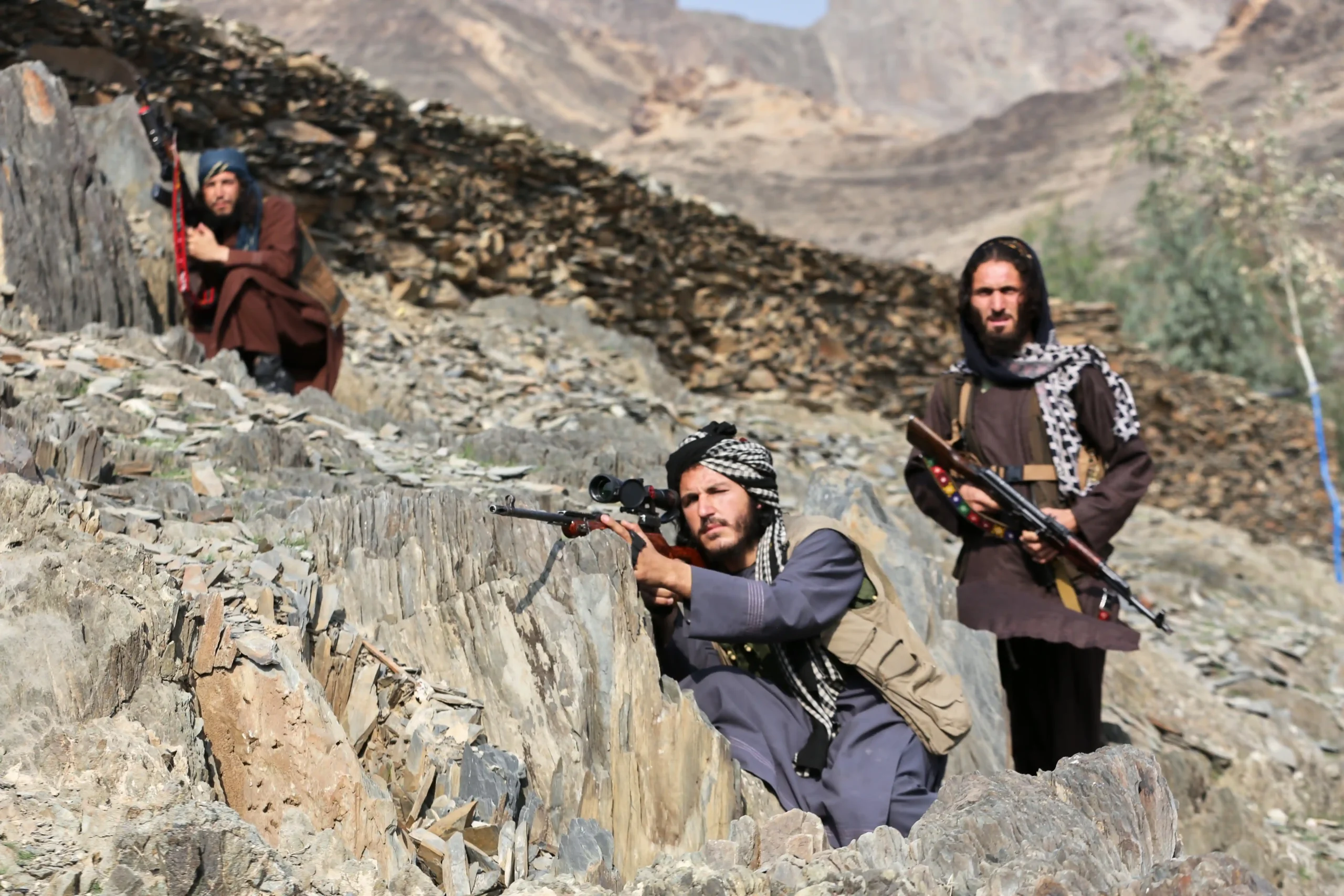
This weekend, the conflict reached a terrifying new milestone. Following a series of cross-border provocations, the Pakistan Air Force launched a powerful strike on Afg, targeting what it described as high-value military installations and militant hideouts. This move marks the first time since the Taliban’s return to power in 2021 that Pakistan has directly struck the heart of the Taliban’s establishment, including targets in Kabul, Kandahar, and Paktia.
A Cycle of Retaliation and “Open War”
The rhetoric coming out of both capitals has shifted from diplomatic frustration to outright hostility. Pakistan’s Defense Minister, Khawaja Asif, didn’t mince words when he declared that the “cup of patience has overflowed.” The catalyst for this sudden surge was a massive retaliatory operation by Afghan forces on Thursday, which prompted the Pakistani military to launch “Operation Ghazab-Lil-Haqq” (Righteous Fury).
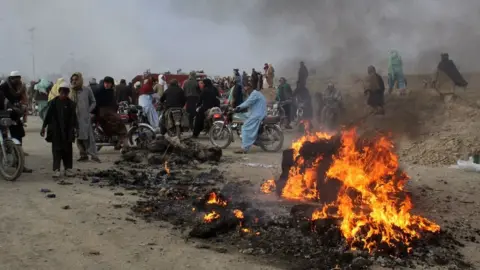
During the early hours of Friday, the sky over Kabul was lit up by explosions as a powerful strike on Afg hit several brigade headquarters and ammunition depots. According to Pakistani security sources, these operations were “intelligence-based and selective,” aimed at neutralizing the Tehreek-e-Taliban Pakistan (TTP) and other groups allegedly sheltered by the Afghan regime. However, the Taliban authorities in Kabul have painted a much grimmer picture, claiming that residential homes and religious schools were hit, resulting in significant civilian casualties.
The Global Call for Mediation
As the smoke rises over the Durand Line, the international community is scrambling to prevent a full-scale regional disaster. The European Union’s foreign policy chief, Kaja Kallas, issued a stern warning on Saturday, urging both nations to “bring down the temperature.” Kallas emphasized that Afghan soil must not be used as a launching pad for terrorism, but also stressed that a military solution is unsustainable.
Other global players, including Russia, Iran, Jordan, and the UAE, have offered to mediate. Even UN Secretary-General António Guterres has called for an immediate ceasefire. Despite these efforts, the stance from Islamabad remains uncompromising. Mosharraf Zaidi, a spokesperson for the Pakistani Prime Minister, stated flatly that there would be “no dialogue” until the export of terrorism from Afghan soil is halted. This refusal to negotiate, even as a powerful strike on Afg resonates across the border, suggests that we are witnessing a decisive shift in Pakistan’s regional strategy.
Drone Warfare and Domestic Fear
The conflict has moved beyond traditional artillery exchanges. For the first time, “rudimentary” drone attacks have been reported deep inside Pakistani territory.
In the city of Bannu, a drone strike allegedly hit a mosque during Iftar, injuring several worshippers. This expansion of the battlefield into civilian areas has led the Pakistani government to impose a countrywide ban on the flying of any unmanned aerial vehicles (UAVs). The fact that a powerful strike on Afg can be met with drone technology in Pakistani heartlands shows how rapidly the nature of this conflict is evolving.
Why the US is Backing Pakistan
Interestingly, the United States has taken a firm stance in support of its major non-NATO ally. Washington has stated that it backs Pakistan’s “right to defend itself” against the Taliban, a group the US still views with deep suspicion. President Donald Trump even praised the leadership of Prime Minister Shehbaz Sharif and General Asim Munir, stating that Pakistan is “doing terrifically well” in managing its border security.
However, many analysts worry that this vocal support could embolden further military action. Each powerful strike on Afg carries the risk of a miscalculation that could draw in regional neighbors. With Pakistan being a nuclear-armed state and the Taliban being a battle-hardened force after decades of fighting NATO, the stakes couldn’t be higher. In the midst of this, civilians are caught in the crossfire.
When a powerful strike on Afg hits a border province like Paktika or Nangarhar, it isn’t just “infrastructure” that is destroyed; it is families and livelihoods. Reports of a refugee camp near Torkham being hit by mortar fire have sent shockwaves through humanitarian organizations. Kabul, in turn, denies these allegations, claiming it has no control over the group’s movements.
This lack of trust is what leads to events like the recent powerful strike on Afg. Without a functional diplomatic channel, the military becomes the only tool left for communication. The Taliban’s spokespeople have warned that they will respond to “aggression with courage,” indicating that they are prepared for a long, drawn-out confrontation.
Key Conflict Statistics:
Major Strike Locations: Kabul, Kandahar, Paktia, Nangarhar.
Pakistan Military Operation: Operation Ghazab-Lil-Haqq.
Drone Target Cities: Abbottabad, Swabi, Bannu, Nowshera.
International Mediators: EU, Iran, Qatar, Saudi Arabia.
To understand the historical context, one can look at the Durand Line Dispute, which remains the underlying structural fault line between these two nations.