
Muslim Graves from Spain powerful 7 Al-Andalus finds reveal stunning past
Unveiling the Past: Ancient Muslim Graves from Spain Discovered in Estepona
The soil of Andalusia has always been a silent witness to ancient civilizations, but occasionally, this earth reveals secrets that allow us to understand history from a fresh perspective. Recently, in the city of Estepona in southern Spain, archaeologists have unearthed an ancient section buried deep underground. A significant number of Muslim Graves from Spain have been found here, dating from the 8th to the 15th centuries. This discovery not only strengthens the ancient Islamic identity of Andalusia but also sheds light on the final rites and daily lives of the people of Al-Andalus.
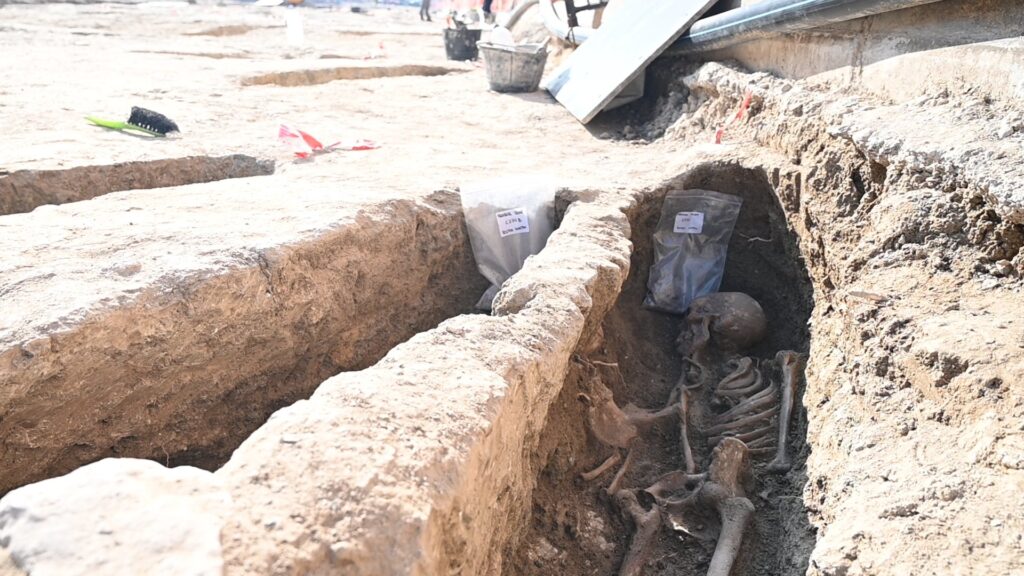
This whole process began when work started on a new boulevard along the route of San Lorenzo and España avenues in Estepona. The project’s goal was to connect the old part of the city with the seaside. However, since it was well-known that this area is highly significant from a historical standpoint, archaeologists were called in before work commenced. The team led by Ildefonso Navarro quickly identified the exact spot where these graves were located.
The Sanctity of Istibbuna and Qibla-Facing Graves
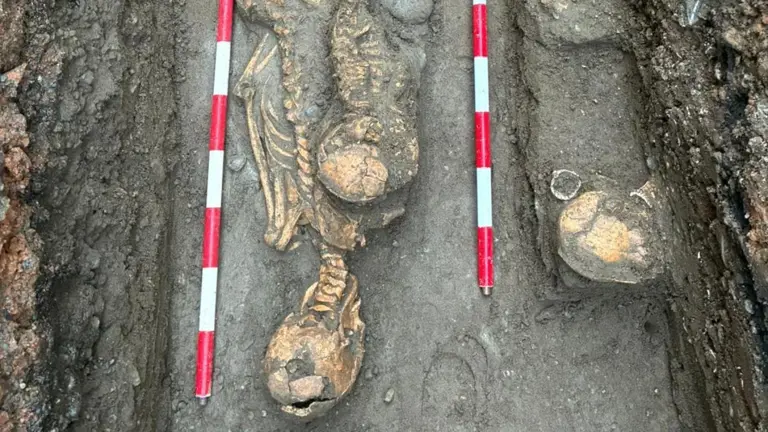
The most astonishing aspect of these Muslim Graves from Spain is the care and devotion with which they were constructed. Mario González, an archaeologist from the MENIA company, explains that all the remains were buried directly in the earth with their faces turned precisely toward Mecca (Qibla). This clearly demonstrates how firmly the residents of Istibbuna (the ancient Nasrid name for Estepona) adhered to their religious beliefs.
In the coming days, a deep scientific analysis of these remains will be conducted. Scientists will attempt to determine the ages of these individuals and the causes of their deaths. All this information will help us understand the diet and lifestyle of people during that era. Every one of these Muslim Graves from Spain is a page of our history that helps fill the blank spaces of the Al-Andalus period.
Warfare and Defensive Strategy
Estepona is not revealing historical secrets for the first time. Over the past few years, more than 600 remains have been found here. However, this new phase starting at the end of 2024 is somewhat different. Not only were Muslim Graves from Spain found here, but ancient swords and weapons were also discovered outside the cemetery walls, telling stories of the wars of that era.
Among these discoveries are five large stone cannonballs made from local mountain rock (peridotite). It is believed that these balls were used for the protection of Istibbuna during the 13th and 14th centuries when Christian armies were advancing southward. These weapons and ancient earthenware pots show the difficult and wartime conditions that the people buried in these Muslim Graves from Spain must have faced.
The Grand Landscape of Al-Andalus
To understand the significance of these Muslim Graves from Spain found in Estepona, we must look at the entire region. Southern Spain was a place where different powers lived together and sometimes clashed. From the Umayyad Caliphate to the Nasrid Kingdom, the politics here kept changing. The Caliphal Palace found in Murcia and this discovery in Estepona are links in the same chain that remind us of 10th-century architecture.
If the Alhambra in Granada shows the splendor of kings, these small discoveries and Muslim Graves from Spain tell the story of common people. Palaces tell us about the elite class, but these graveyards tell us how an ordinary society cared for its loved ones and how strong their faith was at the time of death.
Urban Progress and Historical Preservation
The decision by the Estepona administration to carry out developmental work and history side-by-side is commendable. The site of these graves has been officially declared an ‘Archaeological Zone’ so that history is not harmed while building the new boulevard. By studying the Muslim Graves from Spain alongside new modernization, Estepona has shown the world that the old and new worlds can move forward together.
Nowadays, archaeologists and city planners are working together. Everyone is hopeful that more “rare items” may emerge from beneath the ground. When people walk on the new boulevard, they will realize that beneath their feet, these ancient Muslim Graves from Spain serve as a reminder of the great people upon whom today’s world stands.
The Use of Forensic Science
The skeletal remains found in these Muslim Graves from Spain will not just be preserved; they will be tested using modern forensic techniques. Carbon dating will reveal exactly which year these graves belong to, and dental tests (isotope analysis) will show where these people were born and what kind of water they drank. These details are very important for those tracking the migration of the Zirid and Almohad eras.
Furthermore, the weapons found nearby present a grim picture. It is possible that some of the people buried in these Muslim Graves from Spain were martyred in the very wars fought at the end of the Nasrid era. The discovery of those stone balls is proof that the defenders of the fort had done their utmost.
A History That Never Ends
The story of Al-Andalus is not limited to Spain; it is a story of the whole world. The work done by Islamic Spain in science, philosophy, mathematics, and agriculture still shows its influence today. The discovery of these Muslim Graves from Spain ensures that this historical chain has never been broken.
When the work on San Lorenzo Avenue is finished, Estepona will have a beautiful boulevard. But every traveler should remember that beneath their feet lies the buried story of a civilization that flourished for 700 years. The protection of these Muslim Graves from Spain is essentially a victory for humanity and science.
Final Words
In short, these 12 graves found in Estepona are an important part of that large historical puzzle. Through the hard work of archaeologists, we will learn more things that were hidden behind the veil of the unknown until now. For now, all focus is on the respectful study of these Muslim Graves from Spain so that the secrets of those who remained silent for centuries can finally come before the world.
Whether it is the palace in Murcia or these graves in Estepona, Spain’s Islamic heart is still beating today. These Muslim Graves from Spain tell us that history never ends by simply turning into dust; it only waits to be rediscovered.