Massive KP Protest Rallies Slam Alleged 2024 Election Rigging 7 Cities
Massive KP Protest Rallies Condemn Alleged Rigging in 2024 Elections
The political atmosphere across Khyber Pakhtunkhwa heated up once again as opposition parties gathered thousands of supporters in what have now become known as the Massive KP Protest Rallies. The demonstrations took place on the call of the opposition alliance Tehreek-i-Tahafuz-i-Ayin-i-Pakistan (TTAP), which accused the government of large-scale irregularities in the February 8, 2024 general elections.
These rallies brought together not just workers of Pakistan Tehreek-i-Insaf (PTI) but also supporters of Pakhtunkhwa Milli Awami Party (PkMAP), forming a broad front against what they describe as stolen public mandate.
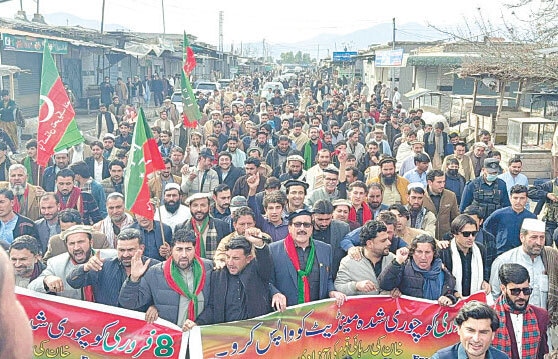
The Massive KP Protest Rallies carried a clear message: release former prime minister and PTI founder Imran Khan, his spouse Bushra Bibi, and all incarcerated workers of the party. Protesters repeatedly chanted slogans for “Haqiqi Azadi” and vowed to continue their struggle until accountability was ensured.
While traffic kept moving and bus stands remained open, large groups of PTI workers marched from Hashtnagri Bazaar toward different parts of the city.
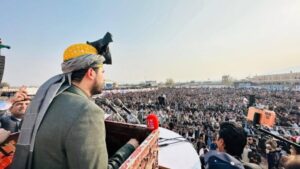
Holding flags, banners, and placards, protesters walked through Ashraf Road, Rampura Gate, and surrounding areas, forming one of the most visible segments of the Massive KP Protest Rallies. The march grew into a sizeable public meeting at Chowk Yadgar, where senior PTI leaders including Junaid Akbar Khan, Sher Ali Arbab, Asif Khan, and Meena Khan Afridi addressed the crowd.
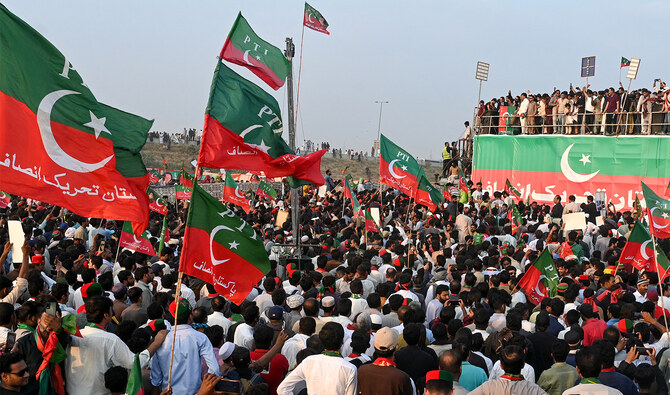
Junaid Akbar stated that party workers were waiting for further instructions regarding a possible march toward D-Chowk Islamabad. This hint fueled speculation that the Massive KP Protest Rallies might turn into a larger national-level movement.
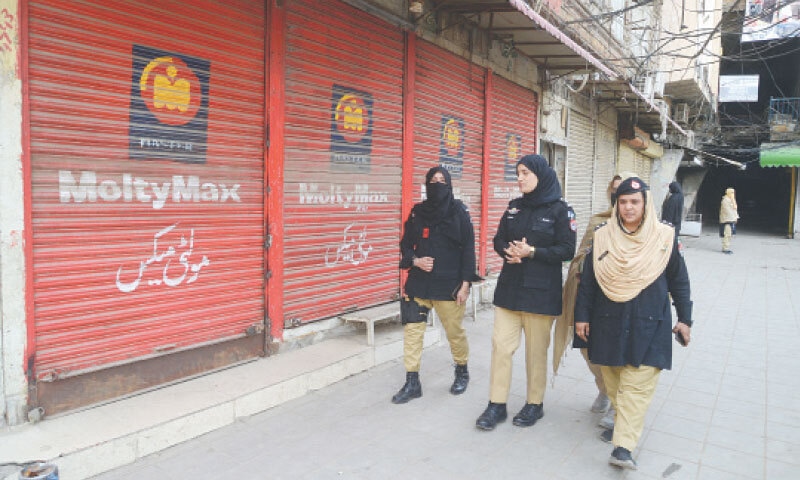
A complete shutter-down strike was observed in Mian Mandi Bazaar and other key areas. Similar scenes were witnessed in Ekkaghund Bazaar, where PTI organised both a wheel-jam and shutter-down demonstration.
Local MNAs and MPAs led the crowds, underlining the unity of PTI workers in the region. Multiple health professionals, tribal elders, and youth activists joined the marches, adding weight to the demand for free and fair elections.
Interestingly, tensions arose within the party as workers prevented some local MNAs from addressing the rally.
They accused these elected representatives of making little effort to mobilise the public for the strike.
Lower Dir: Protests Held Despite Active Business Routine
In Lower Dir, most markets in Timergara, Chakdara, Gulabad, and Balambat stayed open. However, PTI workers still managed to stage small but energetic protests. Burning tyres and blocking roads, they briefly interrupted traffic and added their voice to the wider Massive KP Protest Rallies being held across the province.
These road blockades and protest gatherings were led by Pakistan Tehreek-i-Insaf (PTI) leadership, but interestingly, workers from the Pakhtunkhwa Milli Awami Party (PkMAP) also participated enthusiastically. From the narrow streets of Peshawar to the rugged hills of Mohmand, people from all walks of life stepped out to demand their rights.
Observing the passion of the people on the ground, it becomes clear that this isn’t just an electoral dispute—it is a struggle for the survival of the Constitution of Pakistan, which they feel is under grave threat.
While traffic continued to flow in the city, the local business community registered their protest through a partial shutter-down strike. When the rally reached the historic Chowk Yadgar, the scene was remarkable. PTI provincial president Junaid Akbar Khan delivered a fiery speech, hinting that the next destination for the movement could be Islamabad’s D-Chowk.
Hazara Division: Mansehra, Haripur, and Beyond
The impact of the TTAP call was clearly visible in the Hazara division as well. In Mansehra city, most shopkeepers kept their businesses closed. Although transporters did not officially call for a wheel-jam strike, fewer vehicles were seen on the roads, causing difficulties for commuters but highlighting the effectiveness of the protest. It was the influence of these Massive KP Protest Rallies that led leaders like Omar Ayub Khan in Haripur to fiercely criticize the federal government.
Southern Districts: Bannu’s Complete Lockdown
If we talk about Bannu, it seemed as if life had come to a standstill. In Charsadda, when the Massive KP Protest Rallies reached Farooq Azam Chowk, the anger of the workers turned toward their own leaders. Protesters prevented their own MNAs from speaking because they felt the representatives had not worked hard enough to make the strike a success. This incident suggests that the PTI base now demands tangible action rather than just rhetoric from its leadership.
While traders in Swabi did not observe the strike, everything remained shut in Mohmand and Lower Dir. Areas like Mian Mandi and Ekkaghund in Mohmand witnessed a complete shutter-down.
For ordinary citizens who rely on daily wages, these are undoubtedly tough times. However, many argue that this sacrifice is necessary to save the Democratic Process in Pakistan. Nevertheless, the lukewarm response in places like Swabi indicates that the alliance still needs to build a more universal consensus.