
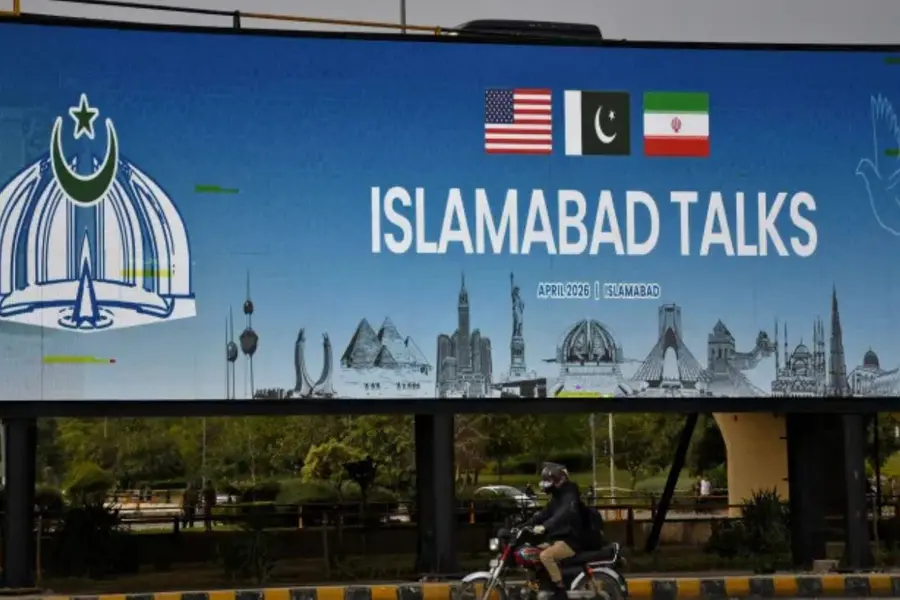
How US-Iran Talks in Islamabad Collapsed: Shocking 5 Facts
US-Iran Talks: How Islamabad Became the Center of Global Diplomacy
Pakistan found itself in the global spotlight as it hosted one of the most sensitive diplomatic engagements in recent history. The US-Iran Talks in Islamabad were not just another round of negotiations—they were a high-stakes attempt to prevent further escalation in an already volatile region. What made this moment even more significant was Pakistan’s ability to bring both sides to the table when many others had failed.
A City Under Lockdown
On Saturday morning, Islamabad woke up to an unprecedented security lockdown. Roads were sealed, checkpoints were placed across key routes, and more than 10,000 security personnel were deployed. The city was transformed into a fortified zone, reflecting the seriousness of the US-Iran Talks.
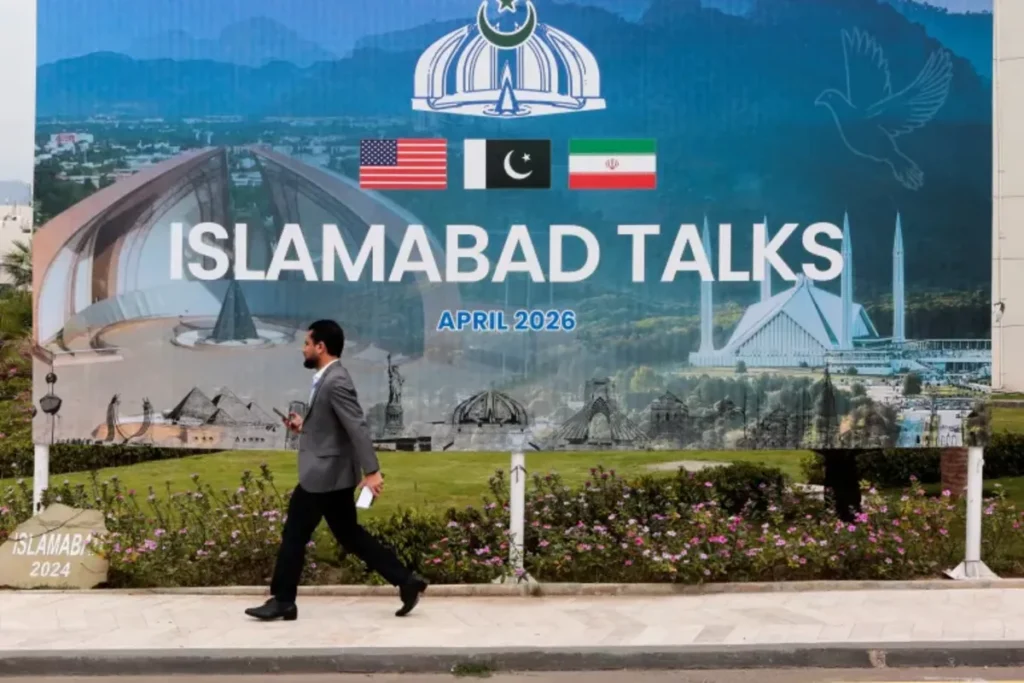
The heightened security wasn’t just precautionary—it was necessary. Hosting delegations from two long-time adversaries required flawless coordination. Authorities ensured that every movement was controlled, every location secured, and every risk minimized.
Secret Arrivals and Strategic Movements
The Iranian delegation arrived quietly on Friday night. Their entry into Pakistan was swift and largely unnoticed. Reports indicated that their aircraft altered its call sign upon entering Pakistani airspace, a move designed to avoid attention.
By contrast, the American delegation landed the next day at Nur Khan Air Base. The base itself carries symbolic weight, having been at the center of regional tensions in the past.
On the runway, a striking visual stood out—three aircraft tails: one American and two Iranian. It was a small but powerful symbol of the moment. These subtle details captured the gravity of the US-Iran Talks, where even visuals carried diplomatic meaning.
Serena Hotel Turns Into Diplomatic Fortress
From the airbase, both delegations were transported under heavy security to Serena Hotel Islamabad. But this was no ordinary hotel stay.
Days before the talks, the hotel had been cleared of guests. Floors were secured, staff were vetted, and access was strictly controlled. What remained was essentially a sealed diplomatic zone.
This transformation highlighted how critical the US-Iran Talks were. Islamabad wasn’t just hosting discussions—it was facilitating a rare face-to-face engagement between two deeply opposed nations.
A Clash of Ideologies
Inside the negotiation room, the atmosphere was intense. The US-Iran Talks were not just about policies—they represented a clash of ideologies.
On one side was the American approach, often described as “peace through strength.” On the other was Iran’s stance of “resistance with dignity.” These fundamentally different perspectives shaped every discussion.
Shehbaz Sharif described the moment as a “make-or-break opportunity for lasting peace.” Yet, even before talks began, it was clear that no outcome was guaranteed.
Iran’s Conditions and Firm Stance
Iran entered the US-Iran Talks with clear demands. Its lead negotiator, Mohammad Bagher Ghalibaf, set the tone early:
- No meaningful talks without progress on a Lebanon ceasefire
- No agreement without unfreezing Iranian assets
Iran also insisted that regional conflicts, particularly in Lebanon, could not be separated from the negotiations. Years of sanctions had severely impacted its economy, making financial relief a top priority.
This firm stance showed that the US-Iran Talks were not just about diplomacy—they were about deeply rooted grievances.
A Rare Diplomatic Breakthrough
Despite initial tensions, something unexpected happened. Within hours of both delegations arriving, direct and indirect engagements began.
This was significant. Previous attempts at dialogue in cities like Muscat, Vienna, and Geneva had often stalled. But Islamabad offered something different—a neutral ground with strong ties to all sides.
Pakistan’s unique position played a major role in enabling the US-Iran Talks. Its relationships with Gulf countries, proximity to Iran, and strategic partnership with China gave it credibility as a mediator.
Pakistan’s Strategic Advantage
Pakistan’s role in the US-Iran Talks cannot be overstated. Several factors made it an ideal host:
- Strong ties with Gulf nations like Saudi Arabia and Qatar
- A shared border with Iran
- Strategic location near the Strait of Hormuz
- Close relations with China
Additionally, Pakistan does not host U.S. military bases, which helped maintain its neutral image. Its military leadership, including Asim Munir, also played a behind-the-scenes role in facilitating trust.
These elements combined to make the US-Iran Talks possible in a way few other countries could achieve.
The Long Night of Negotiations
Once discussions began, they continued almost non-stop. Officials described the US-Iran Talks as “continuous but uneven,” lasting around 21 hours.
The first session was relatively short, followed by a break that blended formal and informal discussions. Dinner was served, but negotiations never truly paused.
As the night progressed, talks became more intense:
- Multiple negotiation rounds took place
- Draft agreements were exchanged
- Positions were repeatedly revised
Progress came in small steps, often followed by setbacks. This pattern defined the US-Iran Talks, where every gain was matched by new disagreements.
Pressure From All Sides
Behind the scenes, pressure was immense. Leaders in Washington and Tehran remained actively involved, constantly communicating with their delegations.
Red lines were drawn and redrawn. Every concession was carefully weighed. The US-Iran Talks were not just about the people in the room—they were influenced by powerful forces outside it.
This external pressure made it difficult to reach a compromise, as both sides had to balance diplomacy with domestic expectations.
Fragile Progress and Uncertain Outcomes
Those close to the discussions revealed that progress was fragmented. While some areas saw agreement, others quickly became points of contention.
This stop-and-start dynamic defined the US-Iran Talks. It showed how complex and delicate such negotiations can be, especially when decades of mistrust are involved.
Conclusion
The US-Iran Talks in Islamabad marked a historic moment in global diplomacy. Pakistan’s role as a mediator brought two adversaries together in a way that had not been seen before.
While the outcome remained uncertain, the process itself was significant. It demonstrated the power of dialogue, even in the most challenging circumstances.

Pingback: Albanese Flags NDIS Overhaul Tax Break Cuts: Shocking 4 chan
Pingback: Iran-US Economic Showdown 5 Dangerous Signals of a Critical