Anger Erupts in Pakistan 20 Dead After Shocking Strike Sparks FuryNow
Anger Erupts in Pakistan as Protests Turn Deadly After Strike on Tehran
Anger Erupts in Pakistan once again as the country finds itself shaken by a wave of violence following the killing of Iran’s supreme leader, Ayatollah Ali Khamenei, in a joint strike carried out by the United States and Israel on Tehran.
By Sunday evening, the unrest had already taken the lives of at least 20 people, with demonstrations spreading from Islamabad to Karachi and Skardu. And it captured the mood perfectly.
Nationwide Grief Turns into Chaos
What began as a reaction to international events quickly grew into something larger. Thousands of protesters, many from Pakistan’s Shia community, flooded major cities to express their outrage over the killing of Khamenei. Pakistan, while predominantly Sunni, includes a significant Shia population of more than 20 percent. Their presence is spread widely across the country, and the strike on Tehran felt personal to many.
What was initially a peaceful protest soon turned tense. People held placards of Khamenei, chanted against Washington and Tel Aviv, and demanded action. As the gatherings grew, so did the state’s concern.
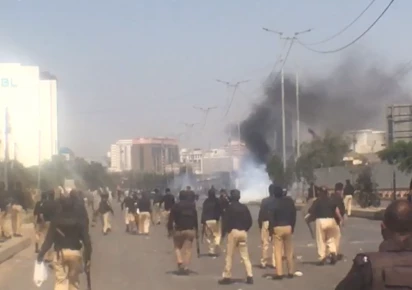
When the protesters tried to advance toward the diplomatic enclave—home to the US Embassy in Pakistan—security forces responded with tear gas and rubber bullets. Witnesses said they also heard live rounds, though authorities did not officially confirm this. Dozens were injured, two people died, and hospitals like Poly Clinic Hospital Islamabad reported a steady stream of wounded individuals.
The situation highlighted, once again, how Anger Erupts in Pakistan whenever geopolitical tensions intertwine with sectarian sentiment. And this time, it all unfolded rapidly, city after city.
Karachi Becomes the Epicenter of Violence
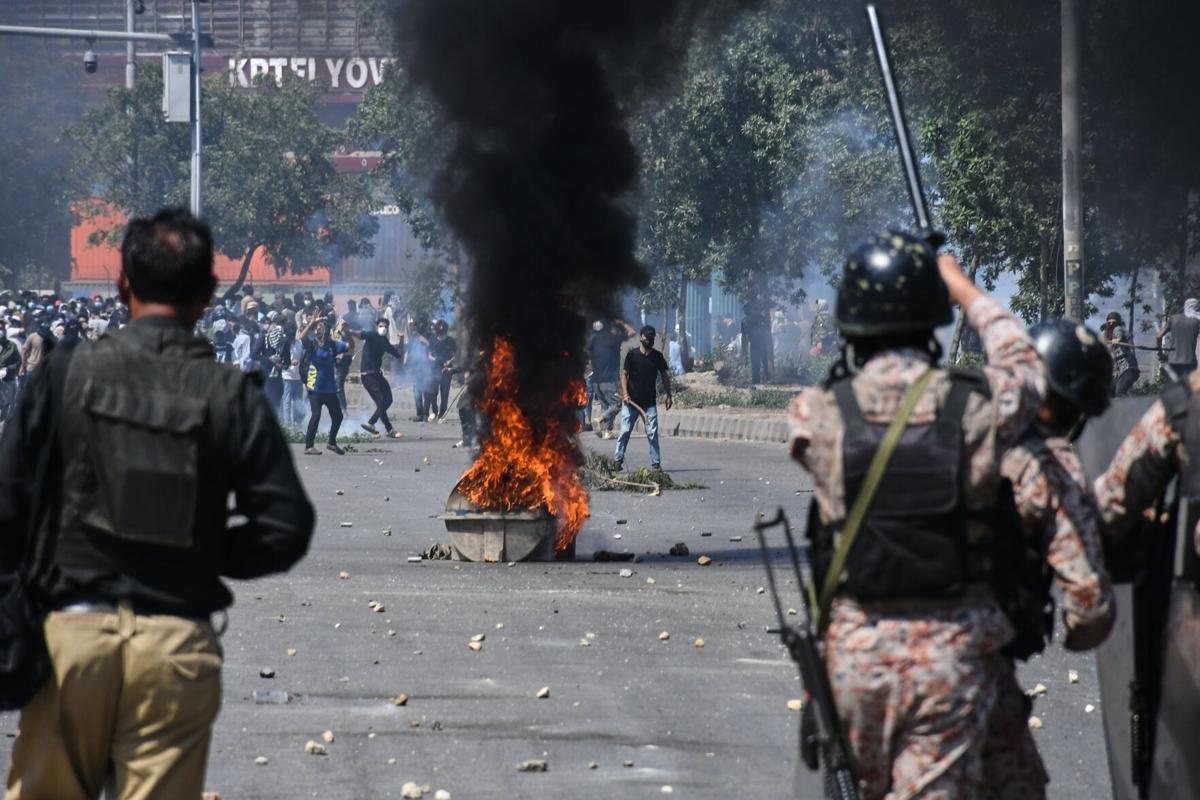
While Islamabad saw chaos, Karachi witnessed the deadliest escalation. Hundreds of people gathered outside the US Consulate Karachi located on Mai Kolachi Road. At one point, a group of young men scaled the consulate gate, broke into the driveway, and smashed windows. The symbolism of the attack was clear: the crowd was furious and wanted their anger seen.
Police surgeon Summaiya Syed confirmed that at least 10 people were killed and 60 were injured in Karachi alone. No one could immediately confirm whether the gunfire heard came from police or unidentified individuals mixed into the crowd.
Sindh Chief Minister Murad Ali Shah called the violence “extremely tragic” and announced an impartial investigation. He reminded citizens that the country is already facing a sensitive regional moment and urged them not to derail public peace further. But by then, images and videos of burning tires, crowds breaking barriers, and police firing volleys of tear gas were already circulating widely.
Once again, the headline Anger Erupts in Pakistan felt like the only way to describe what was happening.
Historical Shadows Add Fuel
This wasn’t the first time anger against the United States turned violent in Pakistan. Many still remember the 1979 attack on the US Embassy in Islamabad, when rumors—later proven false—claimed that the US and Israel were behind the attack on the Grand Mosque in Mecca. That day also ended with deaths on both sides, and the event still stands as one of the most damaging assaults on a foreign diplomatic site in Pakistan’s history.
The memory of that incident resurfaced strongly this week. For many, it reinforced how Anger Erupts in Pakistan whenever foreign actions are perceived as assaults on religious or regional allies.
Voices From the Streets
Amid the chaos, many individuals expressed frustration over what they saw as government mishandling. Protesters felt they had been promised space to express their grief and solidarity. Instead, they were met with force.
Syed Nayab Zehra, a 28-year-old protester, said she had come with her family not to create chaos but to stand with Iranians “even if our government is not with you.” She insisted that the community simply wanted to show unity at a moment of deep grief.
Another protester, Mouwaddid Hussain, accused the government of betrayal. He questioned why grieving citizens were treated like enemies of the state. His voice reflected a broader sentiment: people felt unheard, unprotected, and disrespected.
Moments like these are exactly when Anger Erupts in Pakistan, especially when citizens feel their emotional wounds are deepened by state responses.
Government Response and International Reactions
Pakistan’s government officially condemned the US-Israel attack on Iran and also criticized Iran’s retaliatory strikes on Gulf states. The administration insisted that diplomatic balance is essential during such volatile times. Meanwhile, the US Embassy urged American citizens in Pakistan to avoid large gatherings and remain cautious.
Even though authorities sealed roads leading to the Red Zone, protesters kept pushing to advance, further amplifying the confrontation. Whenever external events shake that balance, Anger Erupts in Pakistan, sometimes faster than the state can control.
This unrest also raised questions about crisis communication, policing tactics, and how peaceful grief can turn violent when there’s mistrust between people and institutions.
If events continue to unfold in Iran, Gulf states, or the wider Middle East, Pakistan may face more challenging days ahead. Each new headline risks becoming another moment where Anger Erupts in Pakistan—a phrase now used worldwide to describe the current turmoil.
Until then, one thing is clear:
Anger Erupts in Pakistan—and the shockwaves are far from over.