
Deadly Myanmar Explosives Depot Blast Kills 39: 7 Grim Details
Deadly Myanmar Explosives Depot Blast Kills Dozens Near China Border
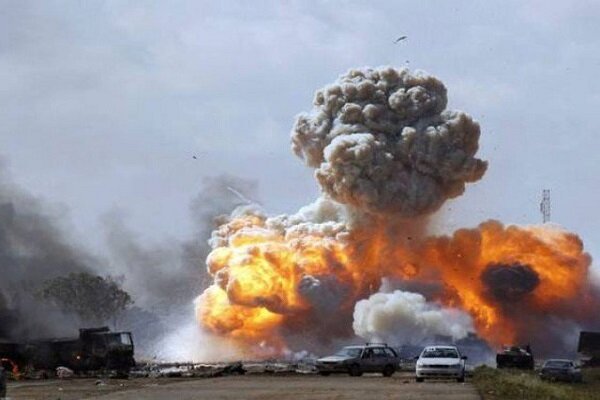
A devastating explosion in northeastern Myanmar has left at least 39 people dead and dozens more injured, shocking communities near the country’s border with China. The tragic incident occurred in Shan State, where a large stockpile of explosives detonated in a village controlled by a powerful ethnic rebel group.
The Deadly Myanmar Explosives Depot disaster has become one of the most severe non-combat incidents reported in the region this year. Witnesses described scenes of complete destruction, with homes flattened, bodies scattered across the area, and rescue workers struggling to locate survivors beneath massive piles of debris.
As investigations continue, questions remain about what caused the explosion and whether it could have been prevented.
Massive Explosion Rocks Shan State
The explosion took place on Sunday in Kaung Tat village, located in Myanmar’s northeastern Shan State. The area is under the control of the Ta’ang National Liberation Army (TNLA), one of the country’s most influential ethnic armed organizations.
According to TNLA officials, the blast occurred at a storage site containing explosives primarily used for mining operations. The region is well known for its valuable ruby mines, and explosives are frequently utilized in mining activities.
The Deadly Myanmar Explosives Depot incident created a massive shockwave that could reportedly be felt from miles away. Local residents said the explosion was so powerful that entire sections of the village disappeared within seconds.
Emergency responders immediately rushed to the scene, but the scale of the destruction made rescue efforts extremely challenging.
Death Toll Reaches 39
Initial reports suggested casualty numbers could be much higher. However, hospital records later confirmed that at least 39 people had lost their lives, while 75 others suffered injuries of varying severity.
Officials warned that the death toll from the Deadly Myanmar Explosives Depot blast could still increase as rescue teams continue searching damaged areas.
Many victims were local villagers who lived close to the storage facility. Families were caught completely off guard by the sudden explosion, leaving little time for evacuation.
Medical facilities in nearby towns quickly became overwhelmed as injured survivors arrived seeking emergency treatment.
Witnesses Describe Horrific Scene
Residents who survived the explosion described scenes of unimaginable devastation.
One local resident explained that body parts were scattered across a wide area surrounding the blast site. A massive crater marked the location where the explosives had been stored before detonating.
The destruction caused by the Deadly Myanmar Explosives Depot blast was unlike anything many locals had ever witnessed.
According to eyewitness accounts, entire homes were blown apart instantly. Buildings closest to the explosion were reduced to rubble, leaving almost no trace of their original structures.
Many survivors compared the aftermath to a battlefield rather than a civilian village.
Search Operations Continue
Rescue teams have been working around the clock to search for additional victims. Heavy machinery, including backhoes and excavators, has been brought in to remove debris and reach areas inaccessible to emergency personnel.
The Deadly Myanmar Explosives Depot disaster buried numerous victims beneath collapsed buildings and rubble piles. Search crews face difficult conditions due to unstable structures and ongoing safety concerns.
Local journalists reported that some homes were destroyed so completely that only scattered fragments remained.
Rescue officials continue urging residents to stay away from damaged areas while investigations and recovery operations remain active.
TNLA Launches Investigation
The Ta’ang National Liberation Army confirmed the explosion in an official statement released on social media.
The group acknowledged that the explosives stored at the site were intended for mining purposes and expressed condolences to affected families.
Following the Deadly Myanmar Explosives Depot tragedy, TNLA leaders announced an immediate investigation into the cause of the blast.
Officials stated that anyone found responsible for negligence or misconduct would be held accountable. However, they did not provide details regarding possible causes or whether safety concerns had previously been raised.
The investigation is expected to examine storage procedures, handling practices, and site security measures.
Myanmar’s Ongoing Conflict Adds Complexity
The explosion occurred against the backdrop of Myanmar’s prolonged political and military crisis.
Since the military seized power in a 2021 coup, various ethnic armed groups and resistance movements have intensified their opposition to the ruling junta. The TNLA is among several organizations engaged in ongoing conflict with government forces.
Although the Deadly Myanmar Explosives Depot blast does not currently appear linked to military operations, the unstable security environment may complicate efforts to determine exactly what happened.
Access to remote areas remains difficult, and independent verification of information is often challenging in conflict-affected regions.
Impact on Local Communities
The explosion has devastated families throughout Kaung Tat village and surrounding communities.
Many residents have lost loved ones, homes, and livelihoods in a matter of moments. Local authorities and aid organizations are now assessing the humanitarian needs created by the disaster.
Community leaders are calling for additional support, including emergency medical supplies, food assistance, and rebuilding efforts.
Experts warn that recovery may take months due to the extensive damage inflicted on homes and local infrastructure.
Concerns About Explosive Storage Safety
The tragedy has also renewed debate about the storage and handling of industrial explosives in mining regions.
Mining operations often require significant quantities of explosive materials, but experts stress the importance of strict safety standards and regular inspections.
Following the Deadly Myanmar Explosives Depot blast, safety advocates are urging authorities and armed groups alike to review existing storage procedures.
Proper management of explosive materials is critical for protecting nearby communities and reducing the risk of similar disasters in the future.
Investigators will likely focus on whether safety protocols were followed and whether warning signs were overlooked before the explosion.
International Attention Grows
As news of the incident spread, international observers expressed concern about the scale of the disaster.
Humanitarian organizations are closely monitoring developments and evaluating possible assistance needs. The Deadly Myanmar Explosives Depot tragedy highlights the vulnerabilities faced by civilians living in conflict-affected regions where infrastructure and emergency services are often limited.
Global attention may also increase pressure for greater transparency regarding the investigation and its findings.
Many observers hope that lessons learned from this catastrophe can help prevent future accidents involving hazardous materials.
Conclusion
The explosion in Shan State represents one of the deadliest industrial-related disasters reported in Myanmar in recent years. With at least 39 people killed and dozens more injured, the impact on local communities has been profound.
The Deadly Myanmar Explosives Depot blast destroyed homes, shattered families, and left an entire village struggling to recover from unimaginable loss. As investigations continue, authorities face mounting pressure to determine exactly what caused the explosion and ensure accountability where necessary.
For survivors and grieving families, the focus now turns toward recovery, rebuilding, and finding answers after a tragedy that has shocked Myanmar and drawn international attention.