Crucial US-Iran Peace Talks 2 Hostile Rivals Meet to Avert Fatal War
The US recently deployed thousands of troops and a powerful naval “armada” to the region, responding to Iran’s violent crackdown on nationwide anti-government protests. Human rights groups report thousands killed and tens of thousands arrested. Amid this unrest, the possibility of a military confrontation has moved from a distant threat to a near reality.
Why These Talks Are Happening Now
The meetings in Oman were almost derailed because both sides initially could not agree on the venue and agenda. Still, regional mediators pushed hard to get the two countries to the table. At this delicate moment, both nations realize that the Crucial US-Iran Peace Talks might be the last chance to pull back from the edge.
The US wants Iran to freeze its nuclear programme, give up its enriched uranium, and allow broader negotiations that include Tehran’s ballistic missiles, support for proxy groups, and human rights abuses. Iranian leaders, however, insist the discussions must remain limited to the nuclear issue. Whether these differences can be bridged during the Crucial US-Iran Peace Talks remains to be seen.
President Donald Trump has repeatedly said he is prepared to bomb Iran if there is no deal. His administration’s escalation — aircraft carriers, fighter jets, missile systems — shows he wants Tehran to feel maximum pressure.
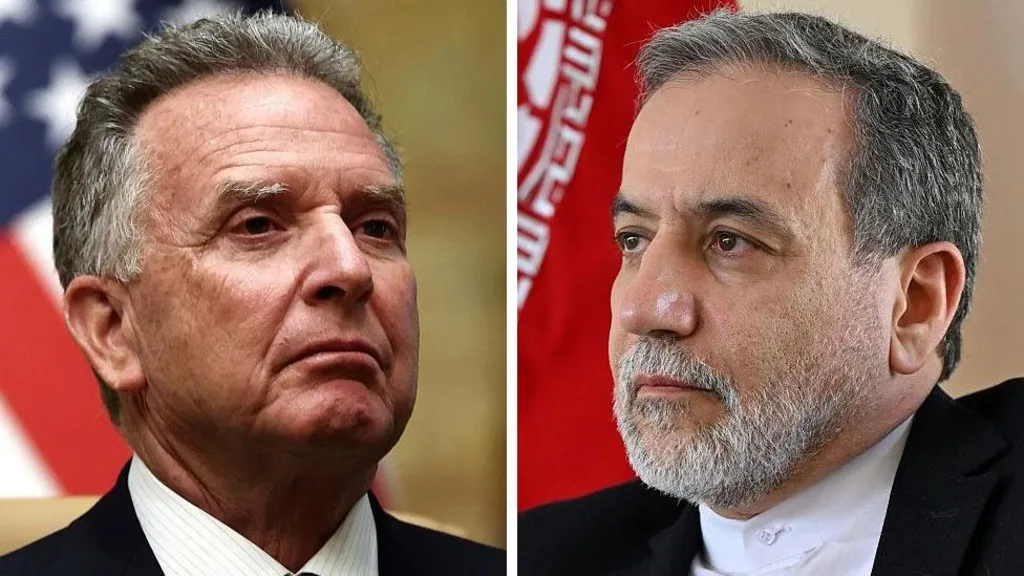
Iran, in return, has vowed to strike American military assets and even Israel if attacked. Iranian Foreign Minister Abbas Araghchi, who is leading Tehran’s delegation in the Crucial US-Iran Peace Talks, recently warned that the country’s forces have “their fingers on the trigger.”
This will be the first direct meeting between US and Iranian officials since the war last year, when the US bombed Iran’s three main nuclear sites. Iran says it halted uranium enrichment after that attack, but Western intelligence agencies remain skeptical. Why Iran Is Under Pressure
Inside Iran, the regime is facing one of the biggest internal crises since the 1979 Revolution. Months of protests driven by economic suffering, inflation, and public anger have left the government weakened. Human rights reports estimate nearly 6,883 killed and over 50,000 arrested during the crackdown. Many believe the regime is desperate for sanctions relief to survive politically.
This adds another layer of urgency to the Crucial US-Iran Peace Talks, because Iran knows failure could push the US toward military action.
The Nuclear Programme at the Heart of the Crisis
For decades, Iran has said its nuclear programme is peaceful. The US and Israel argue it is designed to develop weapons. Iran insists it has the right to enrich uranium on its own soil and rejects transferring its 400kg stockpile to another country. Officials did signal they may be open to a regional consortium for uranium enrichment — an idea discussed in earlier negotiations before the Israel-Iran war last year.
This idea could resurface during the Crucial US-Iran Peace Talks, but it remains unclear whether the US would accept it. However, Iran has firmly rejected US demands to decrease its ballistic missile programme or withdraw support for regional allies like Hezbollah, Hamas, and the Houthis. Iran calls these alliances the “Axis of Resistance” and considers them non-negotiable.
The Middle East has already been shaken by conflicts involving Israel, Gaza, Lebanon, Yemen, and Syria. Adding a US-Iran war could destabilise the region for decades. This concern is one of the primary reasons why Oman stepped in to host the Crucial US-Iran Peace Talks. Gulf countries believe diplomacy is the only way to prevent widespread destruction. Inside the Negotiation Rooms
Representing the US is special envoy Steve Witkoff, joined by Jared Kushner. Iran’s delegation is led by Abbas Araghchi. Both sides are expected to bring tough, uncompromising positions to the table. Iran wants sanctions lifted. The US wants nuclear guarantees. Regional stability hangs in the balance.
At this moment, only meaningful dialogue during the Crucial US-Iran Peace Talks can pull both countries away from a possible military confrontation. President Masoud Pezeshkian has instructed the Iranian team to pursue “fair and equitable negotiations,” but only if the environment remains suitable. The Iranian government wants respect, sovereignty, and relief. The US wants restrictions, transparency, and security assurances.
For the US, these talks offer President Trump a chance to step back from the military threats he has repeatedly issued. But any deal could anger hardliners who view compromise as surrender. Regional observers say this moment could either defuse one of the world’s biggest geopolitical powder kegs or set off a chain reaction no one can control. Conclusion: The World Holds Its Breath as Crucial US-Iran Peace Talks Begin
As the diplomats sit down in Oman, the world waits. There is fear, uncertainty, and hope all mixed together. These Crucial US-Iran Peace Talks are more than another round of negotiations — they are a crossroads.A peaceful path is still possible. War is also possible.The next few days could define the future of the Middle East, global security, and the lives of millions.One thing is certain:
The world is watching the Crucial US-Iran Peace Talks more closely than ever