149th Birth Year Quaid-i-Azam Indomitable Vision Empowers Pakistan.
A Nation Reborn: Reflecting on the 149th Birth Year Quaid-i-Azam Mohammad Ali Jinnah
There is a specific kind of electricity in the air every December 25th in Pakistan. It is more than just a public holiday; it is a day when the soul of the country takes a deep breath and looks back at its origin story. This year, as the winter breeze swept through the streets of Islamabad and the humid air of Karachi carried the scent of rose petals at the Mazar, the country celebrated the 149th Birth Year Quaid-i-Azam. It was a moment of grand ceremony, yes, but also a moment of profound, quiet reflection for 240 million people who call this land home.
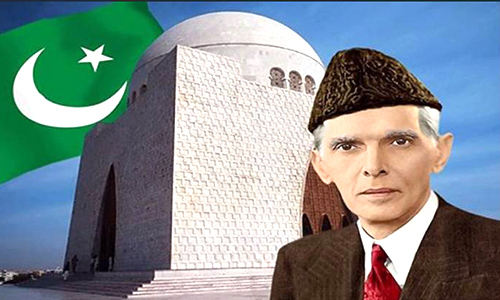
The celebration of this 149th Birth Year Quaid-i-Azam isn’t just about looking at old black-and-white photographs of a man in a Karakuli hat. It is about asking ourselves if we are still the “sovereign, democratic, and inclusive” nation that Mohammad Ali Jinnah envisioned when he stood before the constituent assembly in 1947.
The Thunder of Salutes and the Silence of Prayers
The day didn’t start with speeches, but with the literal sound of history. In Islamabad, the morning was shattered—in the best way possible—by a 31-gun salute, while provincial capitals echoed with 21-gun salutes. It’s a tradition that never fails to give one goosebumps. It signifies the state’s highest honor for its founder.
According to Radio Pakistan, the official state broadcaster, the spiritual heart of the day beat loudest during the Fajr prayers. Across thousands of mosques, people didn’t just pray for their families; they prayed for the Quaid’s soul and for the prosperity of a country that often finds itself at the crossroads of complex challenges. This 149th Birth Year Quaid-i-Azam felt particularly heavy with hope, as the nation looks toward a future that requires the same “unwavering resolve” Jinnah was famous for.
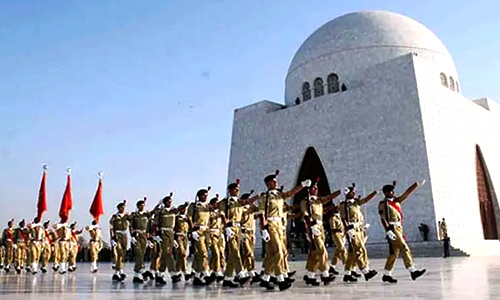
In Karachi, the Change of Guard ceremony at Mazar-i-Quaid remains the most visually striking event. Watching the smart contingents of the Pakistan Military Academy or other branches take over guard duties reminds every spectator that the defense of this country is intrinsically tied to the defense of Jinnah’s ideals.
Leadership Speaks: Beyond the Rhetoric
When Prime Minister Shehbaz Sharif released his message for the 149th Birth Year Quaid-i-Azam, he didn’t just stick to the script. He touched on a very modern necessity: the “renewal of our commitment.” He spoke about the Quaid as a statesman of global stature—a man who didn’t just want a country for Muslims to pray in, but a “welfare state” where equality and the rule of law weren’t just fancy words in a constitution, but lived realities.
The PM’s emphasis on “social justice and religious harmony” is crucial in 2025. In a world that is becoming increasingly polarized, Jinnah’s 1947 vision of a state where your religion has nothing to do with the business of the state remains a radical and necessary idea. The 149th Birth Year Quaid-i-Azam serves as a stark reminder that we are at our strongest when we are inclusive.
The Road to the Sesquicentennial: President Zardari’s Vision
President Asif Ali Zardari brought an interesting historical perspective to the table. He reminded the nation that we are now on the doorstep of a massive milestone. With the 149th Birth Year Quaid-i-Azam being celebrated now, the government has already set its sights on 2026, which will be officially declared the “Year of Quaid-i-Azam” to mark his 150th birthday.
Zardari’s message was a call to the youth. He spoke about “perseverance and hard work”—the very bricks and mortar with which Jinnah built Pakistan. For the younger generation, who might feel disconnected from the struggles of 1947, this 149th Birth Year Quaid-i-Azam is a bridge. It’s an invitation to understand that the “faith, unity, and discipline” motto isn’t just a slogan on a school wall; it’s a survival manual for a nation facing economic and climate-related hurdles.
An Inclusive Legacy: The Christmas Connection
One of the most poetic things about December 25th in Pakistan is the coincidence of Jinnah’s birthday and Christmas. Deputy Prime Minister Ishaq Dar highlighted this beautifully. He noted that Jinnah’s birthday falling on the same day as the birth of Jesus Christ (Peace Be Upon Him) reflects the “inclusive vision and moral foundations” of Pakistan.
During the 149th Birth Year Quaid-i-Azam festivities, Dar reiterated that the commitment to protect minority rights is the “cornerstone of our national ethos.” This is the Pakistan Jinnah fought for—a place where the white in the flag is just as sacred as the green.
The Military’s Vow: Sovereignty and Strength
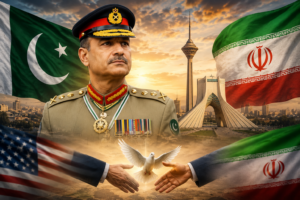
The military leadership, through the ISPR, also paid a glowing tribute. Chief of Defence Forces and Army Staff Field Marshal Asim Munir, alongside the Naval and Air Chiefs, reaffirmed that the armed forces are the guardians of Jinnah’s vision.
Their statement for the 149th Birth Year Quaid-i-Azam was clear: the military stands for a “strong, sovereign, and democratic” Pakistan. In an era of hybrid warfare and regional instability, the military draws its guiding light from the Quaid’s “constitutionalism.” It’s a powerful acknowledgment that the strength of the sword is only as good as the law it protects.
Why We Still Need Jinnah in 2025
You might wonder why we spend so much time talking about a man who lived a century ago. The answer is simple: we haven’t finished his work yet. Jinnah gave us the “homeland,” but the “welfare state” is still a work in progress. This 149th Birth Year Quaid-i-Azam is a checklist for the nation.
Have we achieved social justice?
Is the rule of law equal for the powerful and the poor?
Are we truly united under the banner of progress?
These are the uncomfortable but necessary questions that the 149th Birth Year Quaid-i-Azam forces us to ask. Jinnah was a man of “unwavering principles” and “exceptional clarity.” He didn’t like ambiguity. He liked results. As we celebrate him, we must look at our institutions and ask if they reflect that same clarity of purpose.
Conclusion: Looking Toward 2026
As the lights go out on the government buildings and the gun salutes fade into the night, the message of the 149th Birth Year Quaid-i-Azam lingers. We are a resilient people. Despite the challenges, as President Zardari noted, our “unity, strength, and resilience” will pull us through.
The countdown to the 150th year has officially begun. But we shouldn’t wait for a round number to start living by Jinnah’s rules. Every day that a Pakistani works honestly, every day that a citizen stands up for the rights of another, and every day that the law is upheld—that is the real celebration of the Quaid.